

Takatsuki, Osaka. Wabori by hand
Michiko Kubota. Pictures carved in steel.
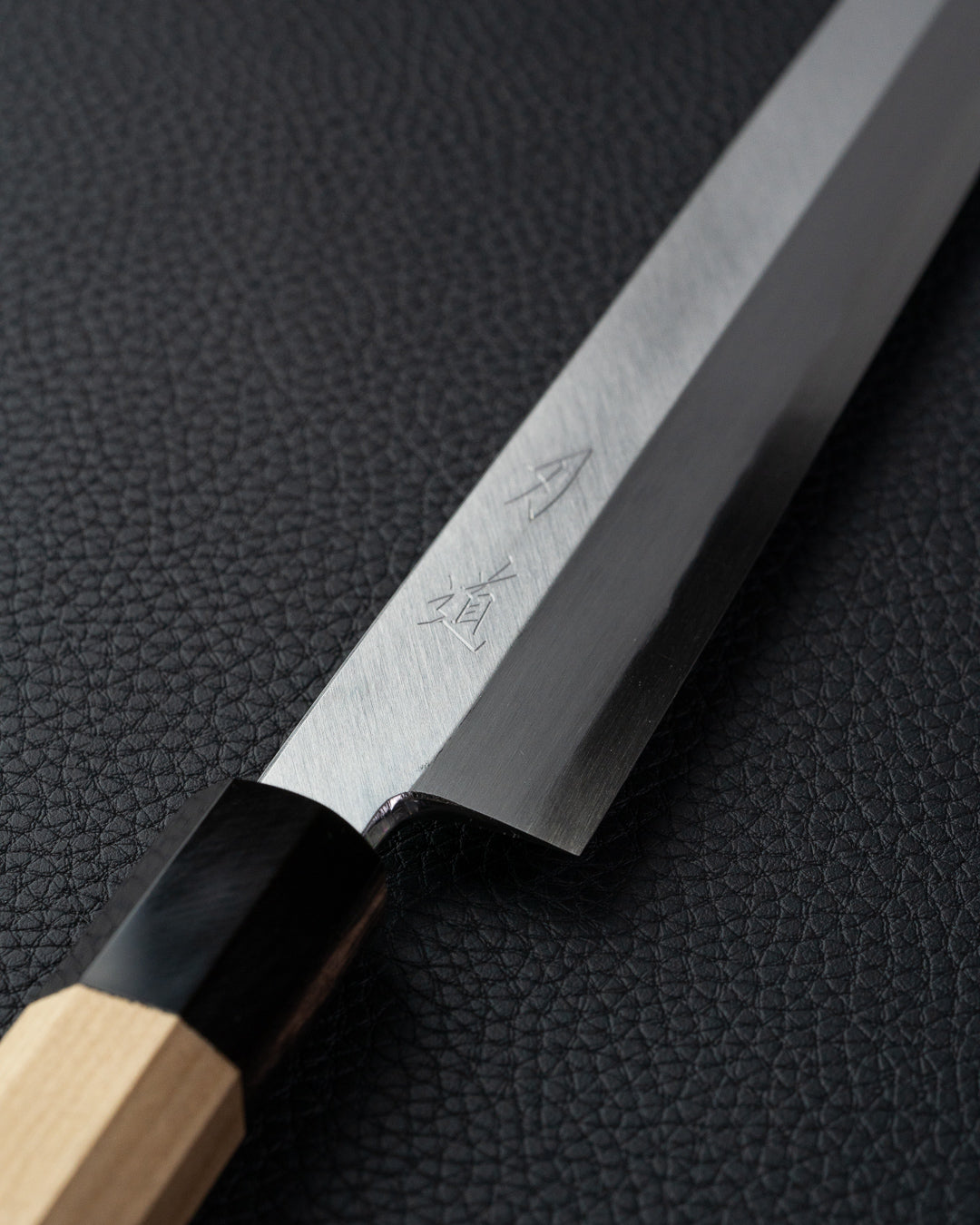
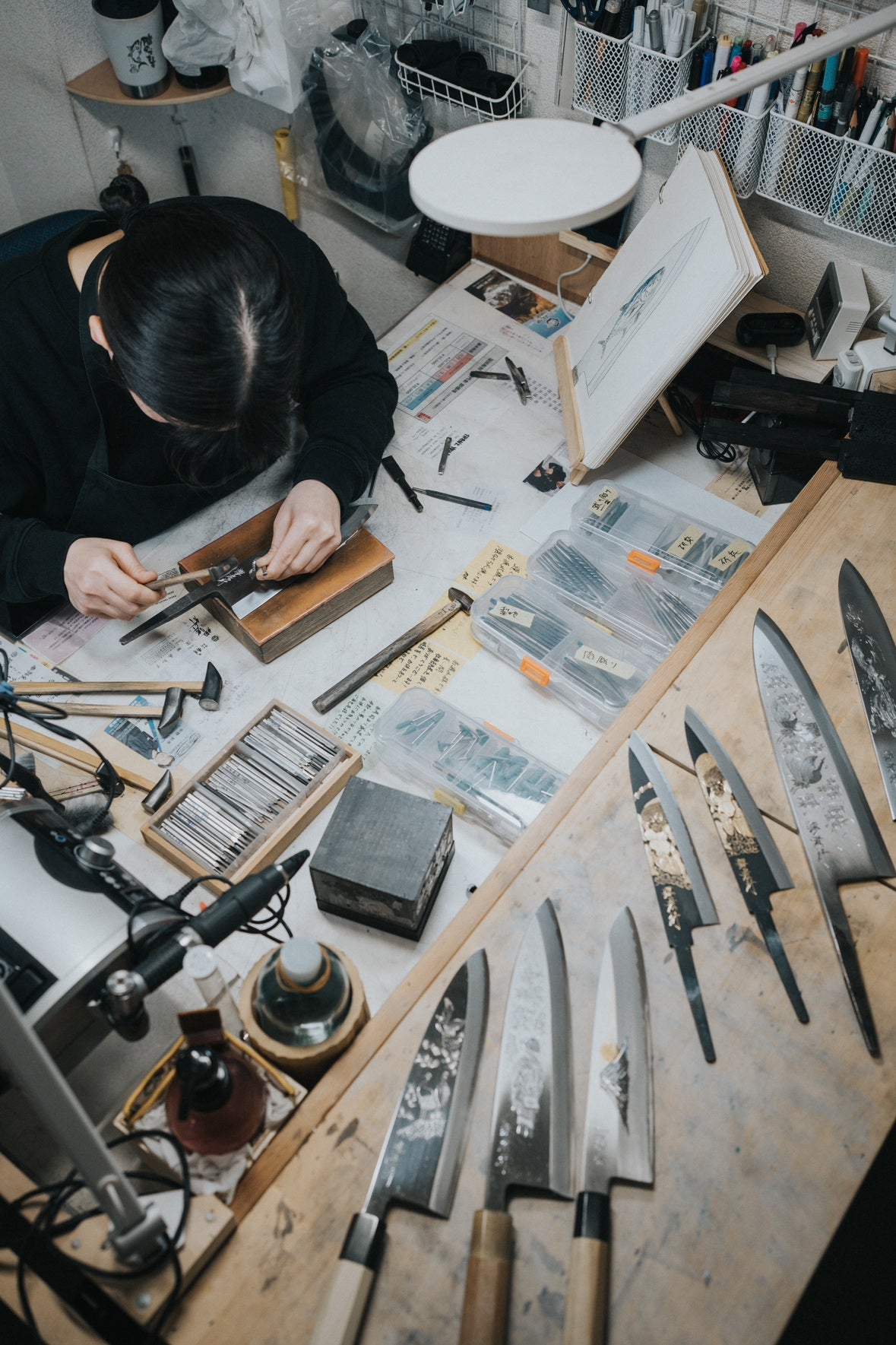
Each knife is engraved by hand, with hammer and chisel. No machines.
Born 1991
From maker's marks to whole pictures
Michiko Kubota is from Takatsuki in Osaka. She wanted to show Japanese craft, and in a knife shop in Kyoto she saw meikiri, the maker's names engraved into knife blades. She knew at once that this was what she wanted to do.
Several workshops said no. Aoki Hamono in Sakai took her in. She taught herself the technique, with dozens of chisels and hammers, and began engraving pictures where others engraved names. "What nobody has made before is worth making," she says.
How Michiko Kubota describes it
From sketch to finished knife
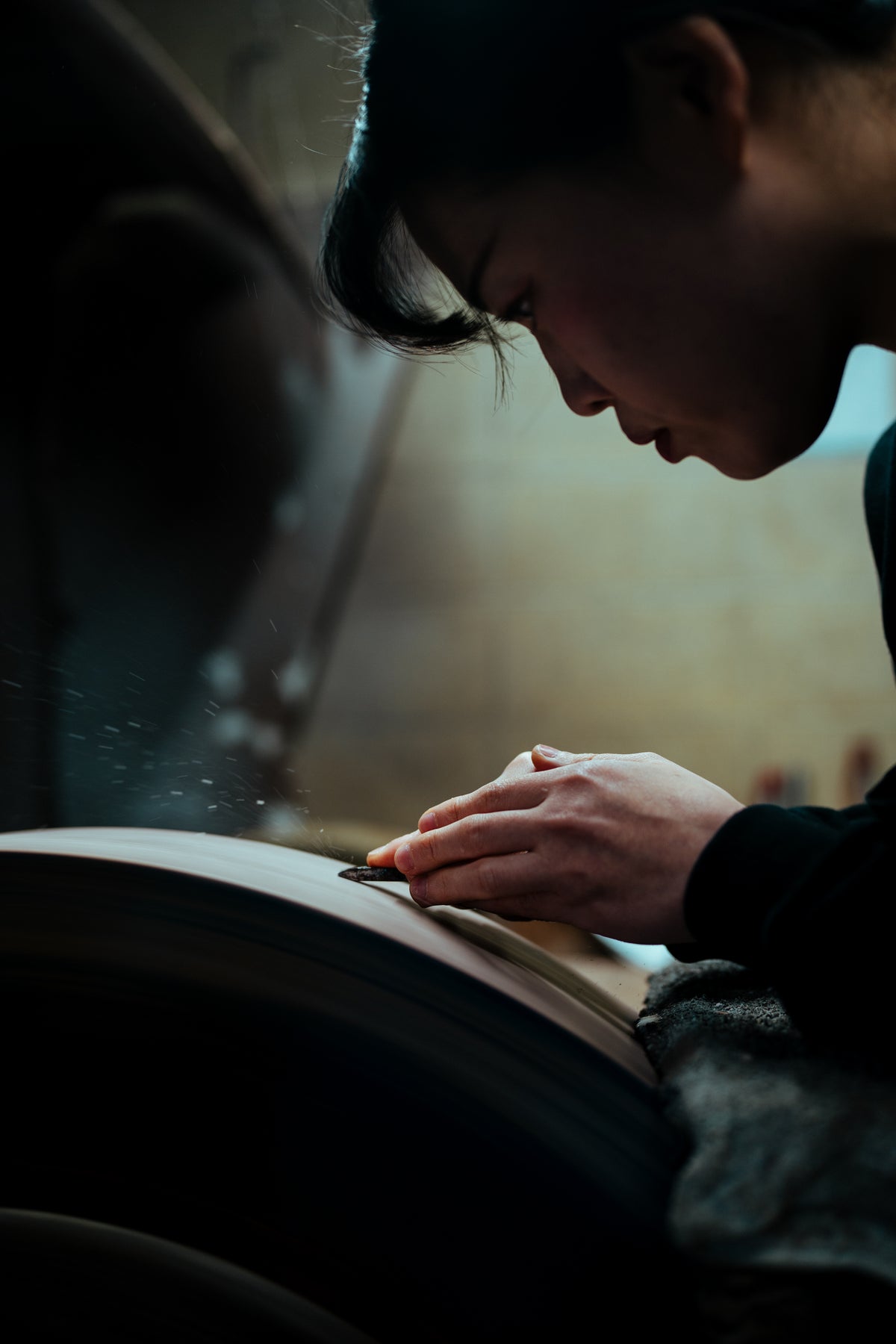
Wabori is Japanese hand engraving. Everything is done with hammer and chisel, in a workshop of around four tatami mats.

The sketch
Every motif starts in a sketchbook. She has drawn over a hundred motifs.

The tools
She makes the chisels herself. For the nashiji pattern the chisel is heated red-hot and pressed against the surface of a file.

The engraving
The left hand guides the chisel, the right strikes with the hammer. The picture is carved in blow by blow.

The handle
The handle is fitted, and the knife is checked to make sure it is perfectly straight.
The box
The box is wrapped in washi paper, and the name of the work is written on by hand.


The motifs
From koi to samurai
The motifs are divided into eleven categories, from water life and birds to samurai, flowers and kanji. Each motif has its own product code starting with KE. Here is one from eight of the categories.

Ascend of Koi
Water life
The koi swimming up the waterfall.

Flock of Cranes
Birds
Cranes, an old symbol of good fortune in Japan.

Sunset over Mt. Fuji
Japanese culture
Fuji in the evening sun.

Fūrinkazan
Samurai
Swift as the wind, silent as the forest.

The Great Wave
Traditional art
After Hokusai's Great Wave.

Tiger’s Roar
Animals
A roaring tiger along the blade.

Karakusa
Traditional patterns
Winding vines, a classic Japanese pattern.

Night Sakura
Flowers
Cherry blossom at night.


Ordering and care
Made to be displayed
The knives are sold only through Sakai Takayuki dealers, and each knife is made to order. Allow at least two months. Some motifs are available with coloured plating.
The knives are made to be displayed, not for daily use in the kitchen, because the engraving is difficult to clean. Dry the knife well, wipe it with a little oil, and do not scrub coloured motifs.
Michiko Kubota does not engrave knives customers already own, and she does not make motifs to order. If you want one of the motifs, ask us.