


Wash, dry, put away
Knife care.
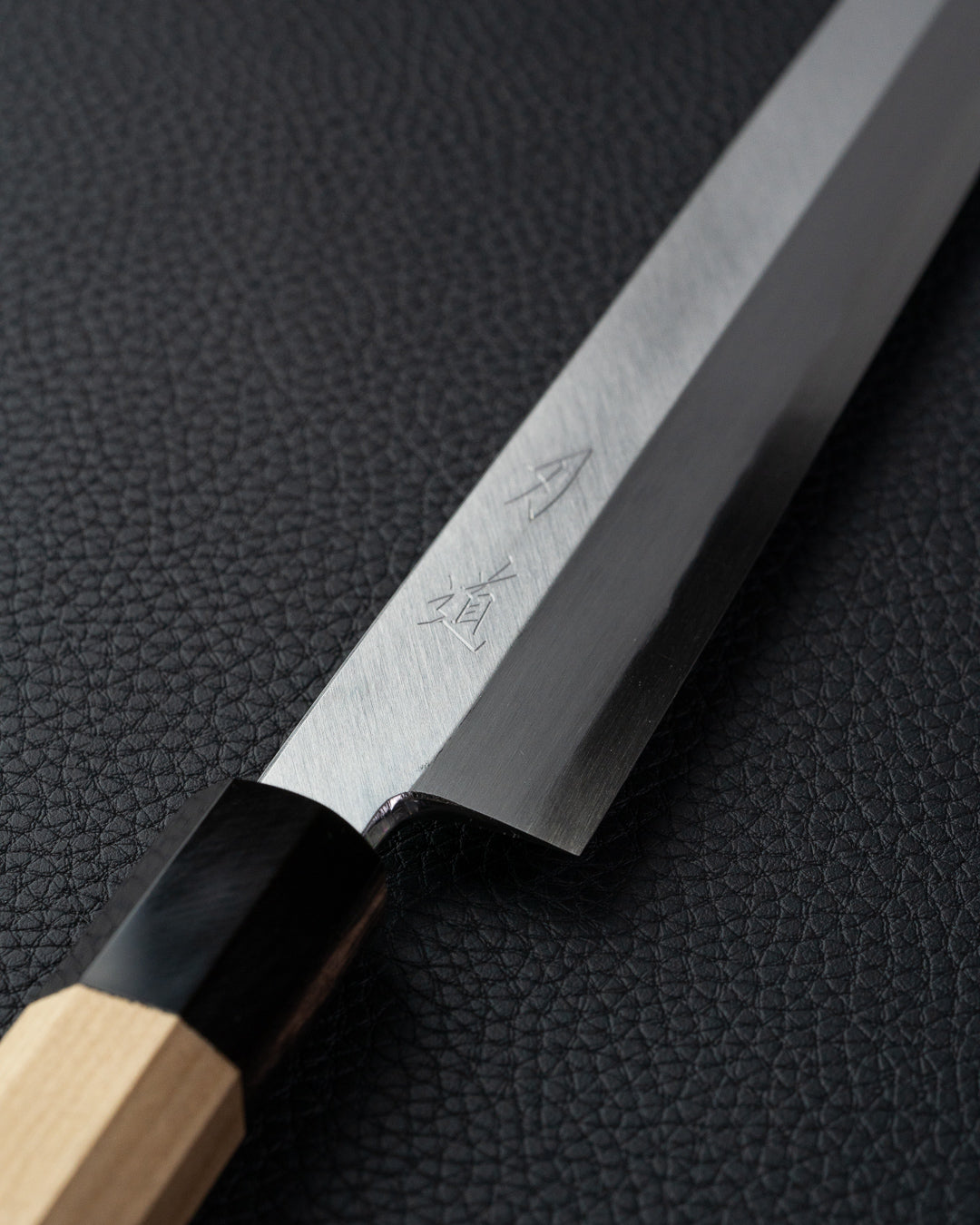
The simplest way to keep your knife sharp is not to dull it. Cut on a board, wash by hand and dry straight away.
After every use
Wash and dry
For storage: a magnetic strip or knife block, or a knife sheath in the drawer.
Rinse
Rinse the blade under running water, tip down. Do not leave the knife to soak.
Wash
Warm soapy water and a soft cloth. Scouring powder and abrasive sponges scratch the finish.
Dry
Dry the blade and the handle straight away, and do not let water run into a wa handle. Dry carbon steel even if it is only going to sit for a minute.
Put away
On a magnetic strip, in a block where the edge does not cut into the wood, or with a blade guard. Never loose in the cutlery drawer.
What dulls the edge
Avoid this
Hard surfaces
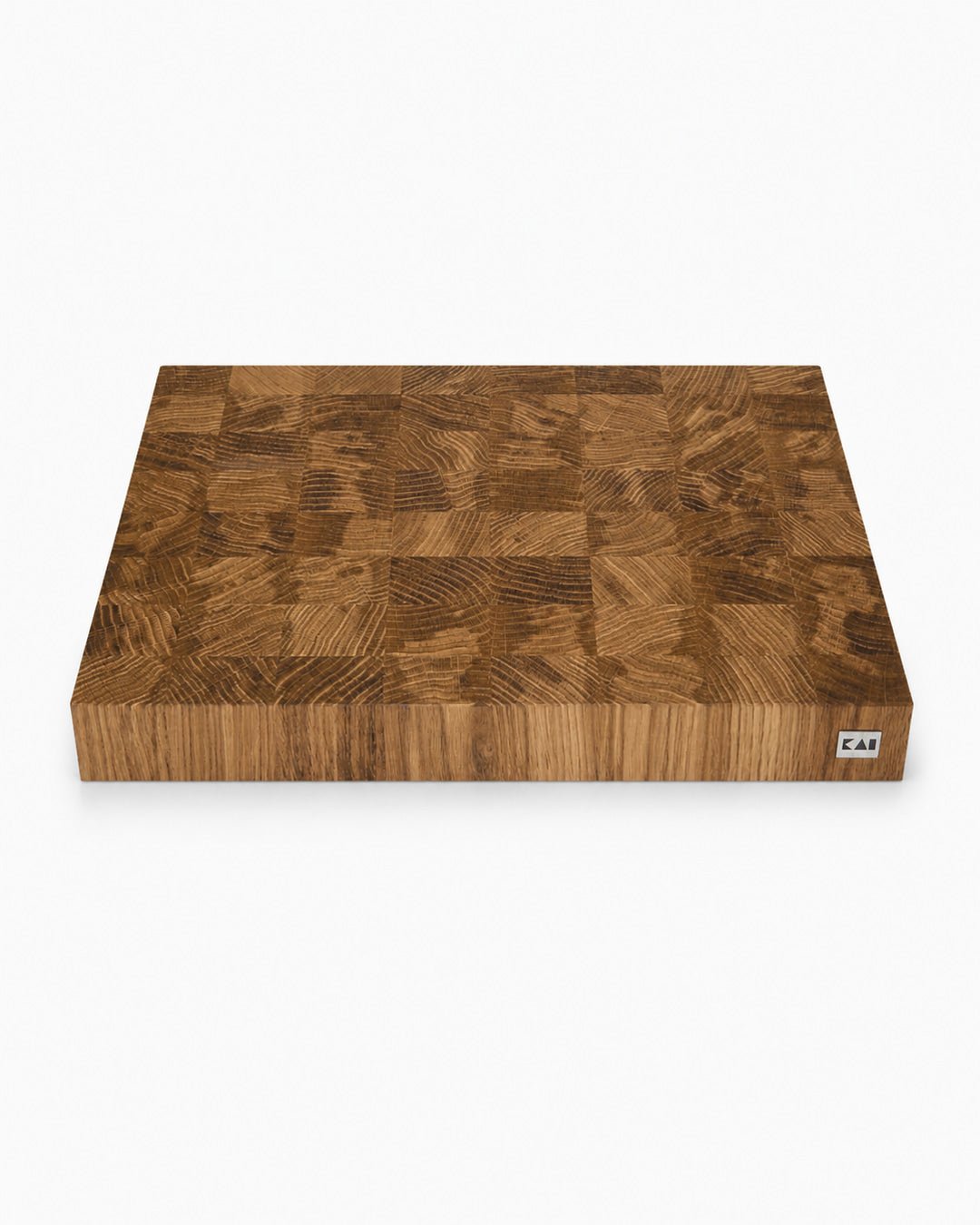
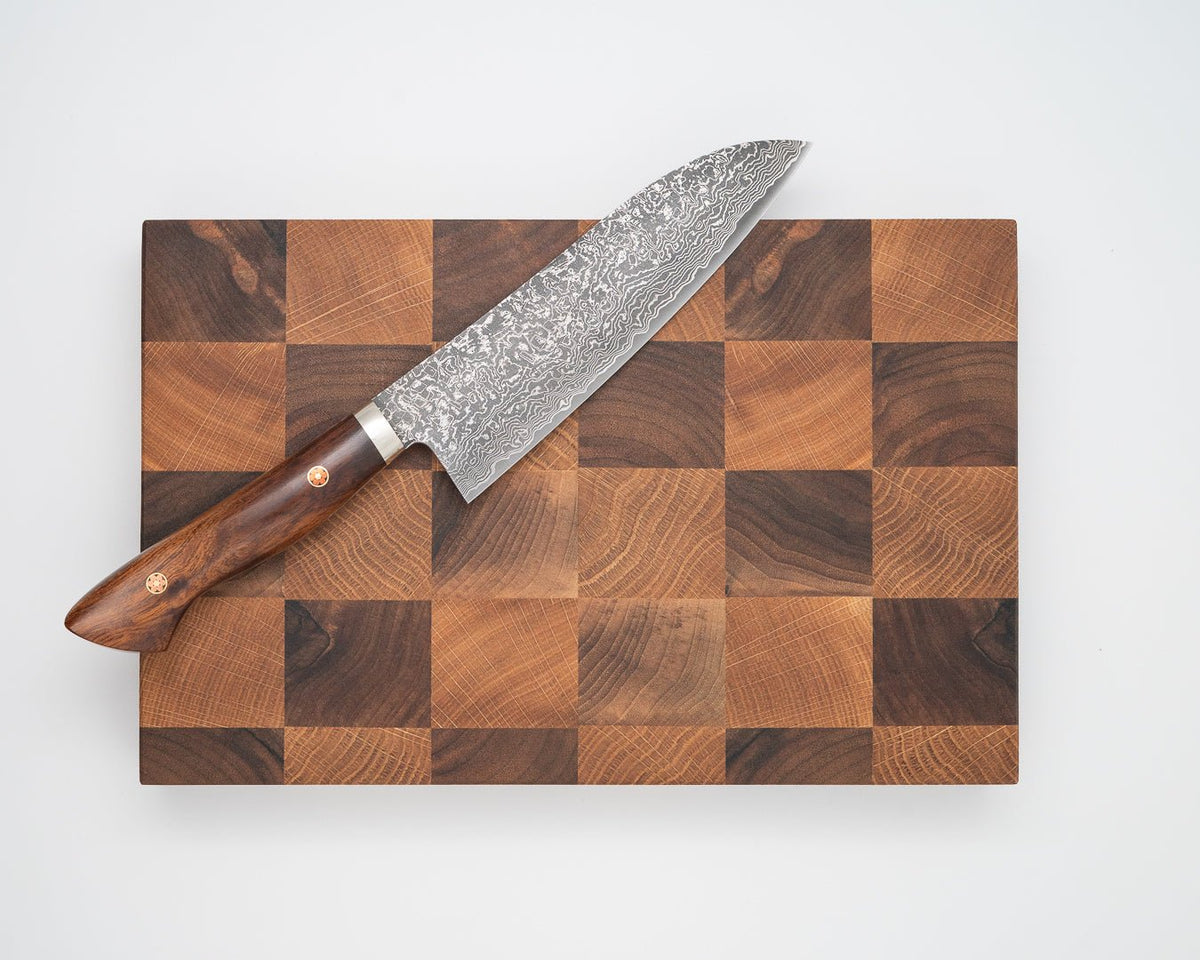
Glass, marble, slate and plates dull the edge at once. Use a wooden board, ideally end grain. Plastic works fine too.
Read about end grainBones and hard things
Bones, frozen food, fruit stones, nutshells and lobster and crayfish shells. Only cut what you could chew through. For lobster and pumpkin you can keep a heavier knife.
At the board
Push, pull or rock
Cut with calm movements, without forcing the knife through the food. When you gather up what you have cut, do not drag the edge sideways across the board.
Carbon steel
Patina and rust
Carbon steel develops a patina with use, a dark layer that protects against rust. Orange rust you remove straight away: a kitchen sponge and warm soapy water, or a rust eraser if it has set in. Do not use steel wool.
If the knife is going to sit unused for several days, or you live somewhere damp, wipe a thin layer of camellia oil on the blade. Onion can turn brown from new carbon steel before the patina has formed.
Between sharpenings
The strop
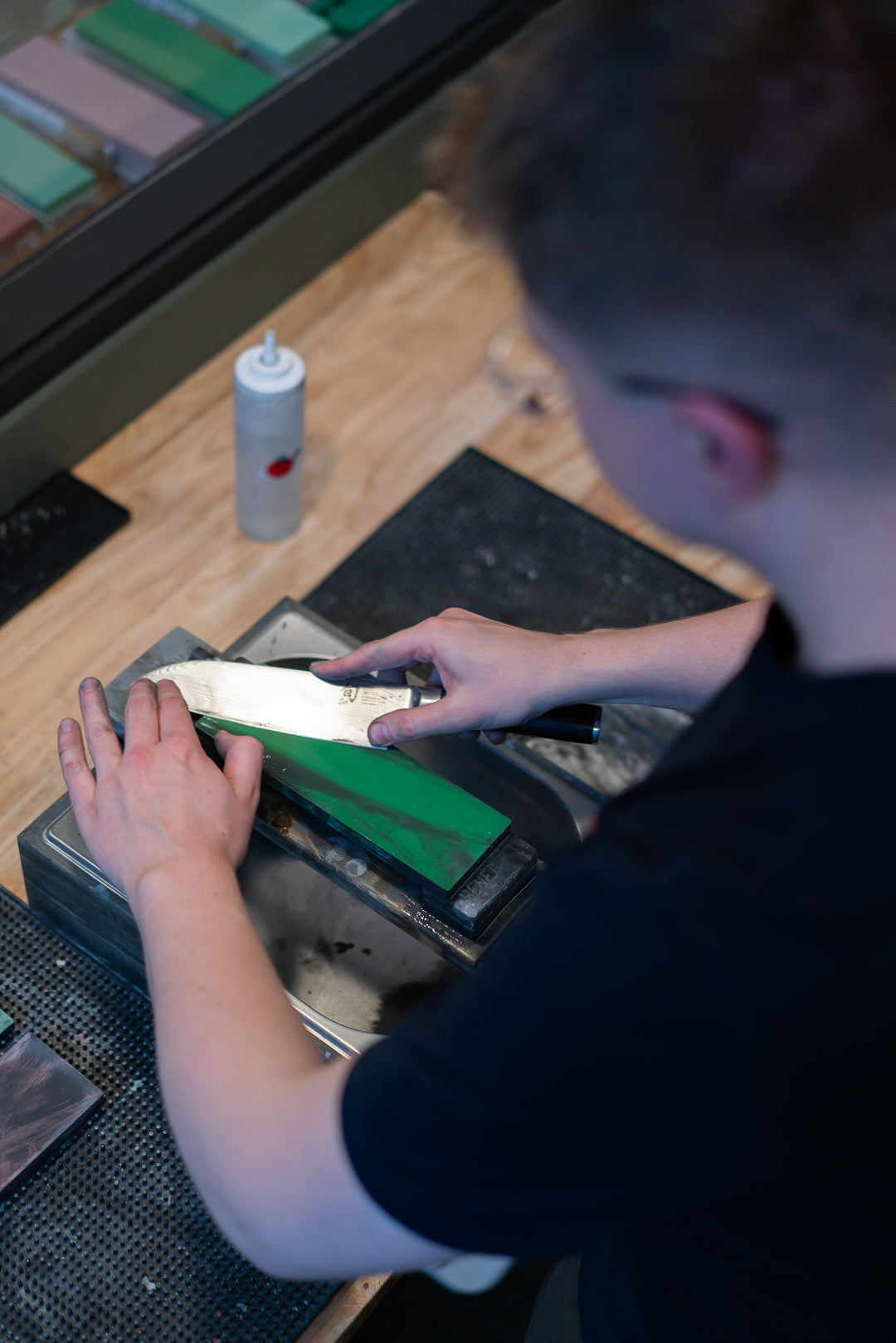
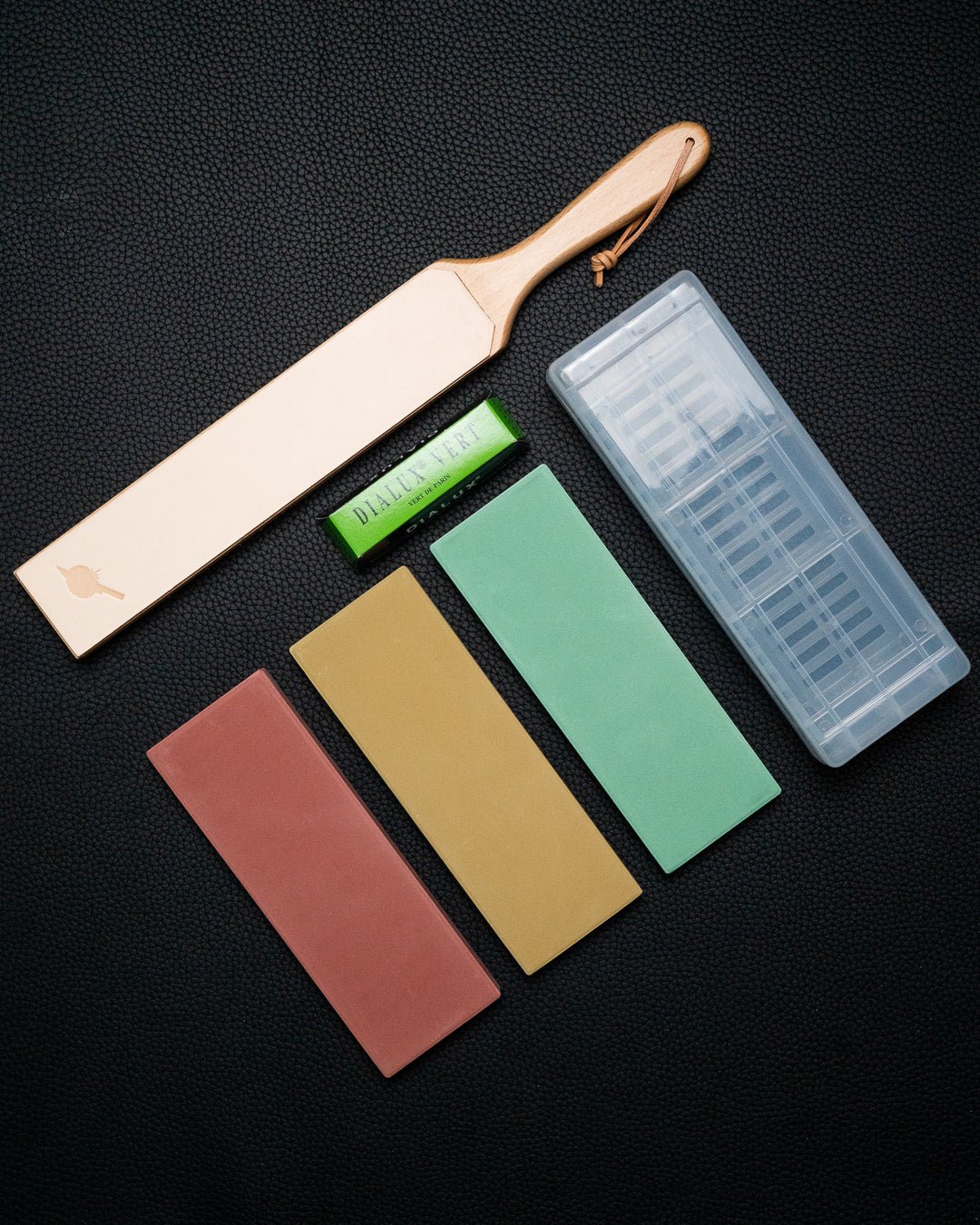
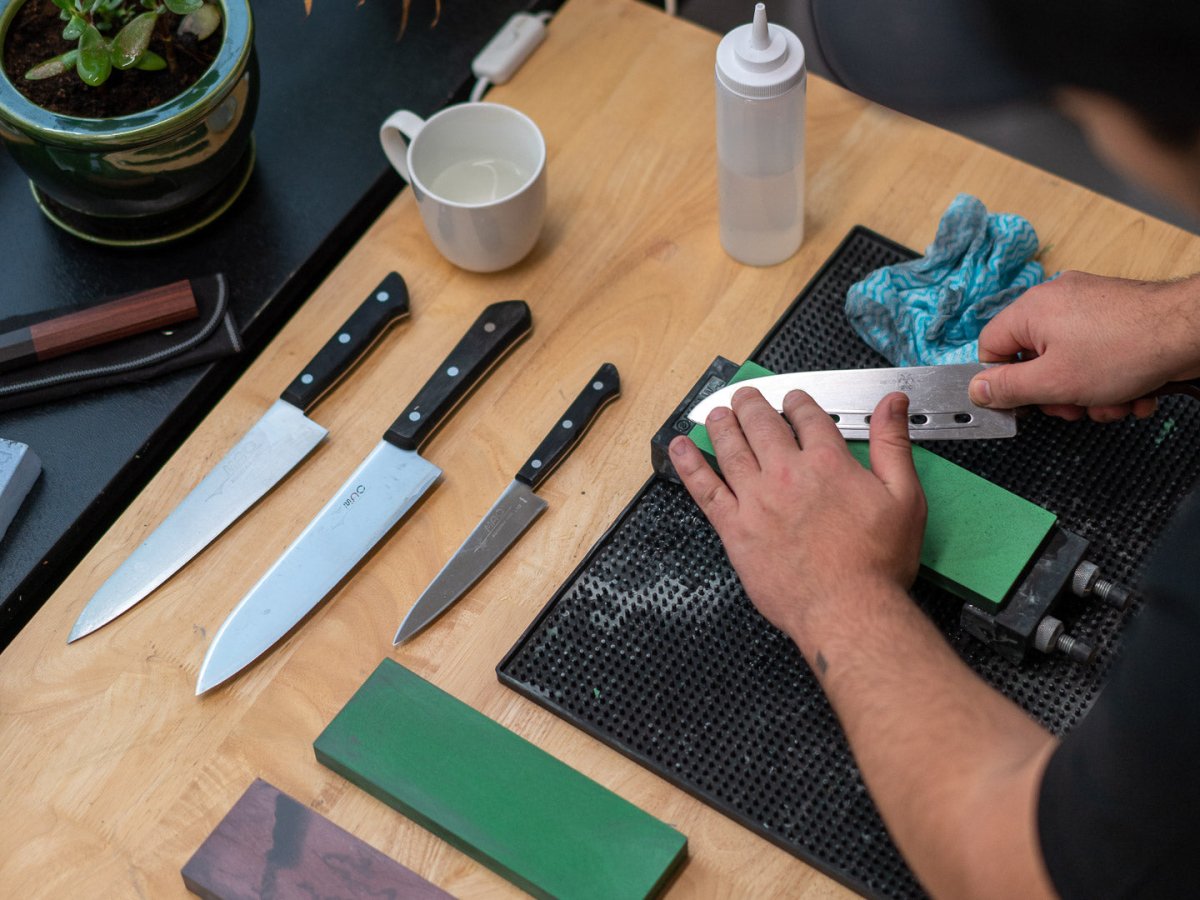
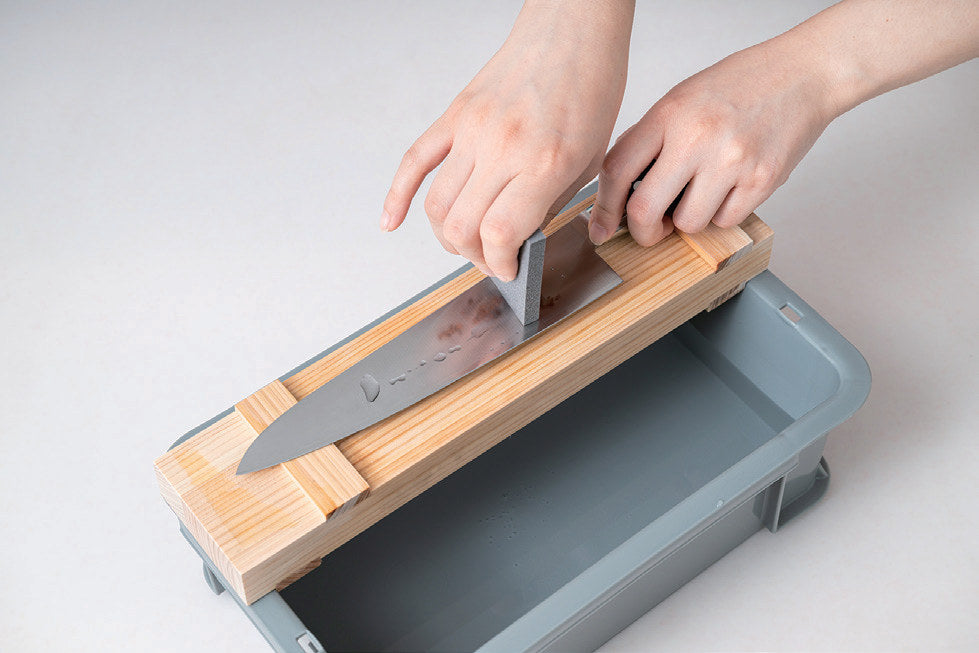
The edge bends a little against the board when you cut. A leather strop straightens it again without removing steel, and it takes a few minutes. At home once a week is enough. A honing steel does damage: metal on metal can chip the edge of a hard Japanese knife. When the strop no longer helps, the knife needs the stone, with normal home use once or twice a year, more often if you use it every day.
More about strops, ceramic rods and how often a knife needs sharpening. If you want to learn to sharpen yourself, we run knife sharpening courses at Teknostallen.
From the shop
Cutting boards that are kind to the edge