





The workshop in Trondheim
A sharp knife, on your kitchen counter.
Your first sharpening with your own stone, step by step, and how to keep the set in good order afterwards. This is how we do it in the workshop, with the 10Good set from KING.
When it needs sharpening
The tomato test
Cut a tomato. If the knife goes through the skin under its own weight, it is sharp enough. If it slides, or you have to press, it is time for the stone. That is the test we use in the workshop.
A few strokes on the leather strop each week between sharpenings helps, see knife care.
The stones
Coarse, medium and fine
The higher the number, the finer the grit. Below around 800 the stone is coarse and takes out chips and sets a new edge. A stone around 1000 is the one every knife sees at each sharpening. From 3000 and up you polish the edge.
Most knives manage with two stones, one around 1000 and a fine one.
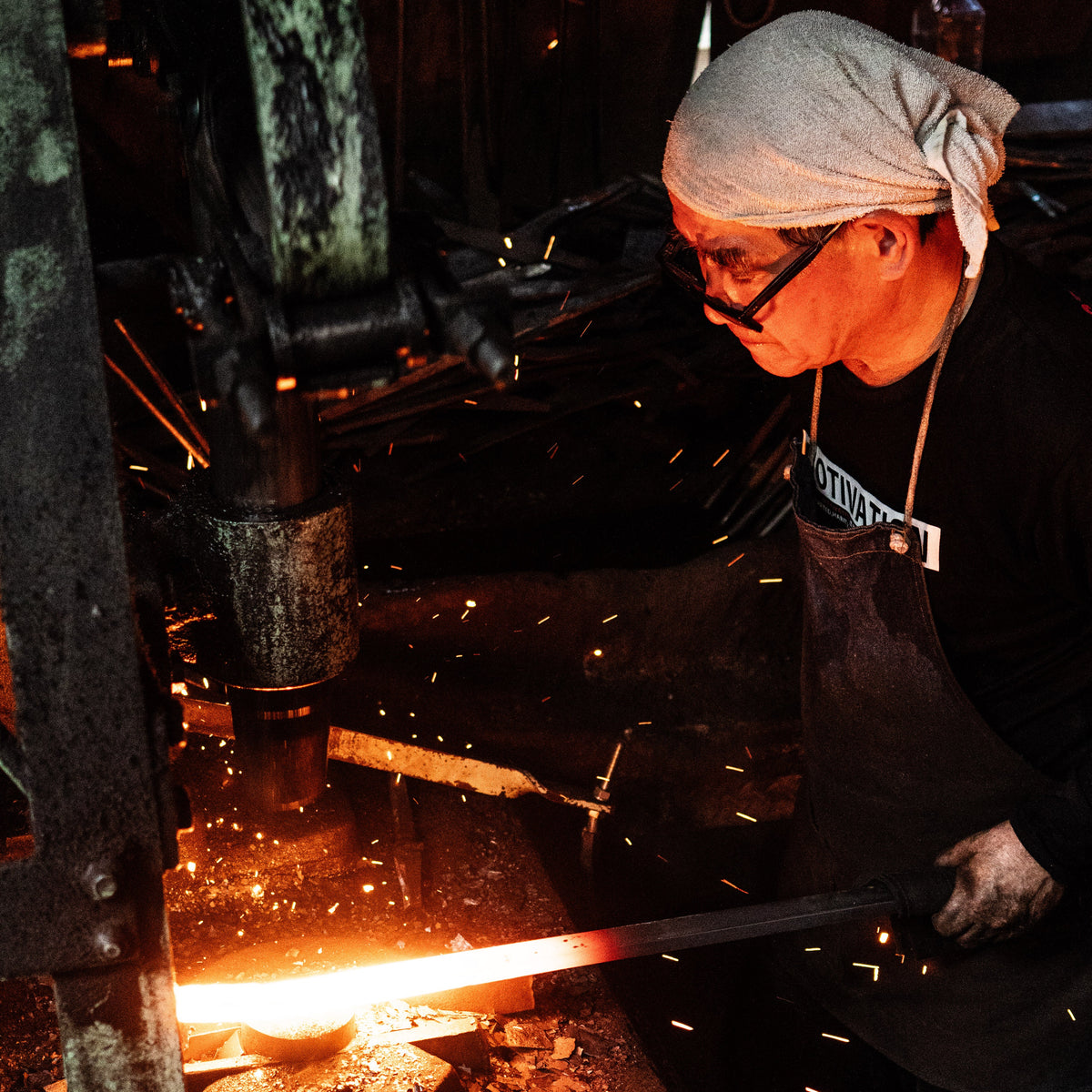
Fra benken i Teknostallen
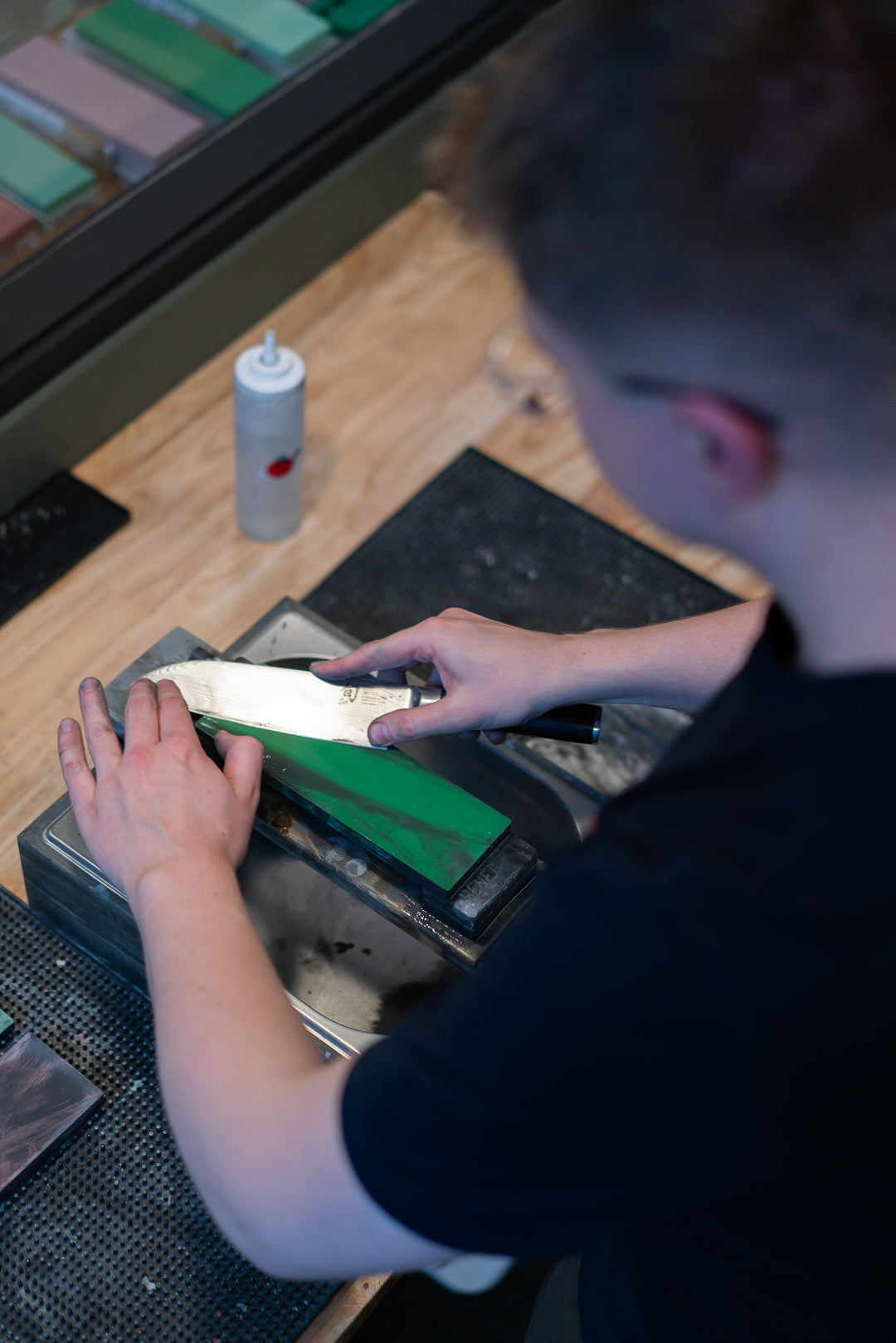
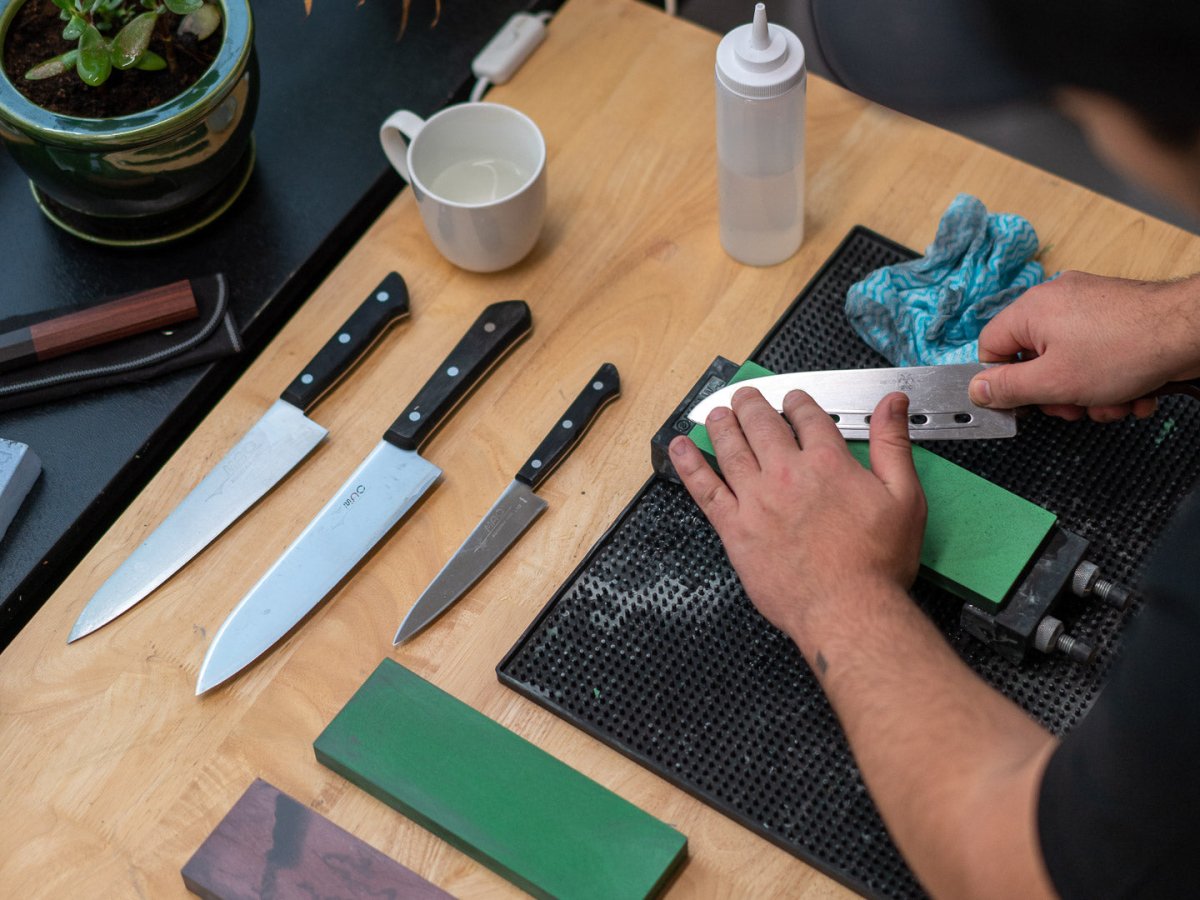
Slipingen på video
Step by step
How to sharpen
Nine steps from the poster that comes with the 10Good set, in the order we use them ourselves.

1. Draw guide lines
Draw guide lines on the stone with a marker. They make it easier to keep the strokes the same length, and they wear away as you go.

2. The stone in water
30 minutes in water. Only wet the surface of the #300 and the #6000.

3. Set up the holder
Wide end up, closest to the hand you sharpen with. Put the stone in and check that it sits firmly.
4. Find the angle
Sharpen at around 15 to 20 degrees per side. The guide in the box helps you find the angle. What matters most is holding the same angle through the whole stroke.

5. The front
Edge facing you. Long strokes over the whole stone, from heel to tip, at the same angle all the way.

6. The back
Turn the knife. Spine towards you, short strokes. Same angle as on the front.

7. Coarse sharpening, until you feel the burr
Sharpen until a small lip rises on the opposite side of the edge. That is the burr. Feel for it with your thumb across the edge. Leave the grey slurry that builds up on the stone, it is what does the sharpening.

8. Fine sharpening, until the burr is gone
Move to the finer stone and sharpen until the lip is gone on both sides. Here you rinse the slurry off as you go, so the stone cuts cleanly.

9. Dry, and draw over newspaper
Dry the knife. Draw the edge over a newspaper or a magazine, and the last of the burr comes off. Cut a tomato.
After sharpening
Caring for the kit
Rust
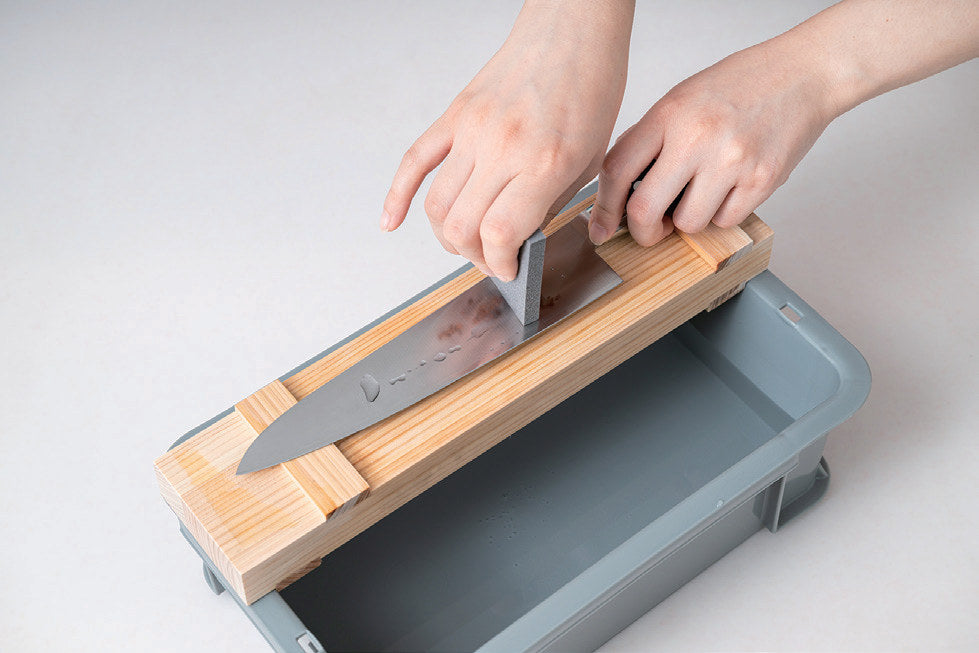
The rust eraser takes marks off the blade, the handle and stainless steel.
- Soak the eraser in water for five minutes.
- Put the knife in the holder and rub the rust away. Keep clear of the edge.

Flattening
Over time the stone wears hollow in the middle, and the edge becomes uneven. The flattening plate makes it flat again.
- Draw a grid on the stone in pencil.
- Rub the stone against the plate with even pressure, under running water.
- The stone is flat when the pencil lines are gone.

Dry and store
- Let the stone dry for a day at room temperature, never on a radiator or in the sun.
- Dry the holder, plate and eraser.
- Keep everything in the box, with the lid on.
From the shop
Whetstones we recommend
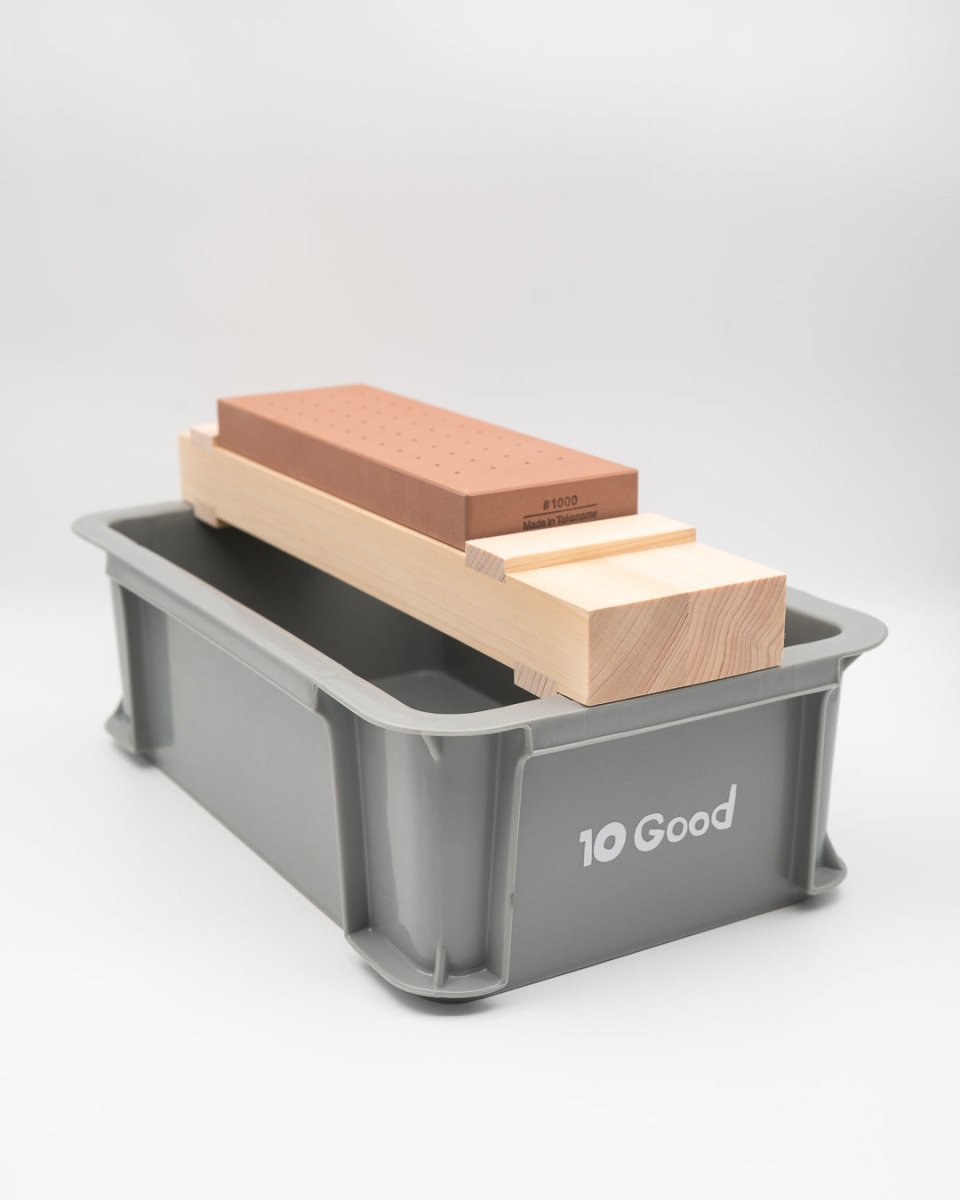
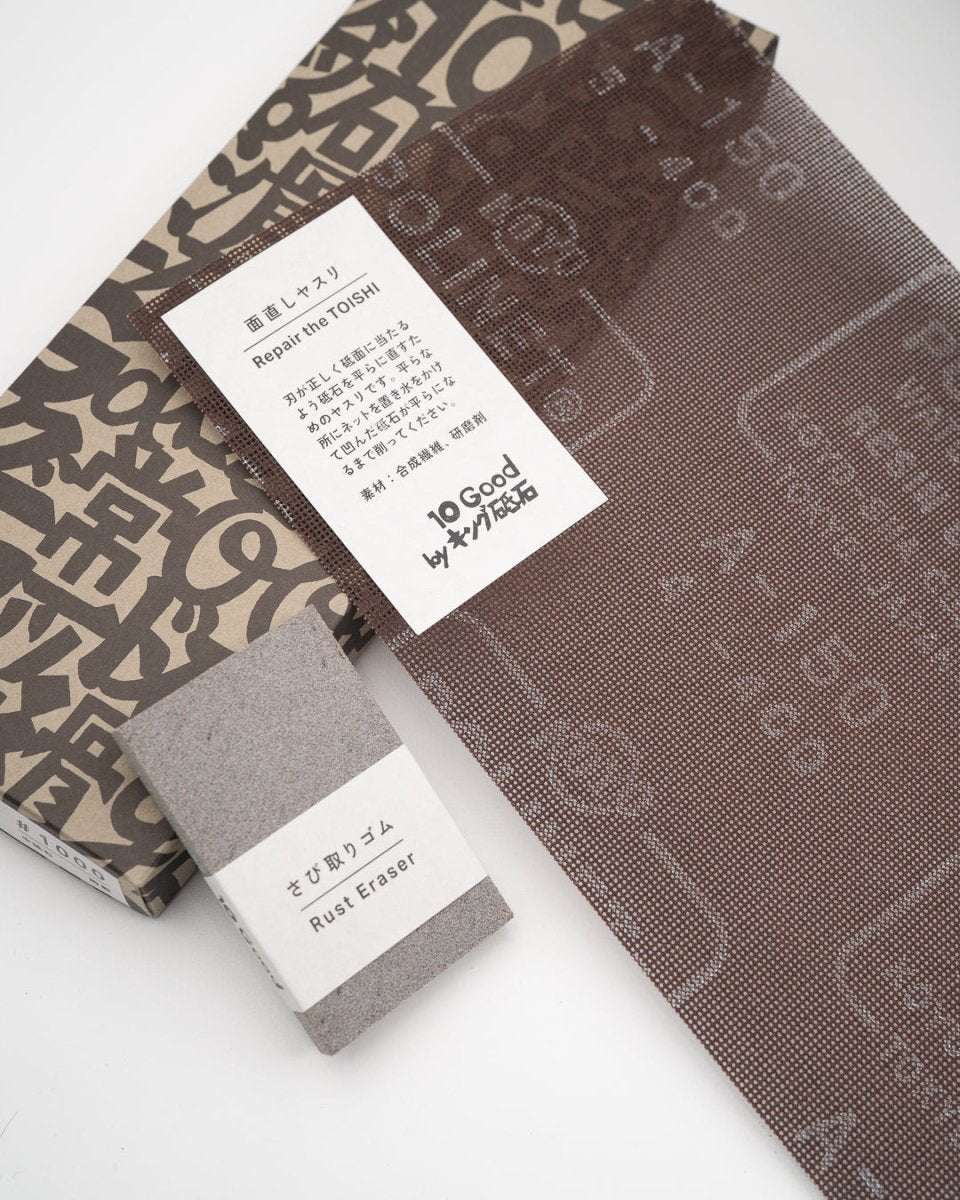
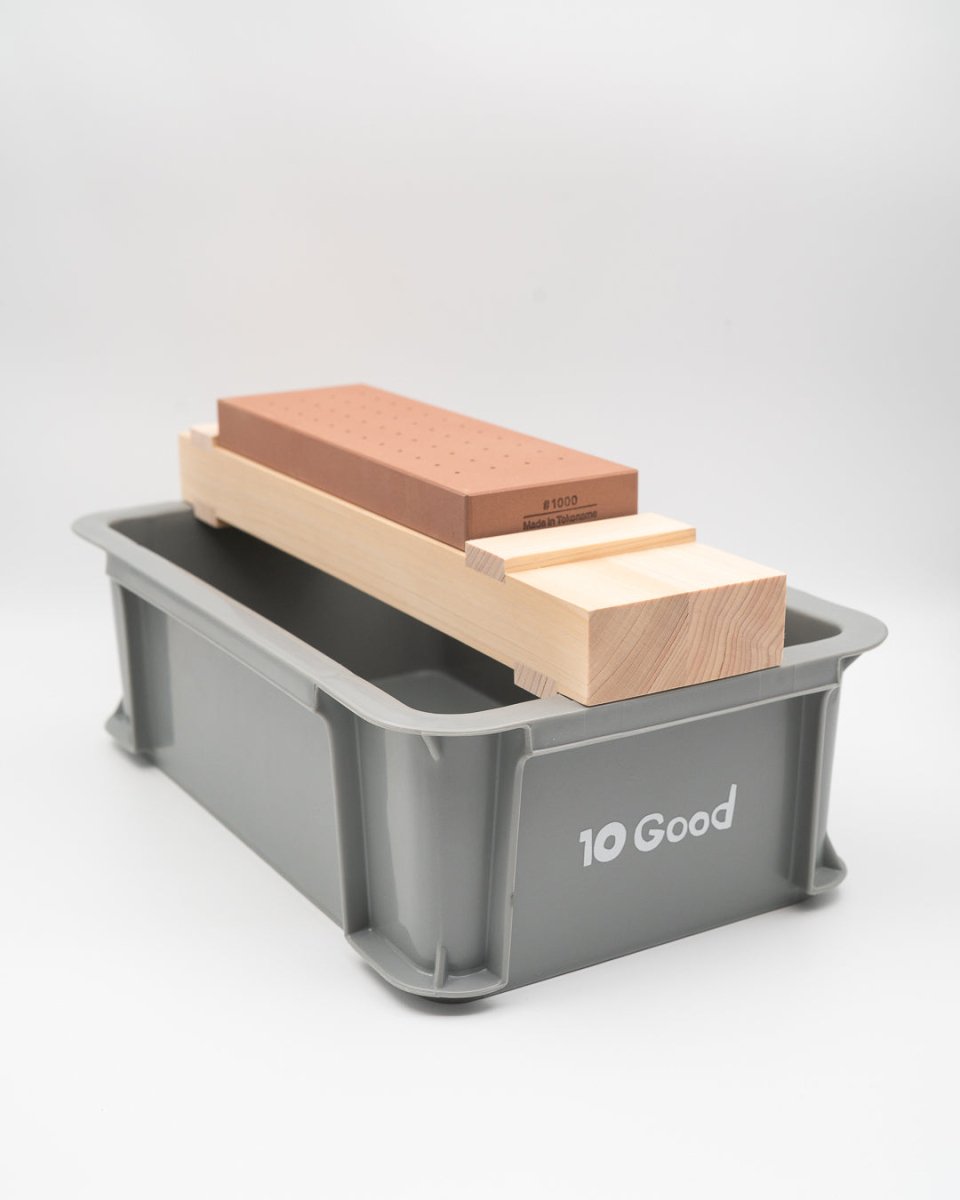
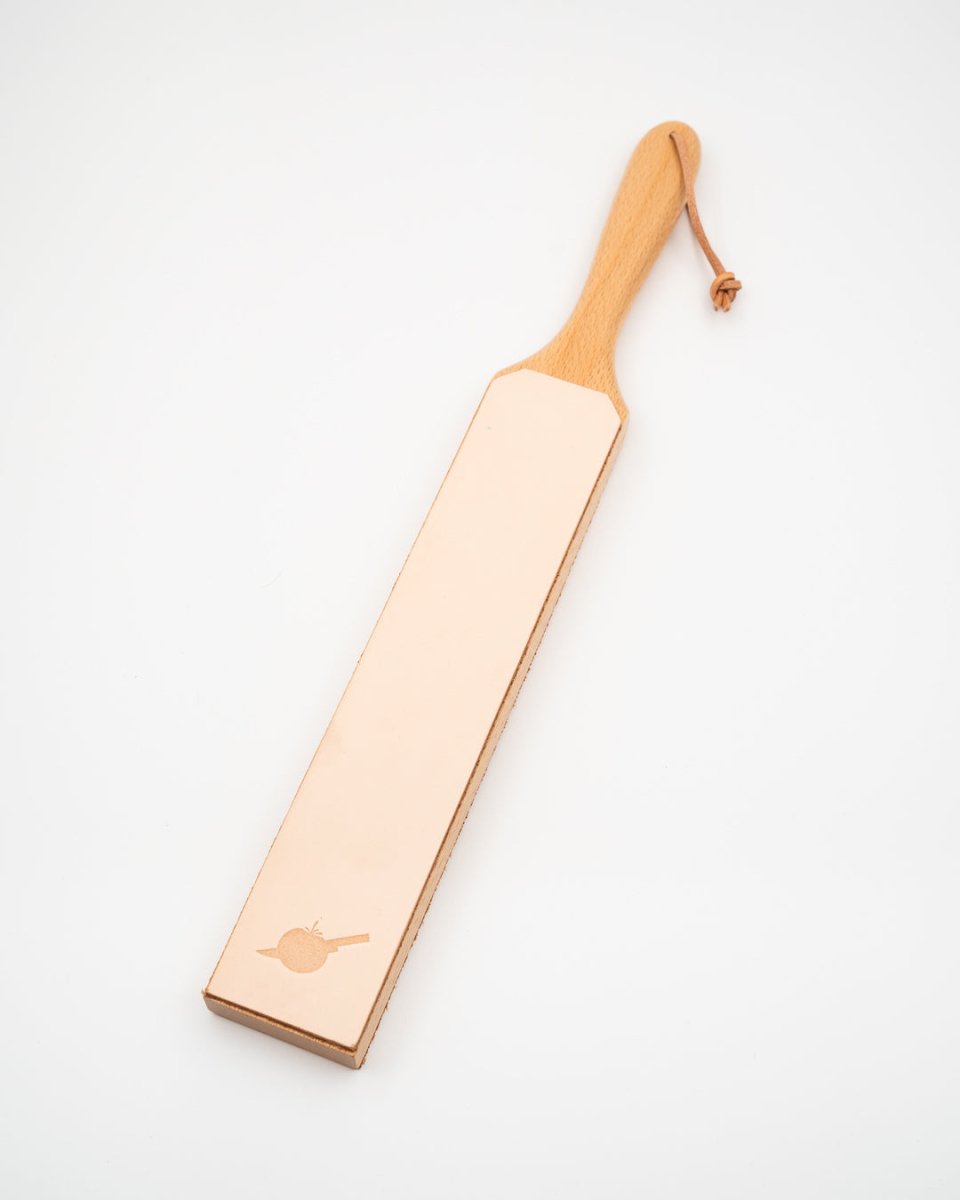
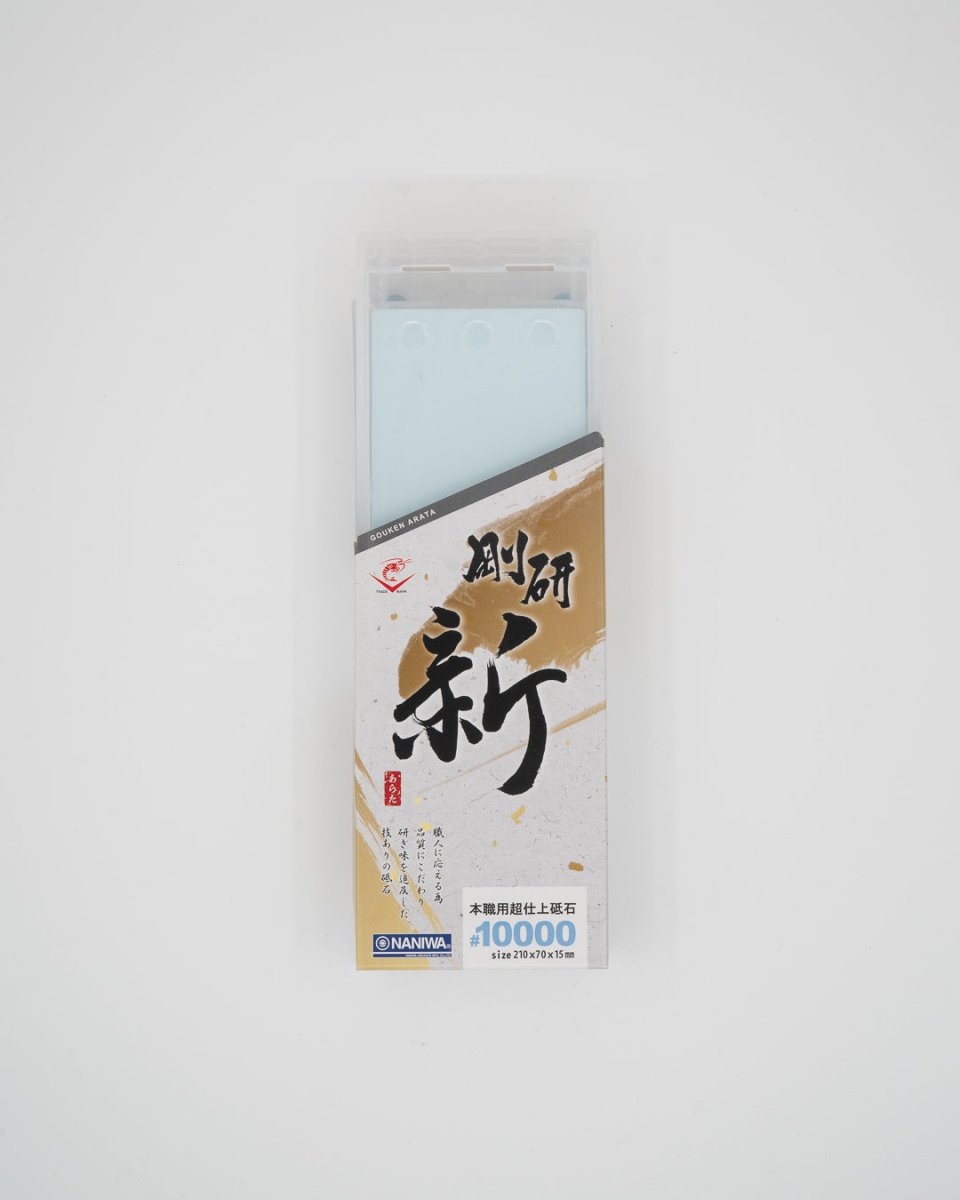
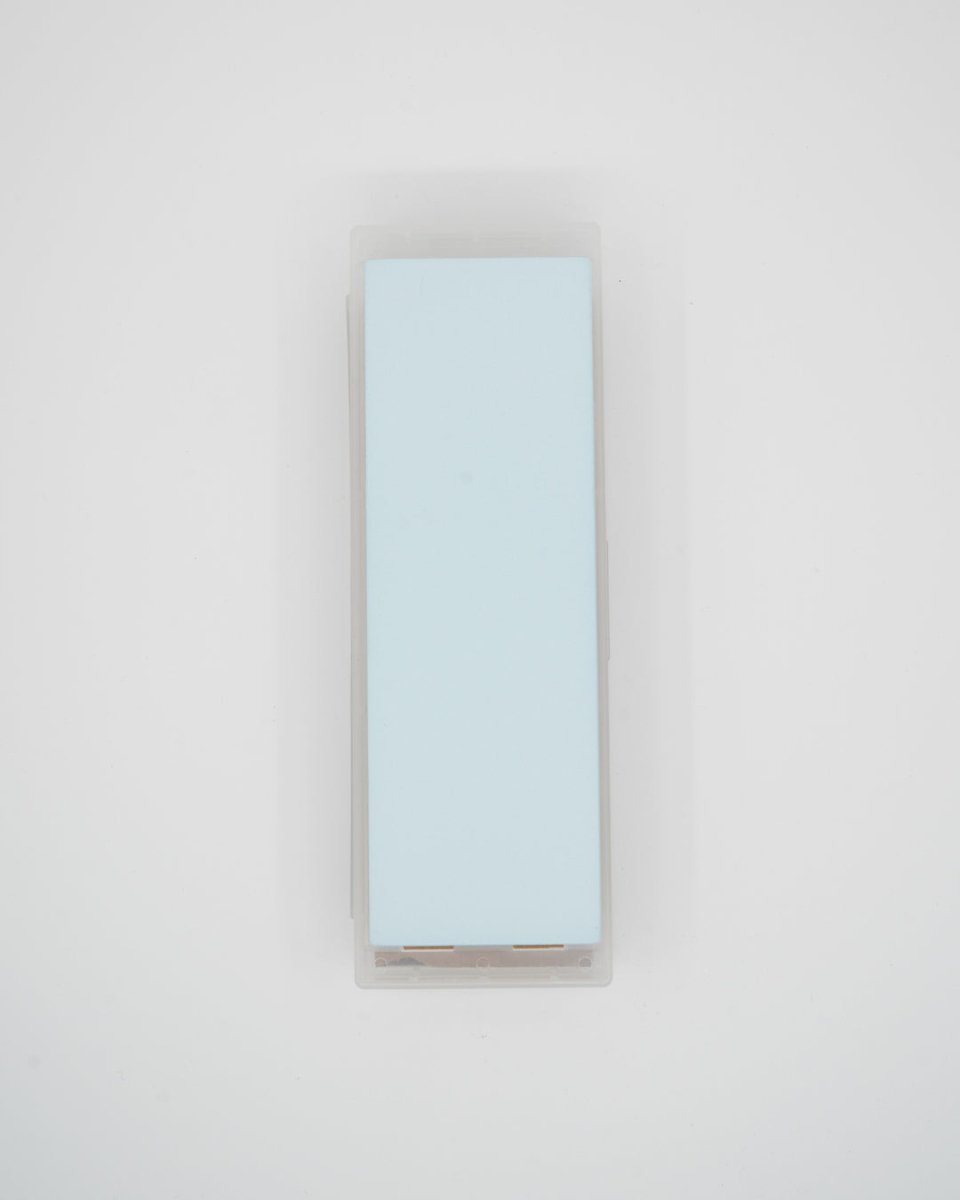


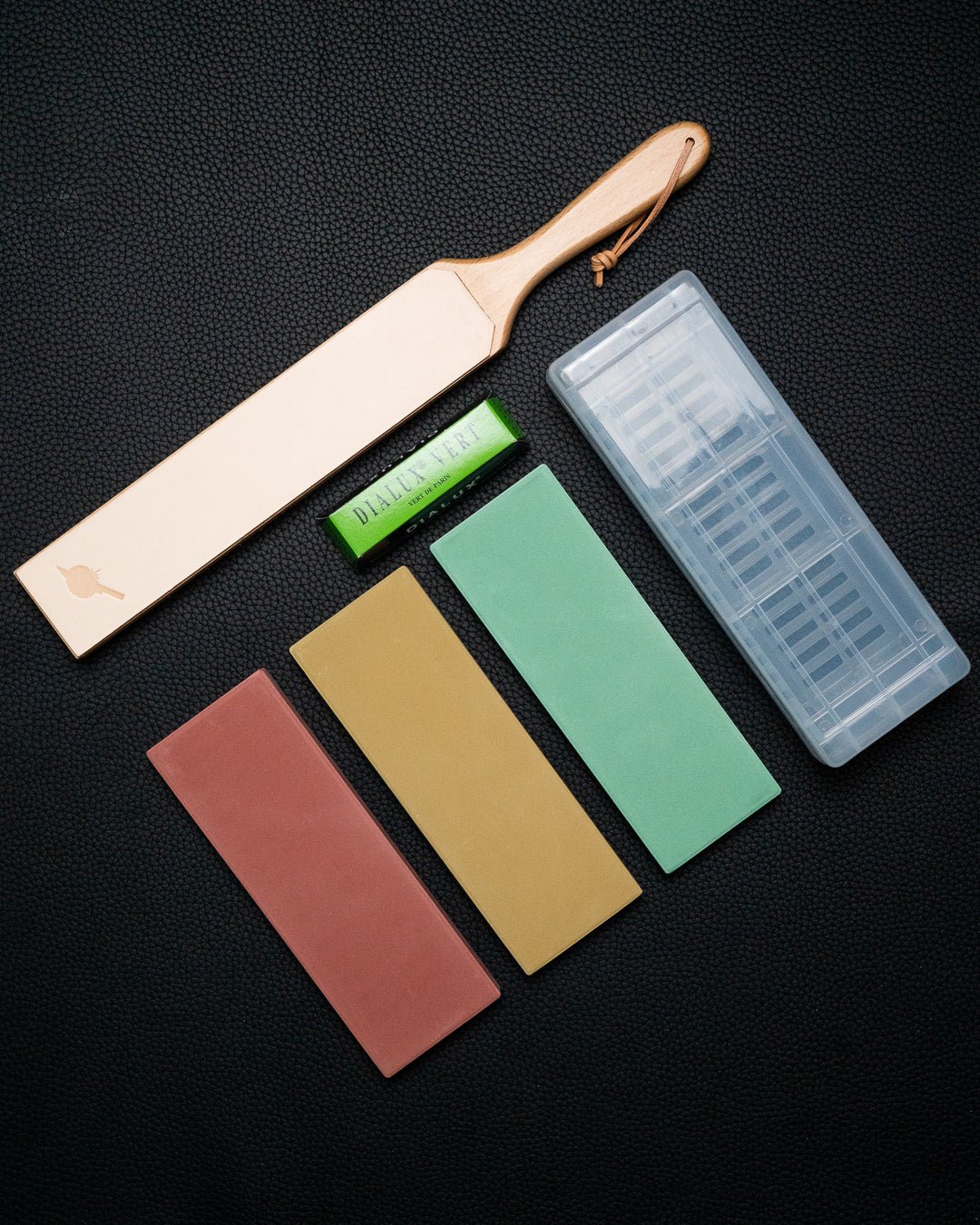
Start with the sharpening kit with a #1000 stone, or take the complete kit with all three stones and a leather strop. The stones are also sold separately: coarse #300, medium #1000 and fine #6000. The flattening plate keeps the stone flat, and the rust eraser comes with the sharpening kit.
The workshop
When you would rather we did it
Lever kniven i Teknostallen og hent den skarp, eller send den per post fra 149 kr per kniv. Alt om sliping, reparasjon og priser står på verkstedsiden.
Knivslipekurset holdes i verkstedet. Ta med egen kniv, eller puss opp en Saisei-kniv.
Questions
Common questions about sharpening at home
#1000. It makes a dull kitchen knife sharp without removing more steel than it has to, and it is the stone in the basic kit. #300 is for chips and knives that have been left for a long time. #6000 gives a finer edge at the end.
With normal home use once or twice a year, more often if you use the knife every day. If it slides on the tomato skin, it is time.
Yes. The stone sharpens stainless steel just as well as carbon steel. The rust eraser also takes marks off stainless.
Small chips can go on the #300 stone, with patience. Larger chips, a broken tip and a crooked edge we handle in the workshop, by hand on a belt, before the edge is set again. Prices are in the price list, and we look at the knife first.