



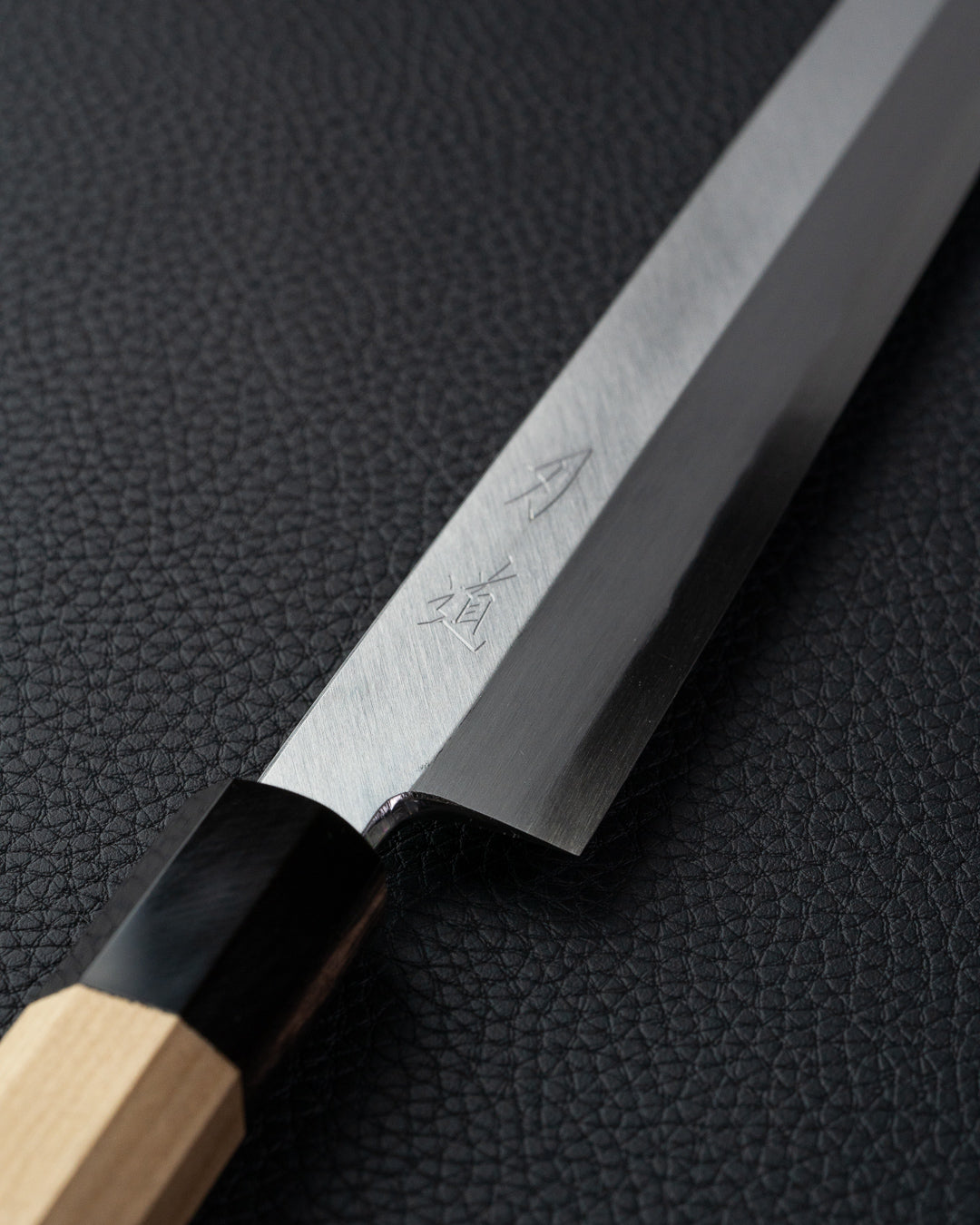
From the specification on the product page
The glossary
Japanese words and trade terms you will meet with us, briefly explained.
Steel
- Aogami
- Blue paper steel. Carbon steel with chromium and tungsten, in grades 1, 2 and Super.
- Shirogami
- White paper steel. A pure carbon steel, in grades 1, 2 and 3.
- Ginsan
- Silver 3. Stainless steel that sharpens almost like carbon steel.
- VG10
- Stainless steel from Takefu Special Steel, made for kitchen knives.
- SG2 and R2
- The same stainless powder steel under two names.
- Powder steel
- Steel made from metal powder pressed together under high pressure. Even and hard, but slower to sharpen.
- Carbon steel
- Steel that is easy to sharpen, but rusts if it is left wet.
- Stainless steel
- Steel with enough chromium that it does not rust in normal use.
- HRC
- Hardness measured on the Rockwell scale. A higher number means harder steel.
- Patina
- A dark, mottled film on carbon steel after use. It protects the steel.
The blade
- San mai
- Three layers: a hard core between two layers of softer steel.
- Hagane
- The hard core steel that forms the edge.
- Jigane
- The softer steel around the core.
- Warikomi
- The soft steel is split, and the core is laid in before they are forged together.
- Honyaki
- A knife from a single piece of steel, hardened hard at the edge and softer at the spine.
- Hamon
- The wavy line between the hard edge and the soft spine on a honyaki.
- Double-bevel, 50/50
- Sharpened on both sides. 50/50 means sharpened equally on both.
- Single-bevel
- Sharpened on one side. The back is flat or slightly hollow, and the knife is made for the right or the left hand.
- Urasuki
- The hollow back of a single-bevel knife.
- Distal taper
- The blade gets thinner from the handle towards the tip.
- Shinogi
- The line on the blade where the angle changes and the bevel begins.
- Choil
- The unsharpened rear part of the blade, by the handle.
- Tang
- The steel that runs from the blade into the handle.
- K-tip
- An angled, dropped tip, as on kiritsuke and bunka.
The surface
- Kurouchi
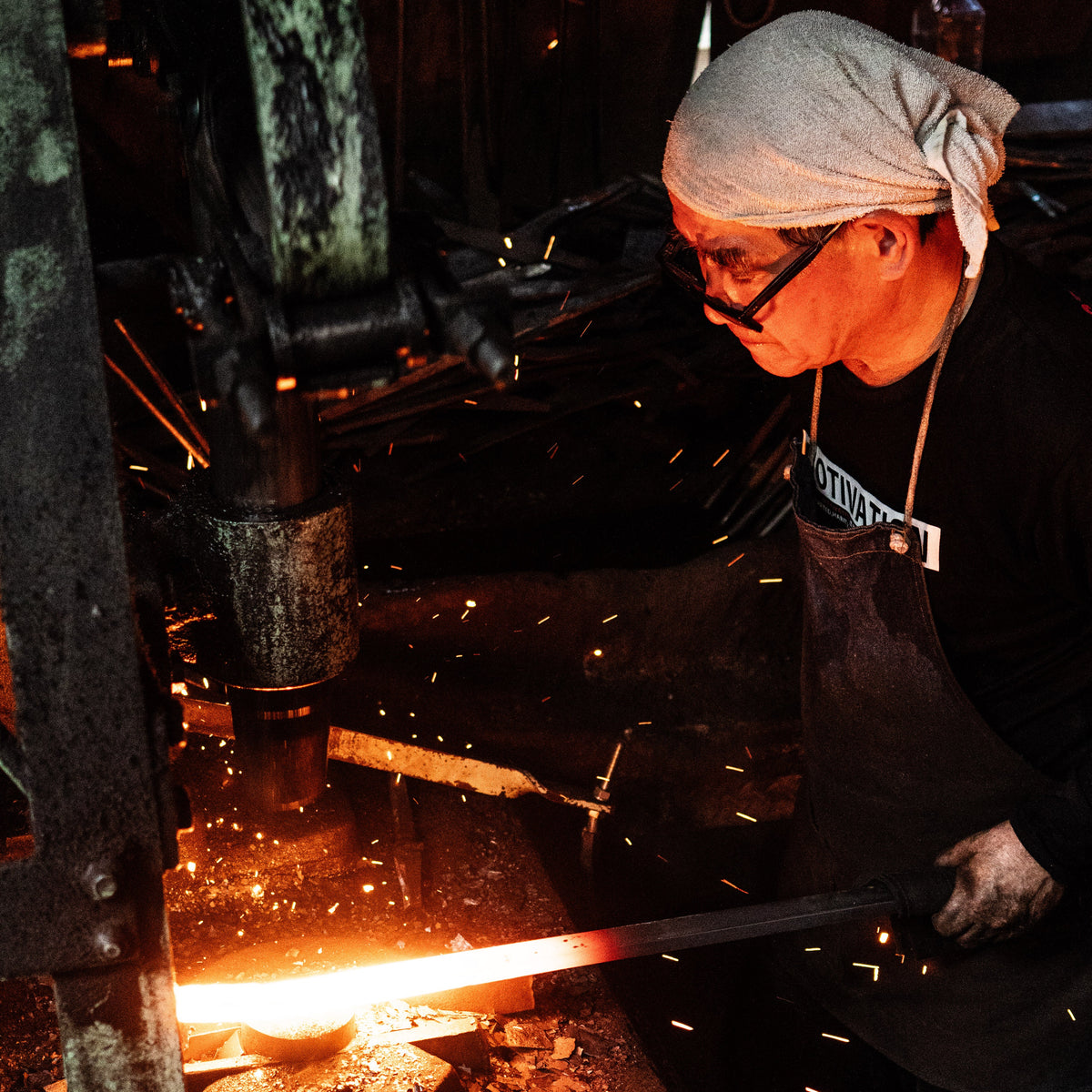
- Black surface. The scale from the forge is left on the blade.
- Nashiji
- A rough surface that looks like the skin of a nashi pear.
- Tsuchime
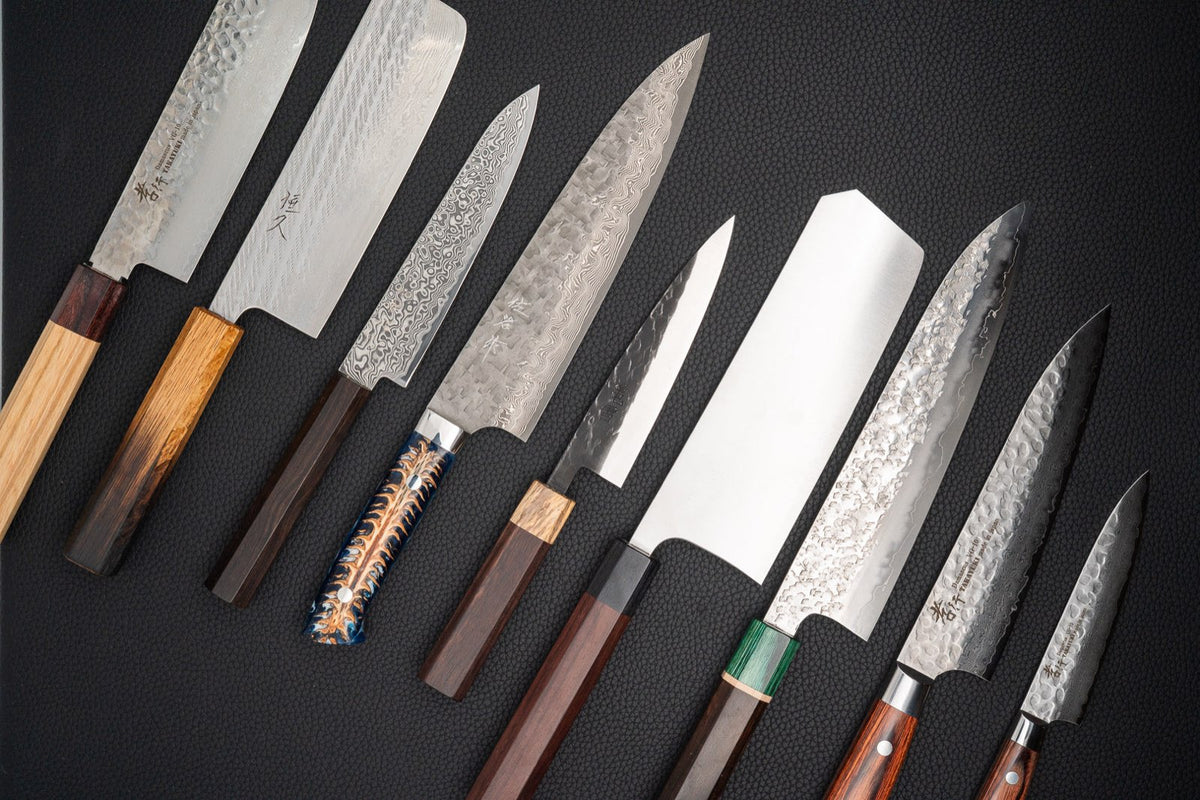
- Hammered surface with small dimples.
- Kasumi
- Mist. A matt, hazy surface.
- Migaki
- Polished, from matt to almost mirror bright.
- Damascus
- Layers of different steels, forged and folded so a pattern forms on the blade.
The knife types
- Gyuto
- Cow sword. The Japanese chef’s knife.
- Santoku
- Three uses. A shorter all-round knife with a flatter edge.
- Bunka
- Culture. An all-round knife with an angled, pointed tip.
- Kiritsuke
- Knife with a k-tip. Traditionally single-bevel, today mostly double-bevel.
- Nakiri
- Vegetable cutter. Double-bevel, with a straight edge.
- Usuba
- Thin blade. Single-bevel vegetable knife.
- Petty
- A small knife used alongside the main knife.
- Sujihiki
- A long, double-bevel knife for meat and fish.
- Yanagiba
- Willow leaf. A long, single-bevel knife for sashimi.
- Deba
- A heavy fish knife, usually single-bevel.
- Honesuki
- A small, stiff boning knife for poultry.
- Funayuki
- Boat knife for fishermen, common in Tosa.
The handle
- Wa handle
- Japanese wooden handle. Light, and easy to replace.
- Yo handle
- Western handle, with two scales riveted to the tang.
- Ferrule
- The ring closest to the blade on a wa handle, often in horn or dark wood.
- Pakkawood
- Veneer pressed together with resin. Tolerates water and needs little care.
- Saya
- Wooden blade cover.
Sharpening and the workshop
- Burr
- The thin edge that folds over to the other side when you have sharpened all the way out to the edge.
- Grit
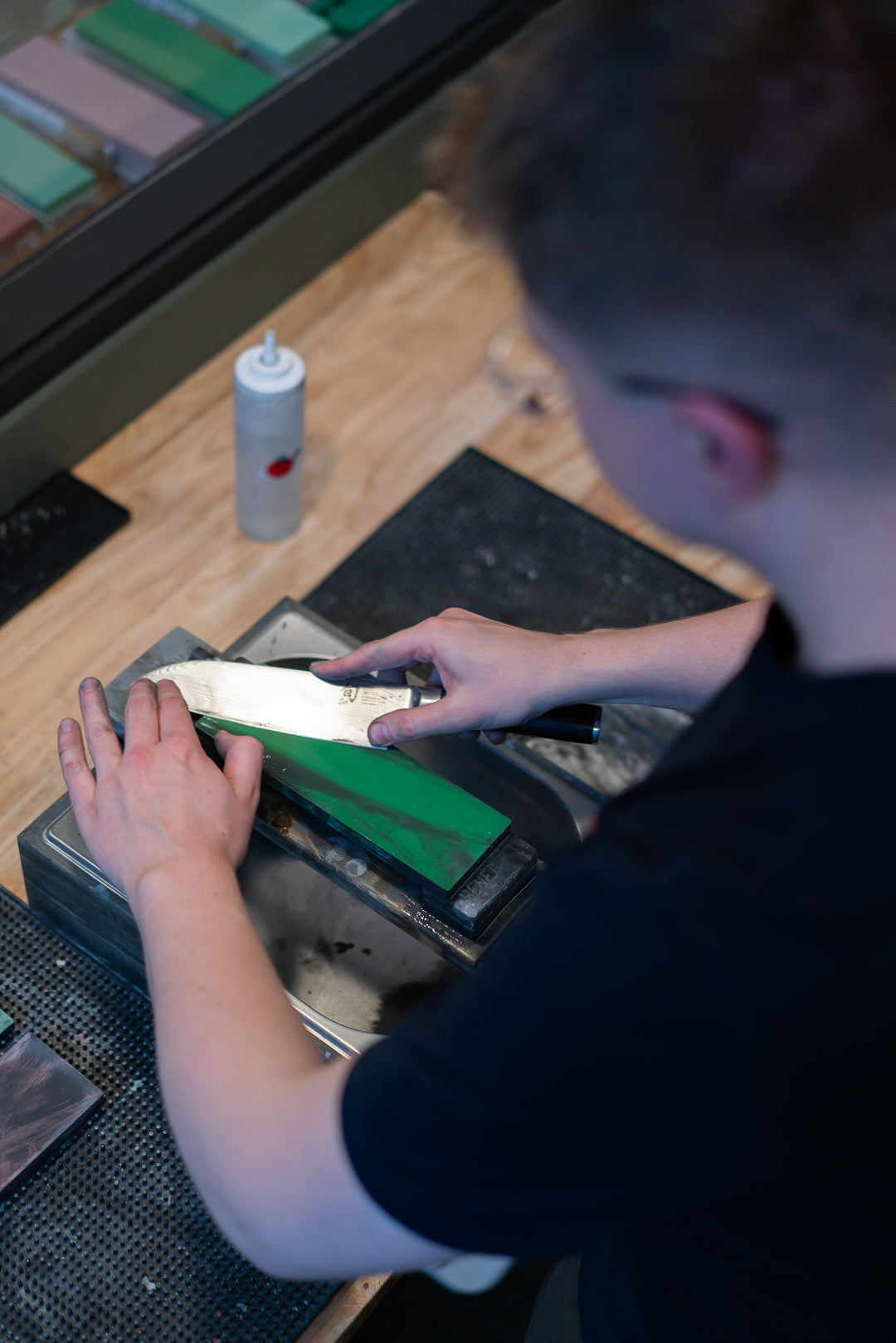
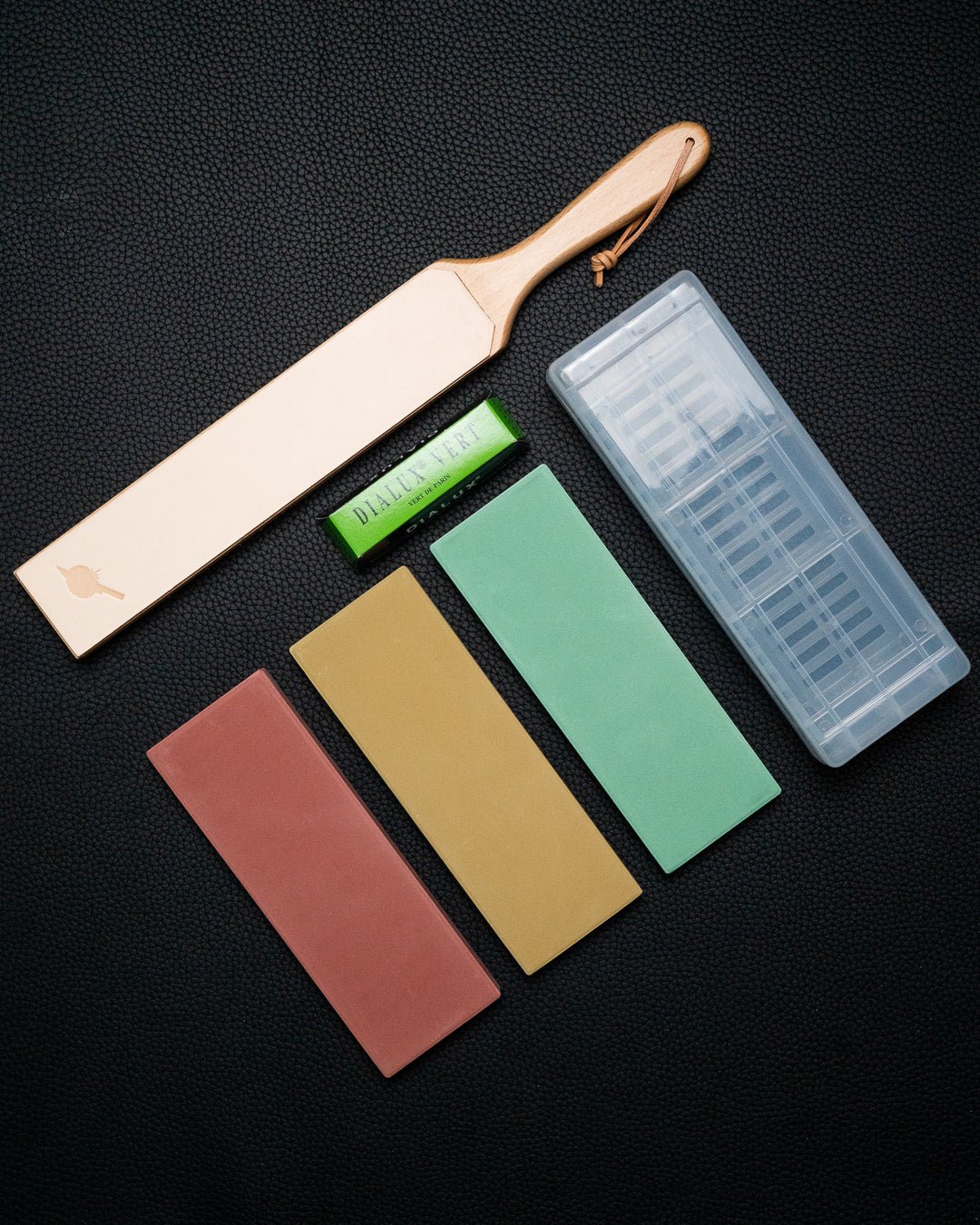
- The number on the whetstone. A higher number is finer.
- Nagura
- A small stone that raises slurry on the whetstone.
- Strop
- A leather strap that straightens and polishes the edge without removing steel.
- Thinning
- The blade is ground thinner behind the edge once the core has worn down.
- Tennen toishi
- Natural whetstone.
- Hamono
- Edged tools. Part of the name of many knife workshops.
- Tonya
- Wholesaler. In Sakai the wholesaler orders the knives and fits the handles.
- Dentoukougeishi
- Official title for a traditional master craftsman.