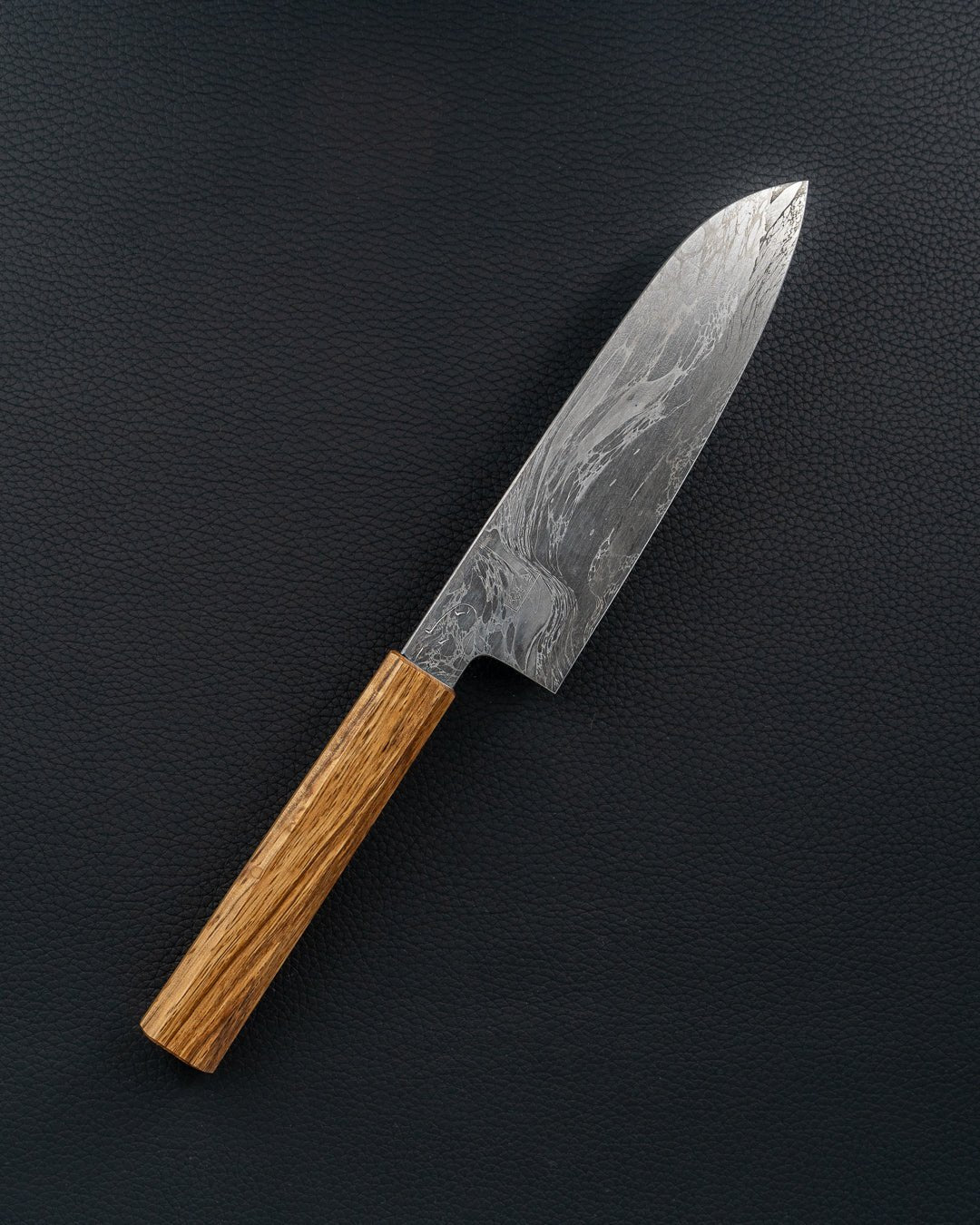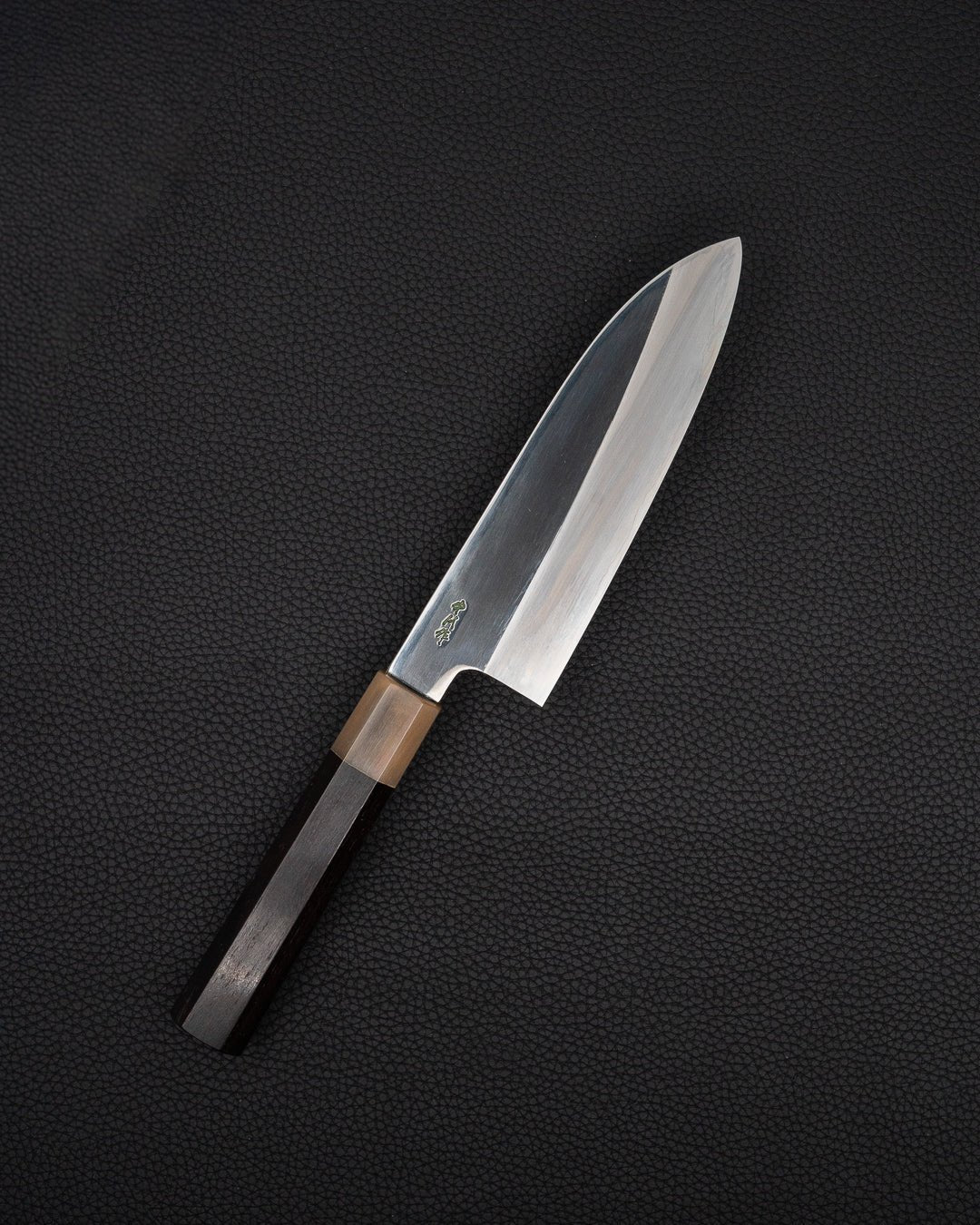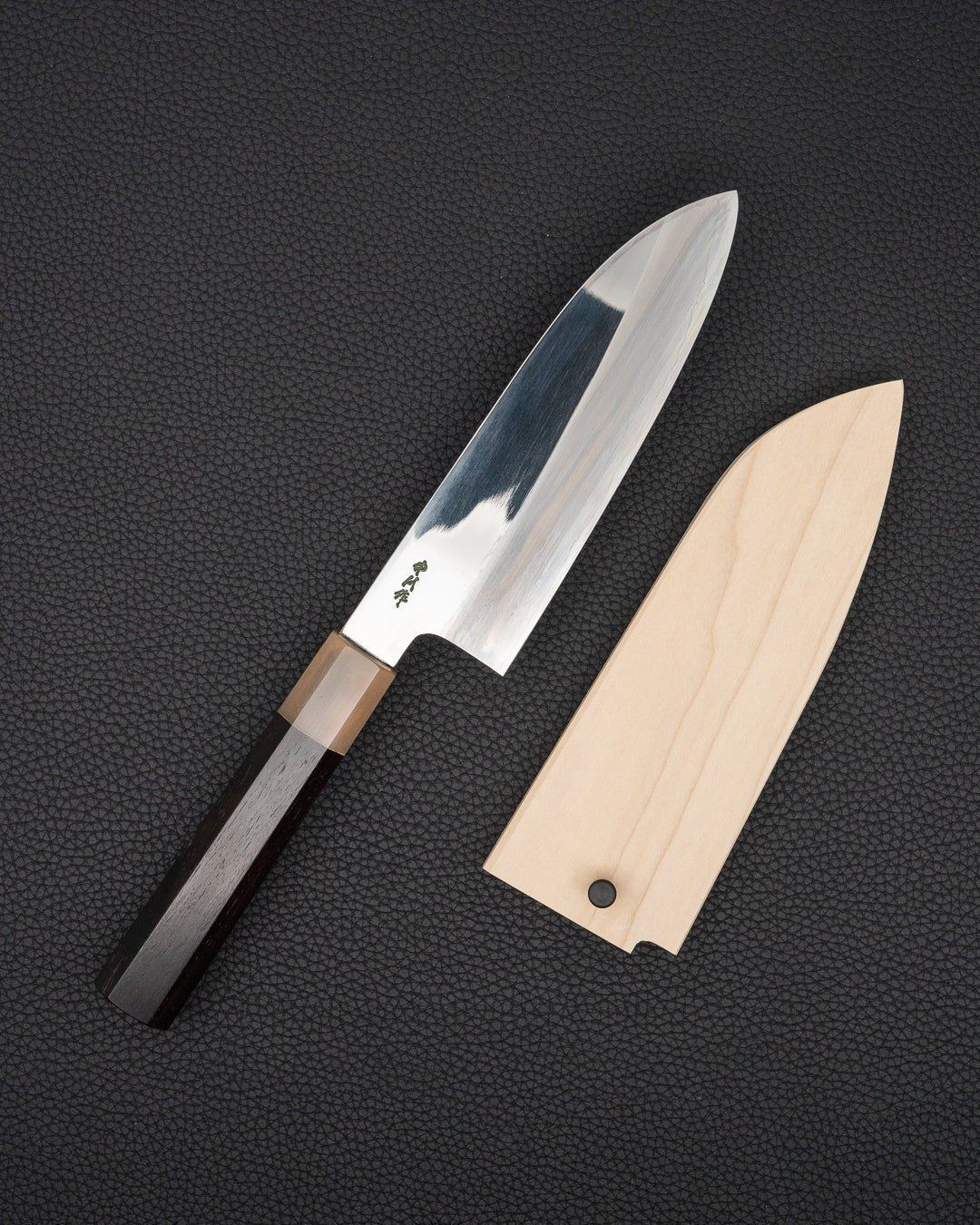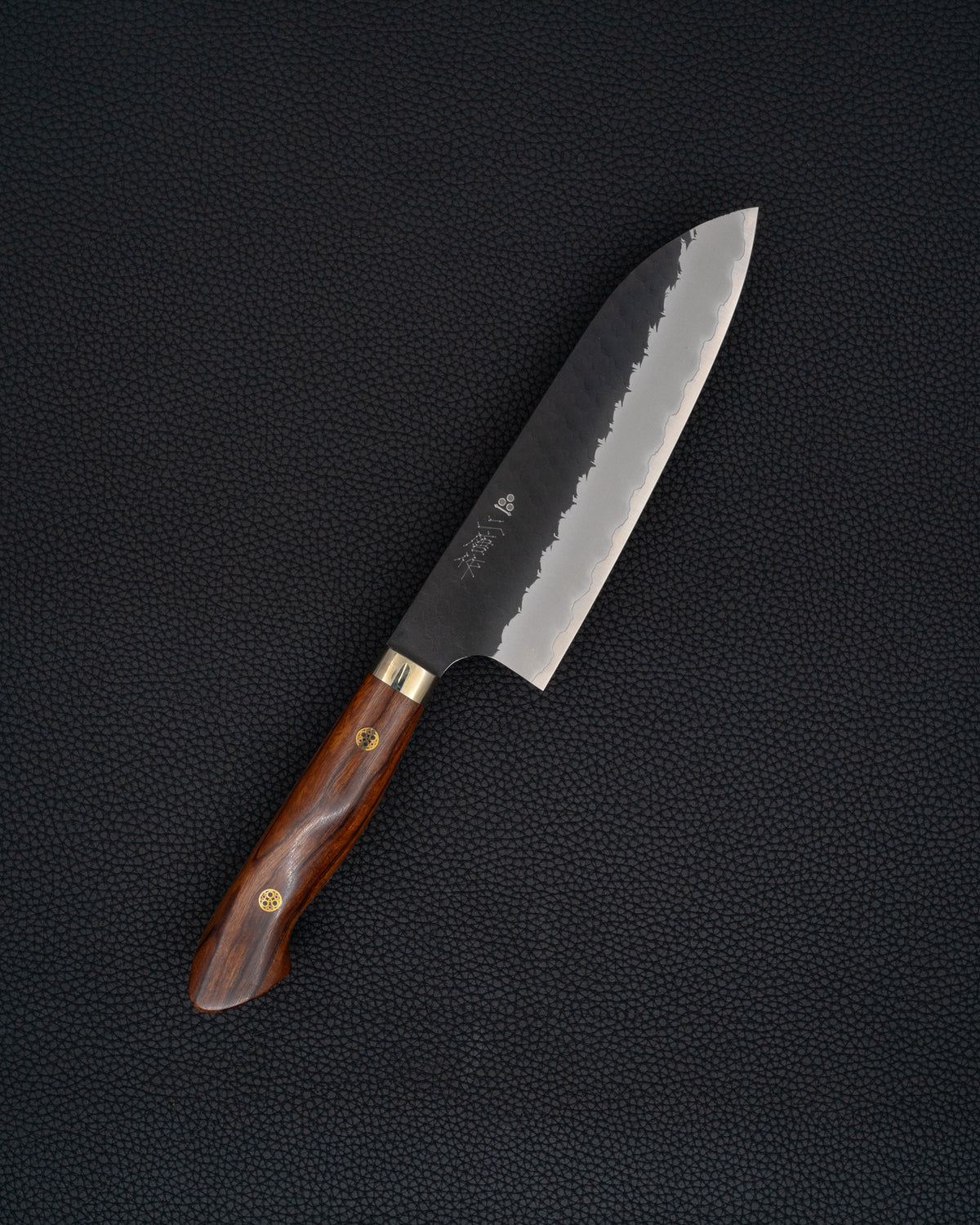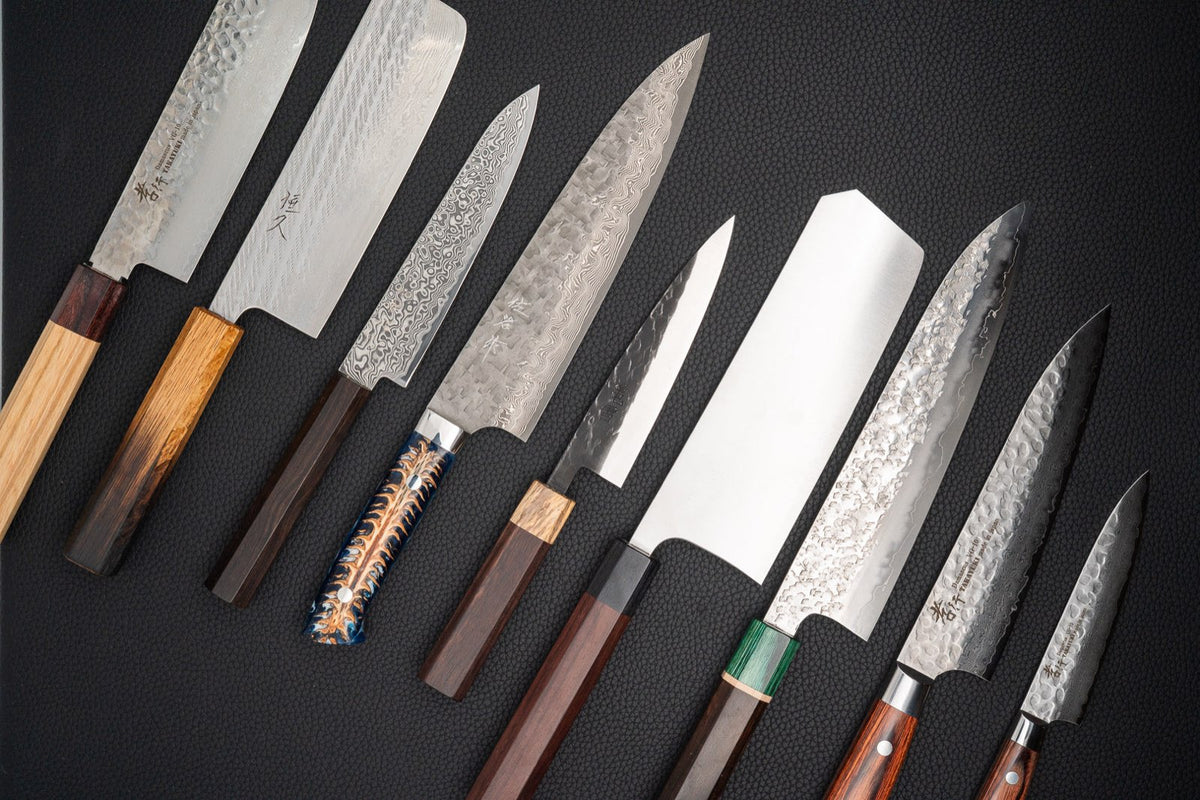



Santoku 165 mm, SHIGEKI TANAKA SG2 Damascus Ironwood Santoku
For those who want a shorter knife than a gyuto for everyday cooking.
You have another variant of this item in your wishlist.
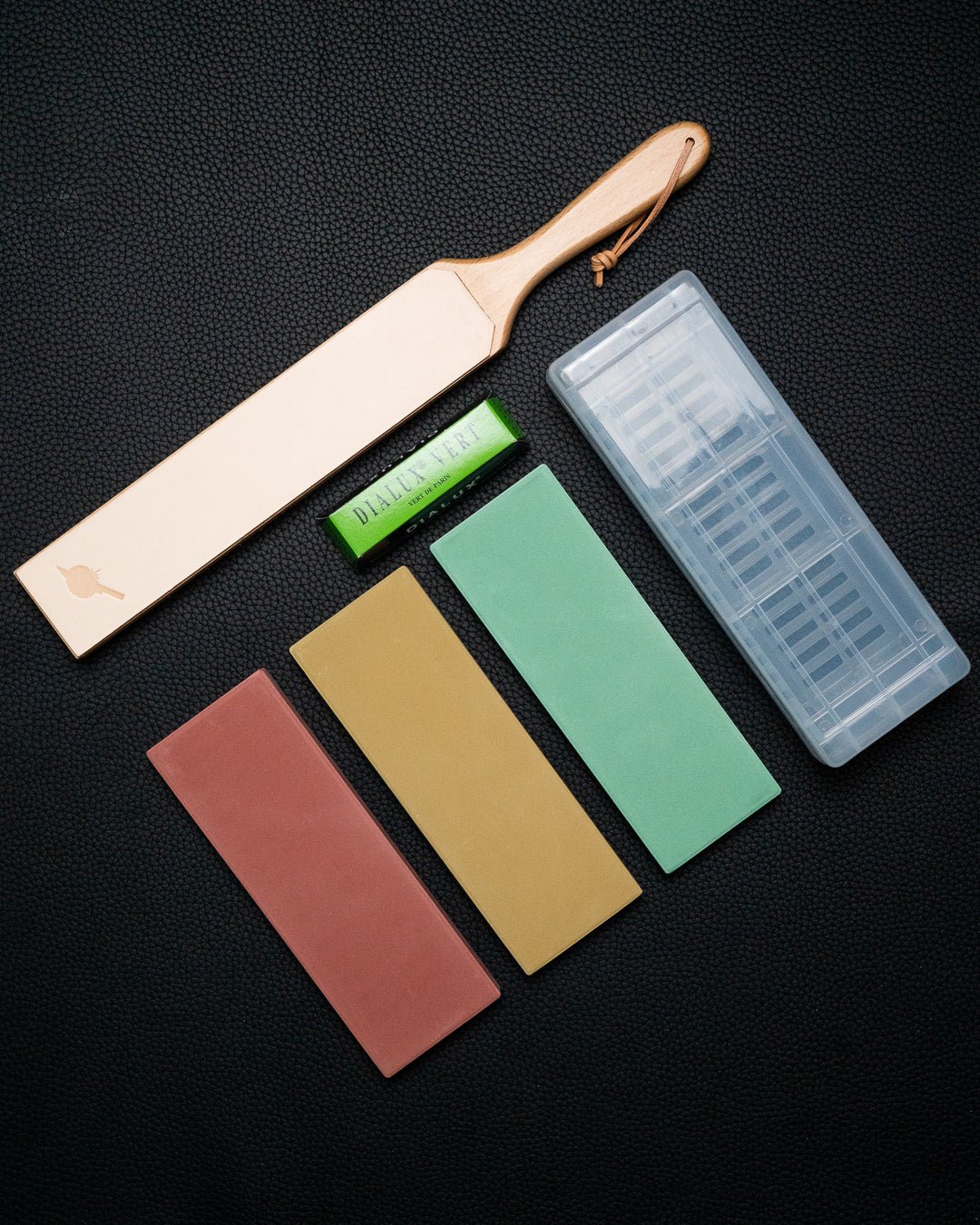
Goes with the knife
Choose options
You have another variant of this item in your wishlist.
Description
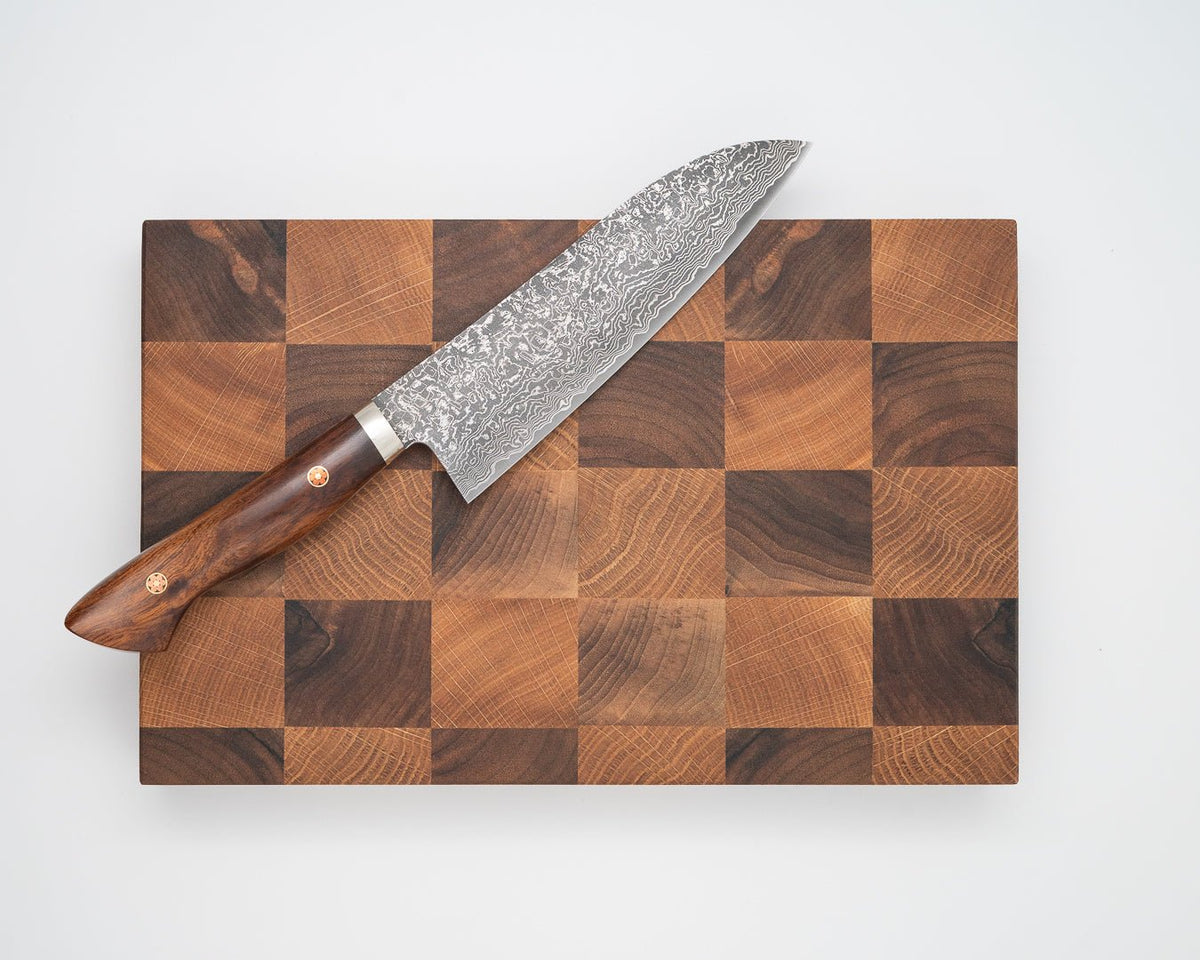
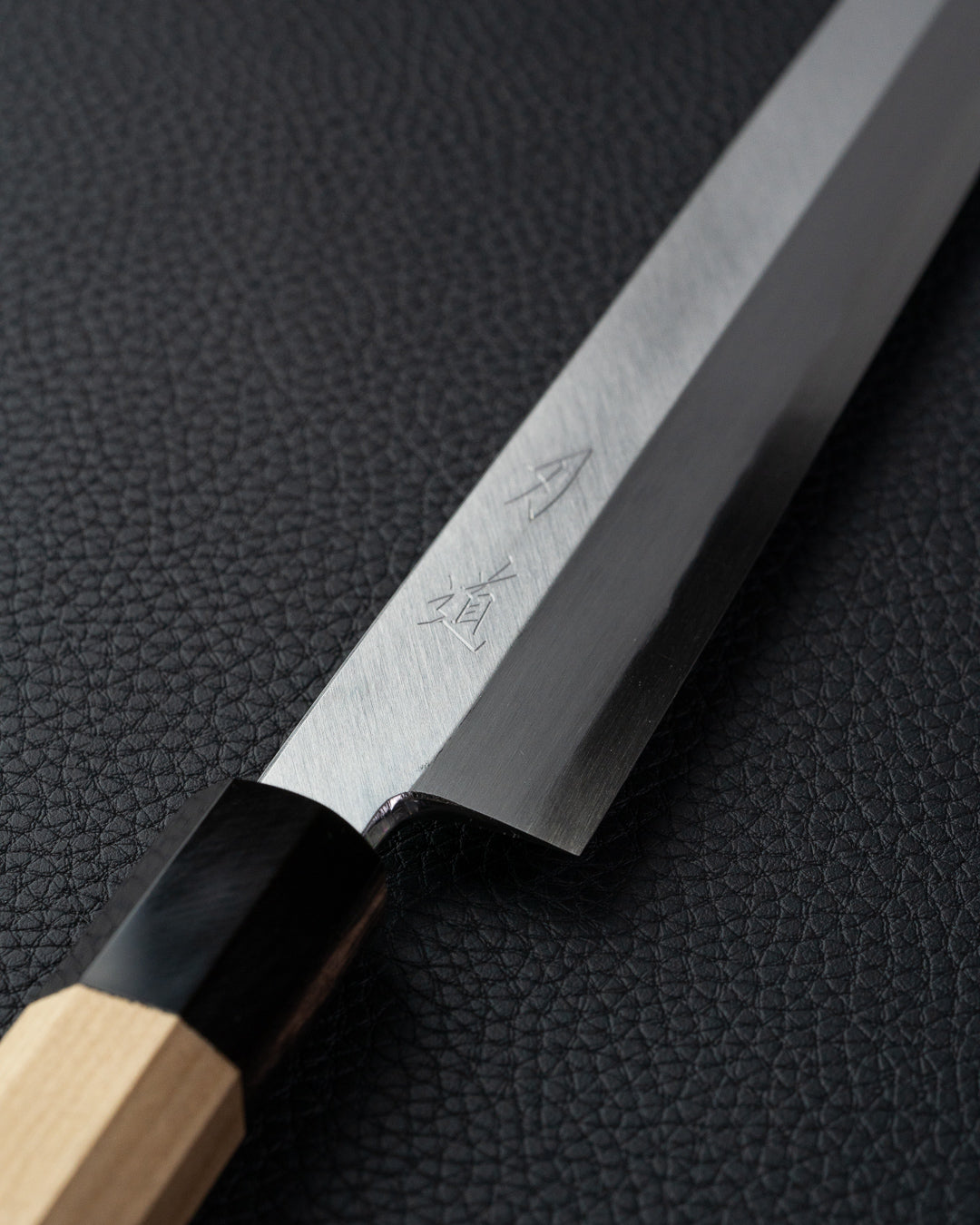
Santoku of 165 mm from Shigeki Tanaka in Miki. The santoku suits you if you want a shorter knife than a gyuto for everyday cooking.
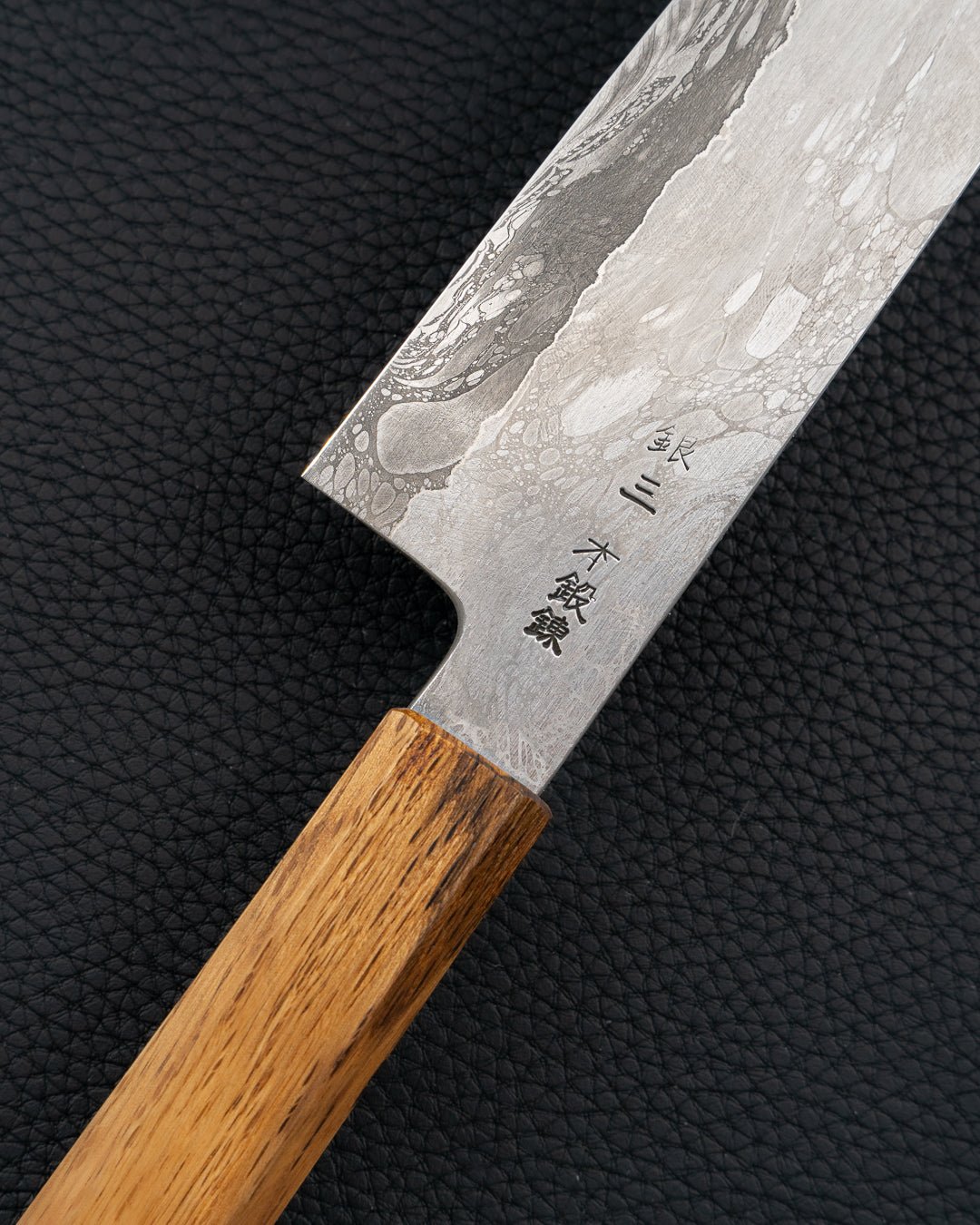
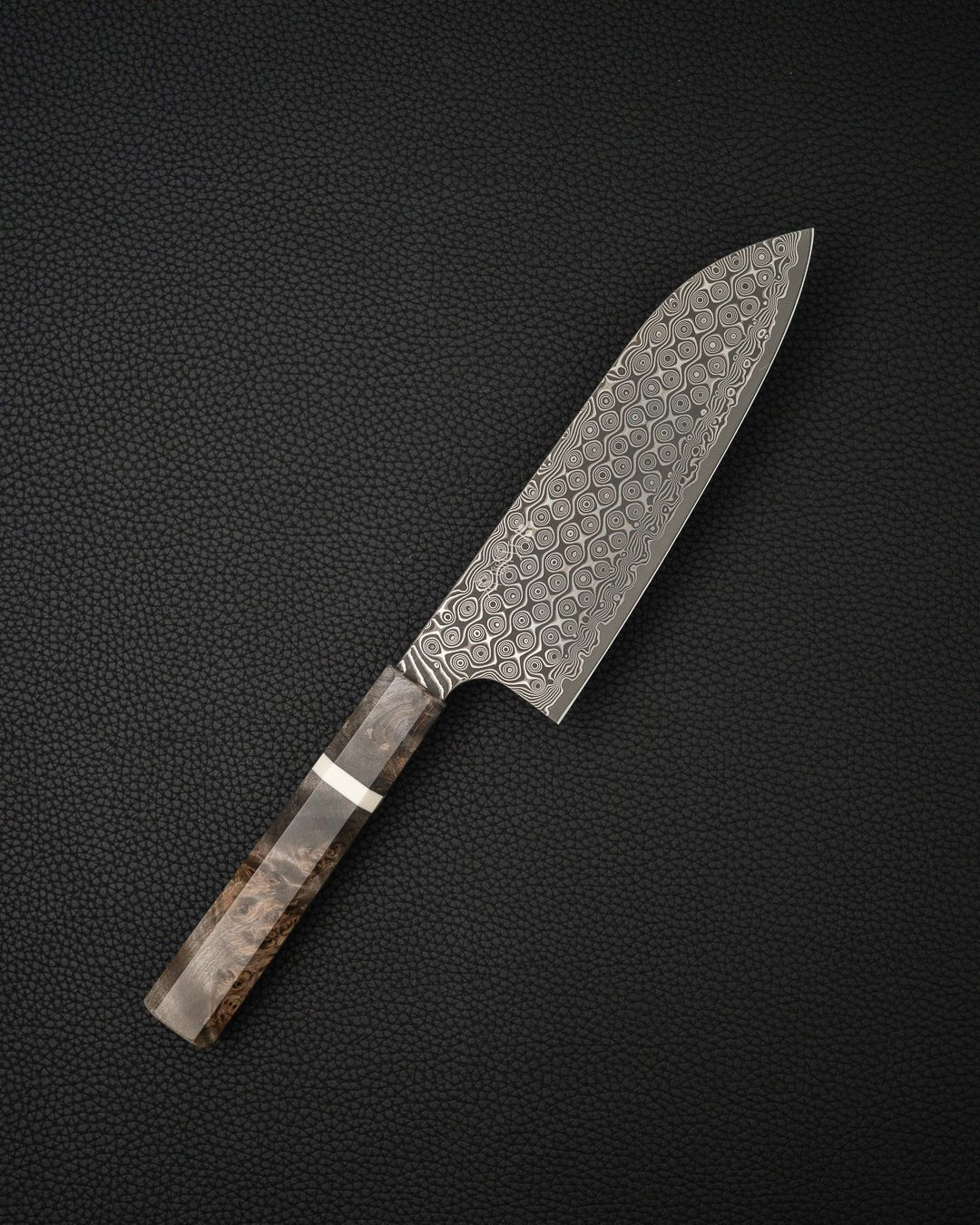
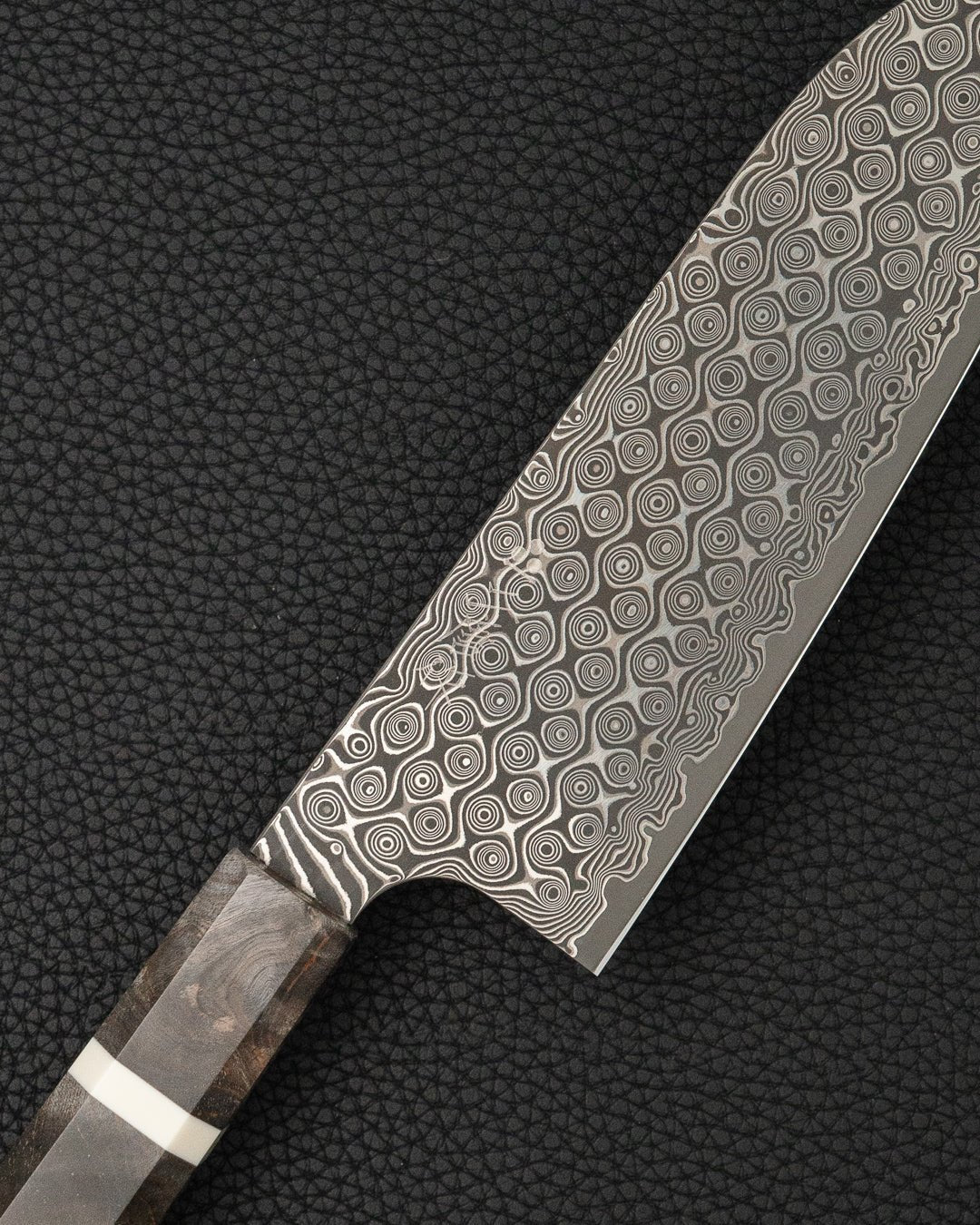
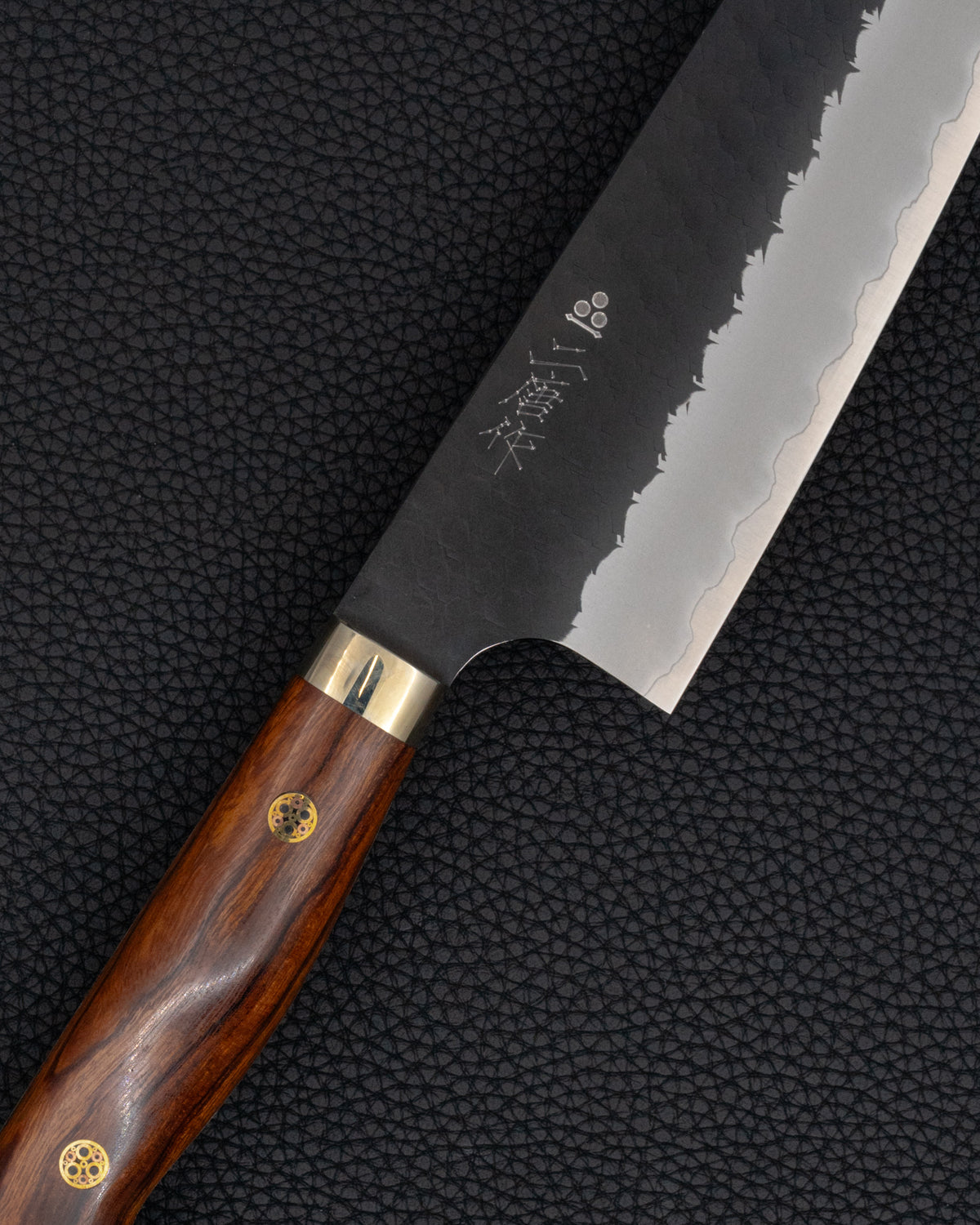
The blade is SG2 (R2), a stainless powder steel, with a Damascus pattern. The handle is Western (yo) in ironwood, desert ironwood. The edge is sharpened 50/50.
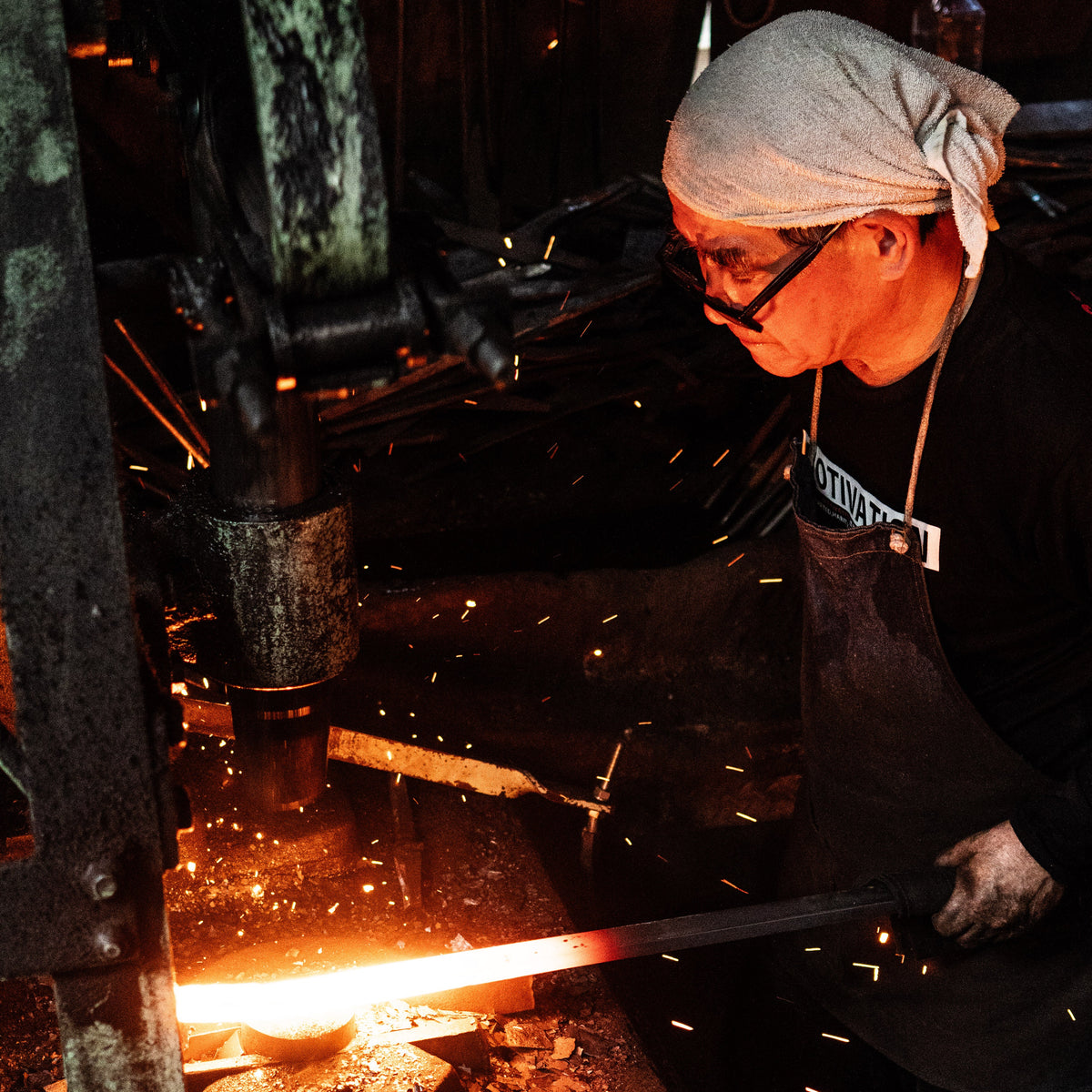
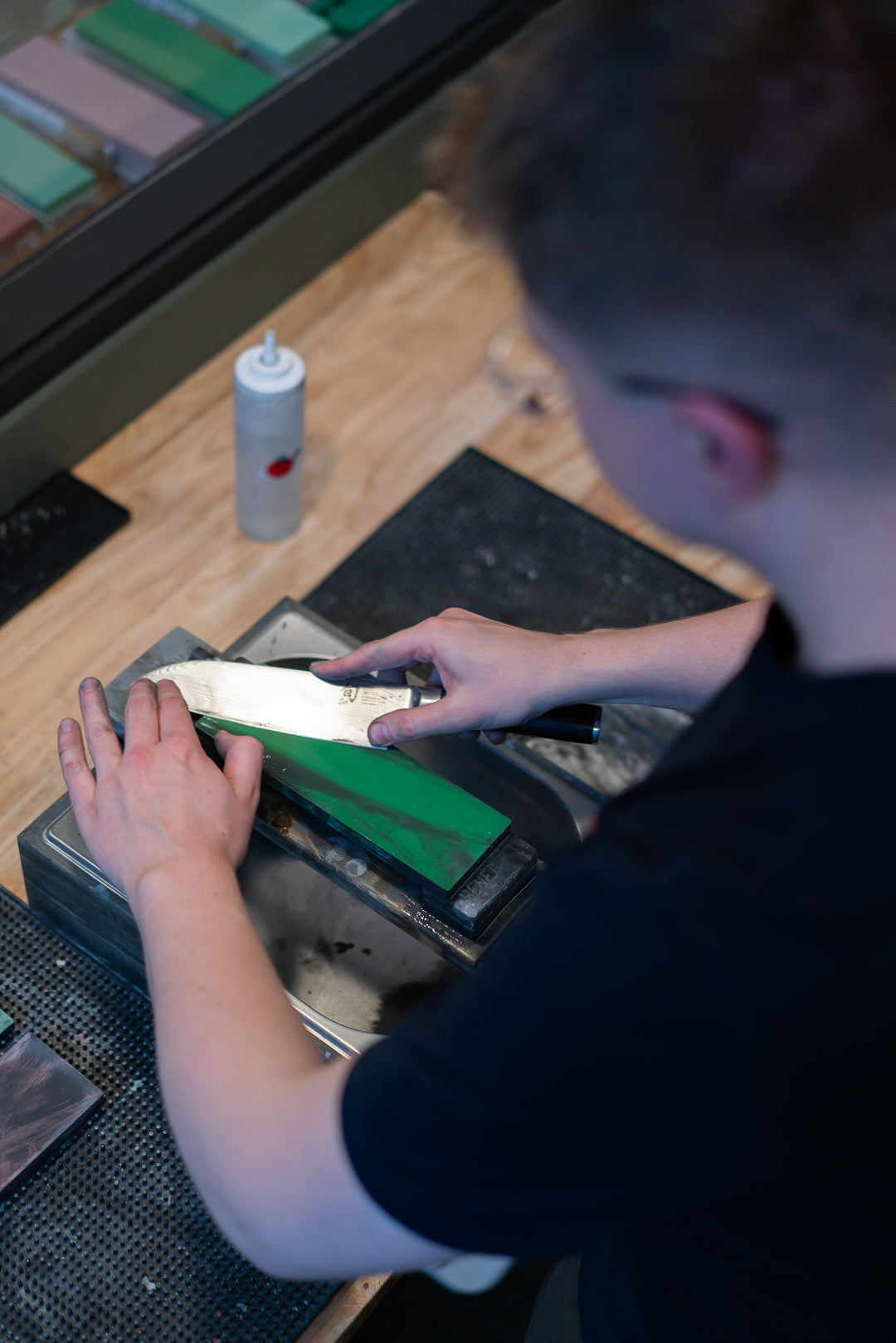
SG2 is easy to care for: wash by hand and wipe dry. Tanaka learned the trade at Takefu Knife Village before starting his own forge. We sharpen it in the workshop when it needs it.
Shigeki Tanaka · Miki, Hyogo‑prefekturet

Shigeki Tanaka is a Japanese knife maker from Miki in Hyogo Prefecture who makes hand-forged kitchen knives in the traditional way.
All knives from Shigeki TanakaSpecifications
- Knife type
- Santoku (chef's knife)
- Region
- Miki, Hyogo
- Steel
- R2/SG2, powder steel (hsps)
- Blade length
- 165 mm
- Handle
- Ironwood (desert ironwood)
- Edge
- 50/50
- Right-/left-handed
- Both
- Item number (SKU)
- SHTA-SG2-IRONWOOD-165S
- Weight
- 195 g
About the knife type: Santoku (chef's knife)
Santoku is a Japanese all-purpose knife. The name means 'three uses': meat, fish and vegetables.
The blade is slightly wider than on a gyuto or a Western chef's knife, so there is room for large vegetables. The tip gives the edge a larger contact surface, and the knife cuts well with a push cut.
About the steel: R2/SG2
Care and maintenance
Wash by hand in warm water, and dry it straight away.
Never the dishwasher. Use a cutting board of wood or plastic, not glass or stone.
Similar knives