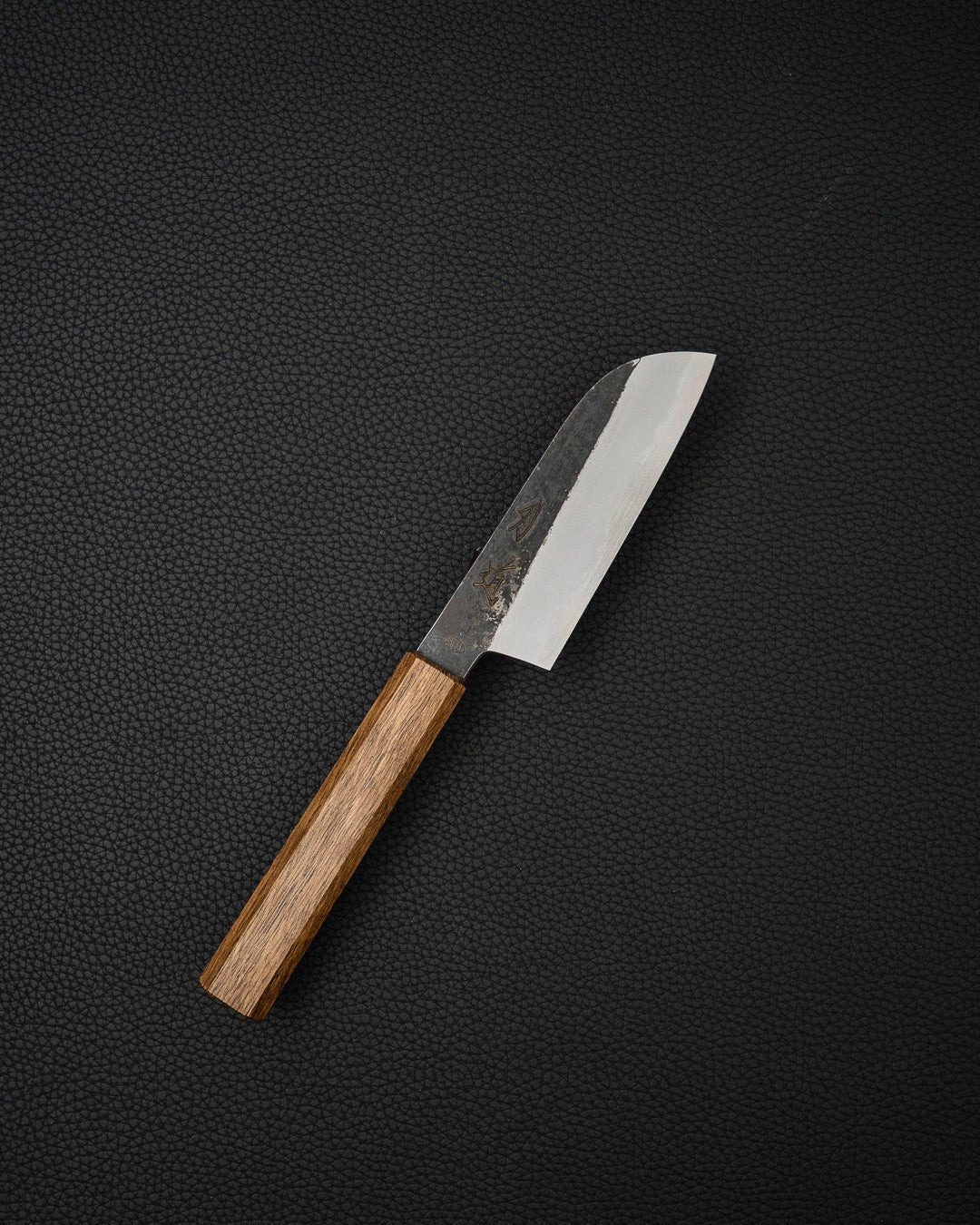

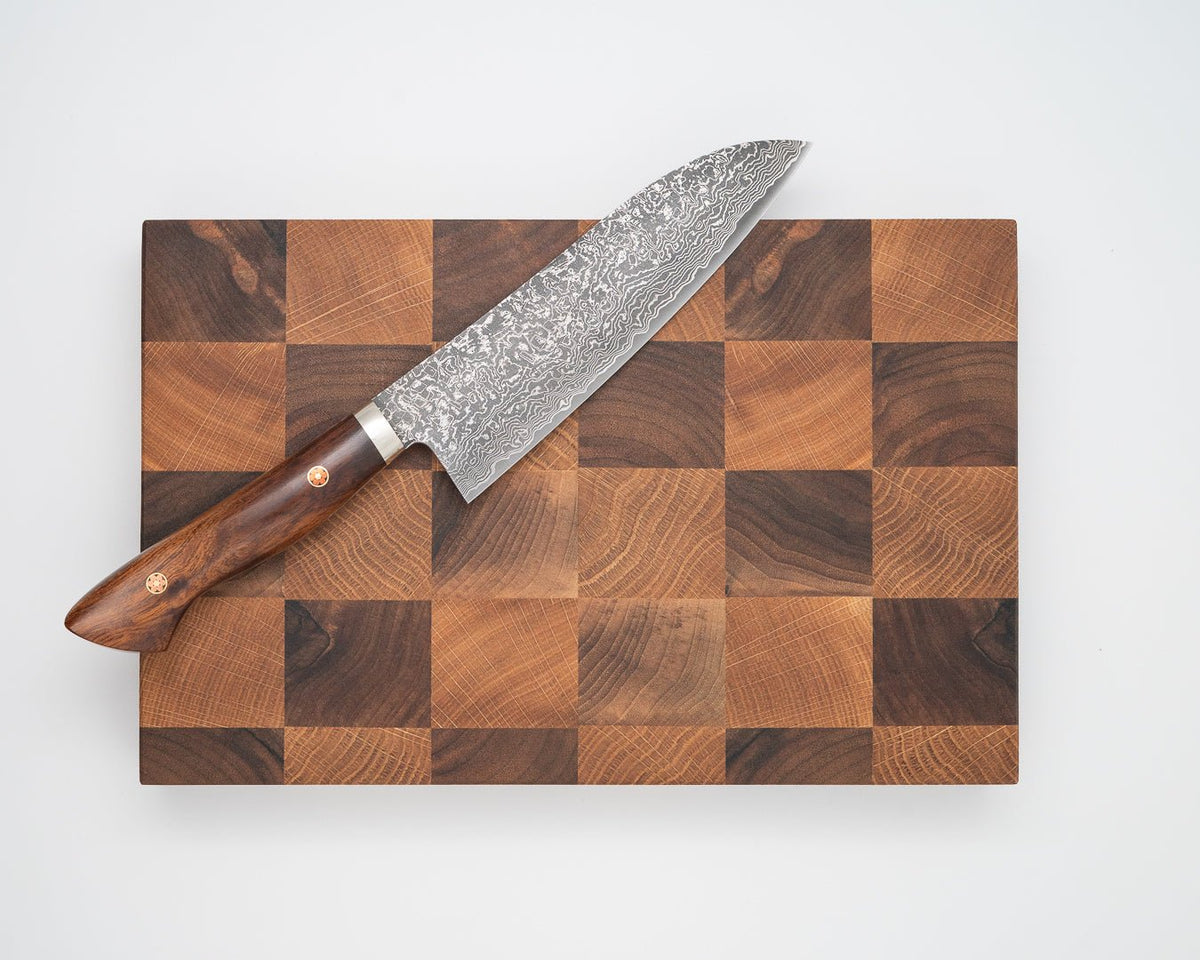

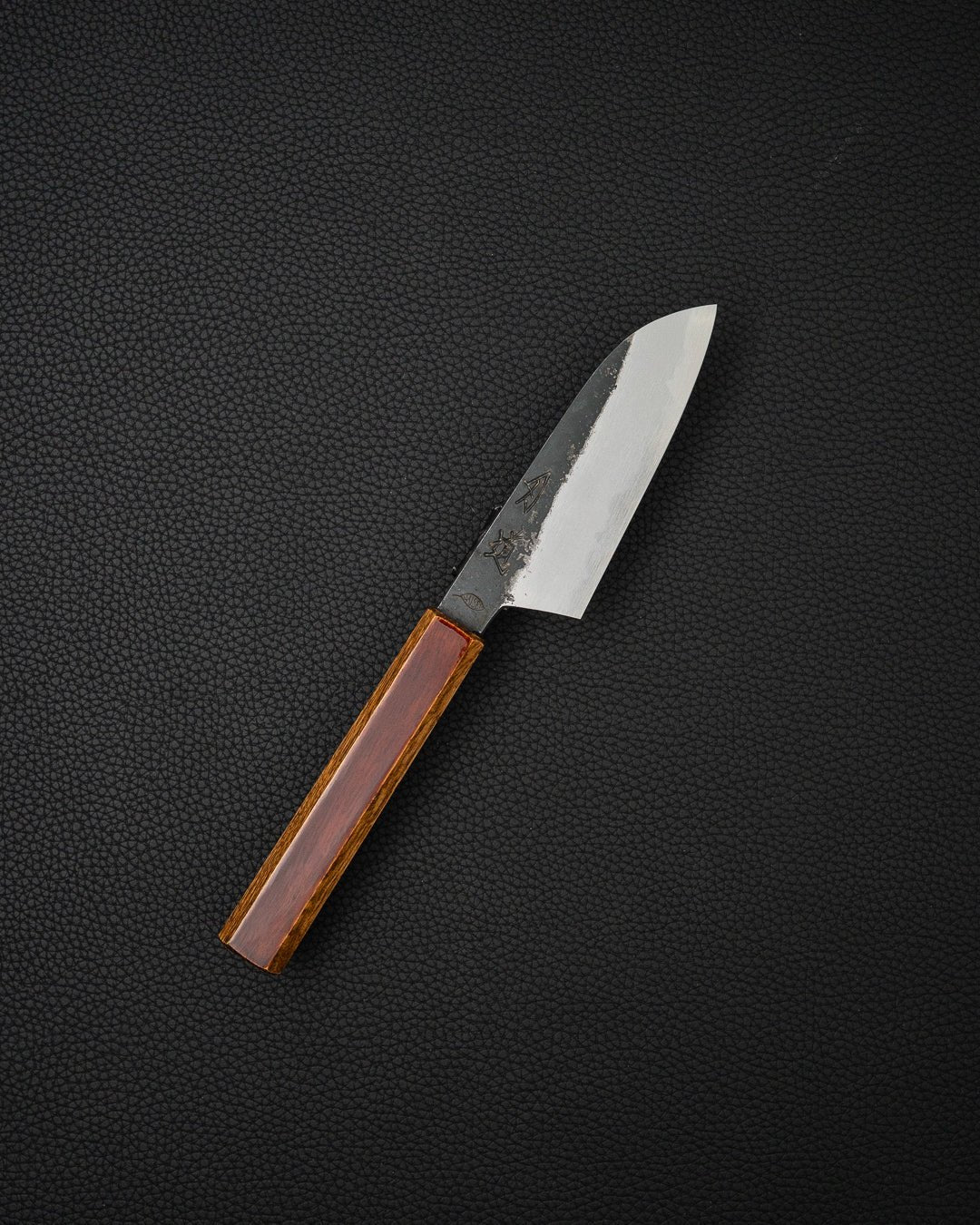

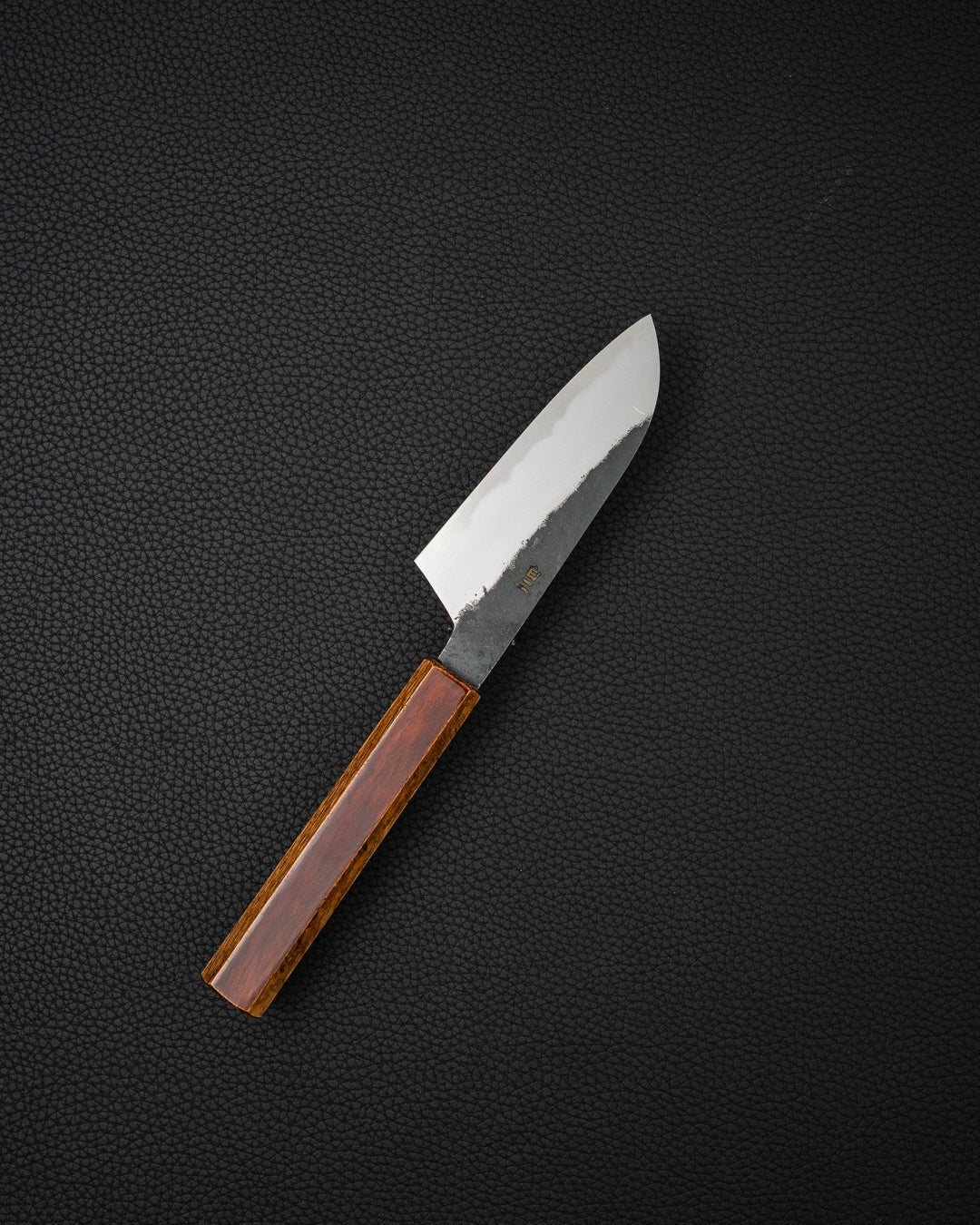

Santoku 110 mm, HADO x SAISEI Sumi Urushi Oak "Hi-Chin" Shou-Santoku
For those who want a shorter knife than a gyuto for everyday cooking.
You have another variant of this item in your wishlist.
HADO Factory Seconds
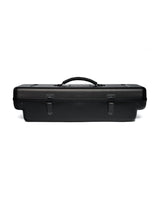
Goes with the knife
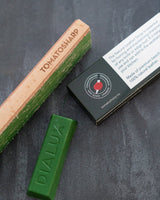
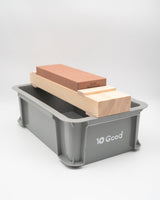
Choose options
You have another variant of this item in your wishlist.
Description
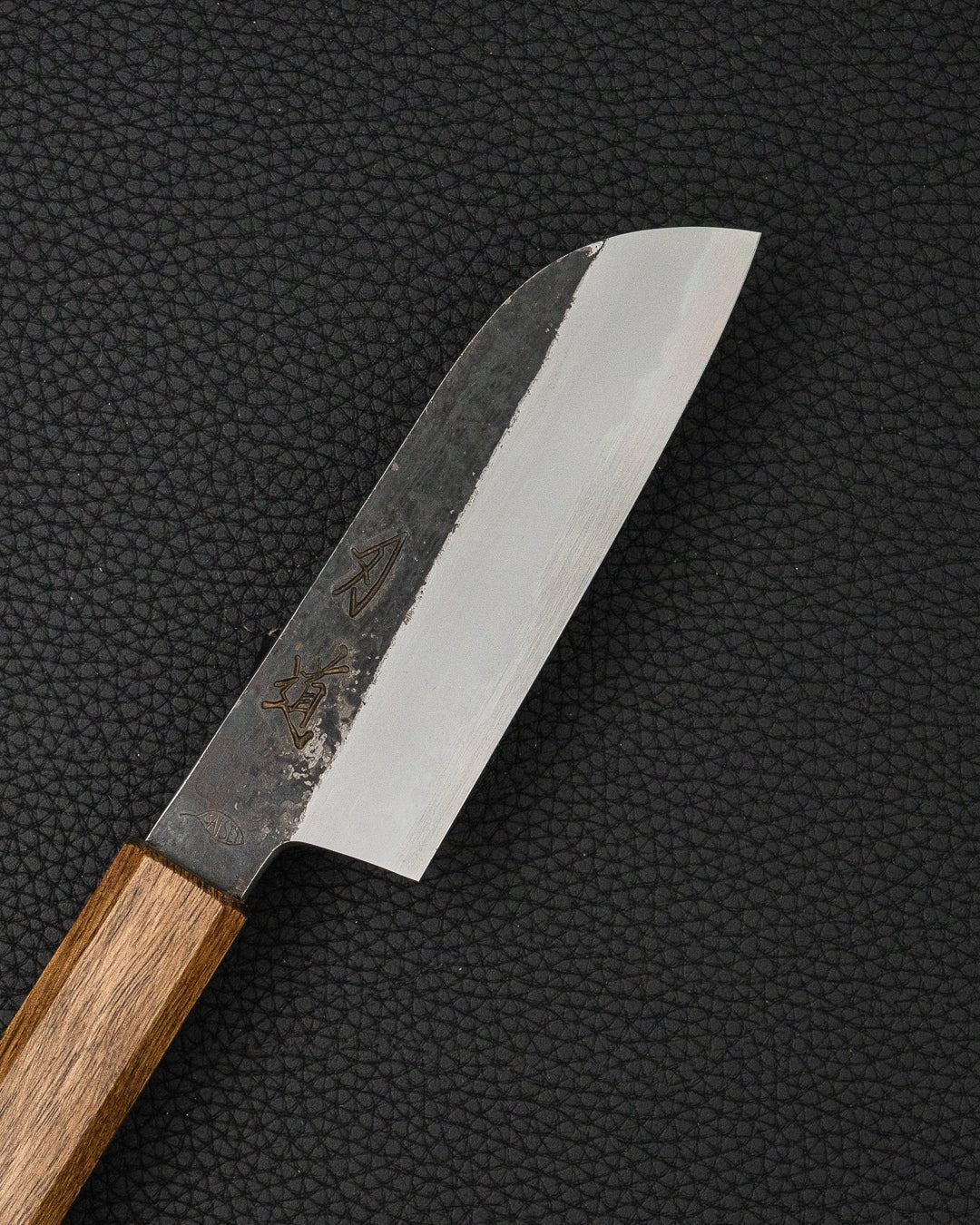
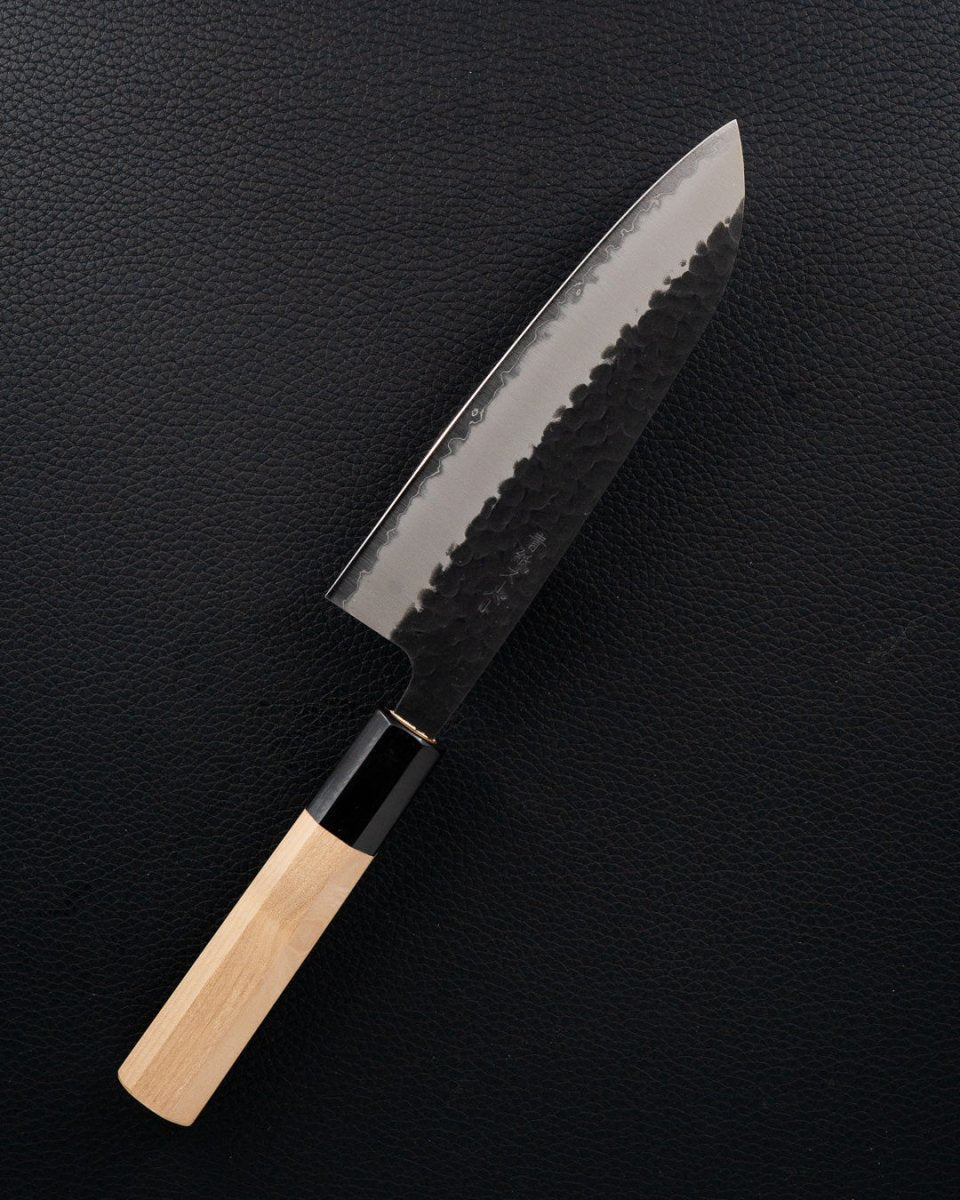
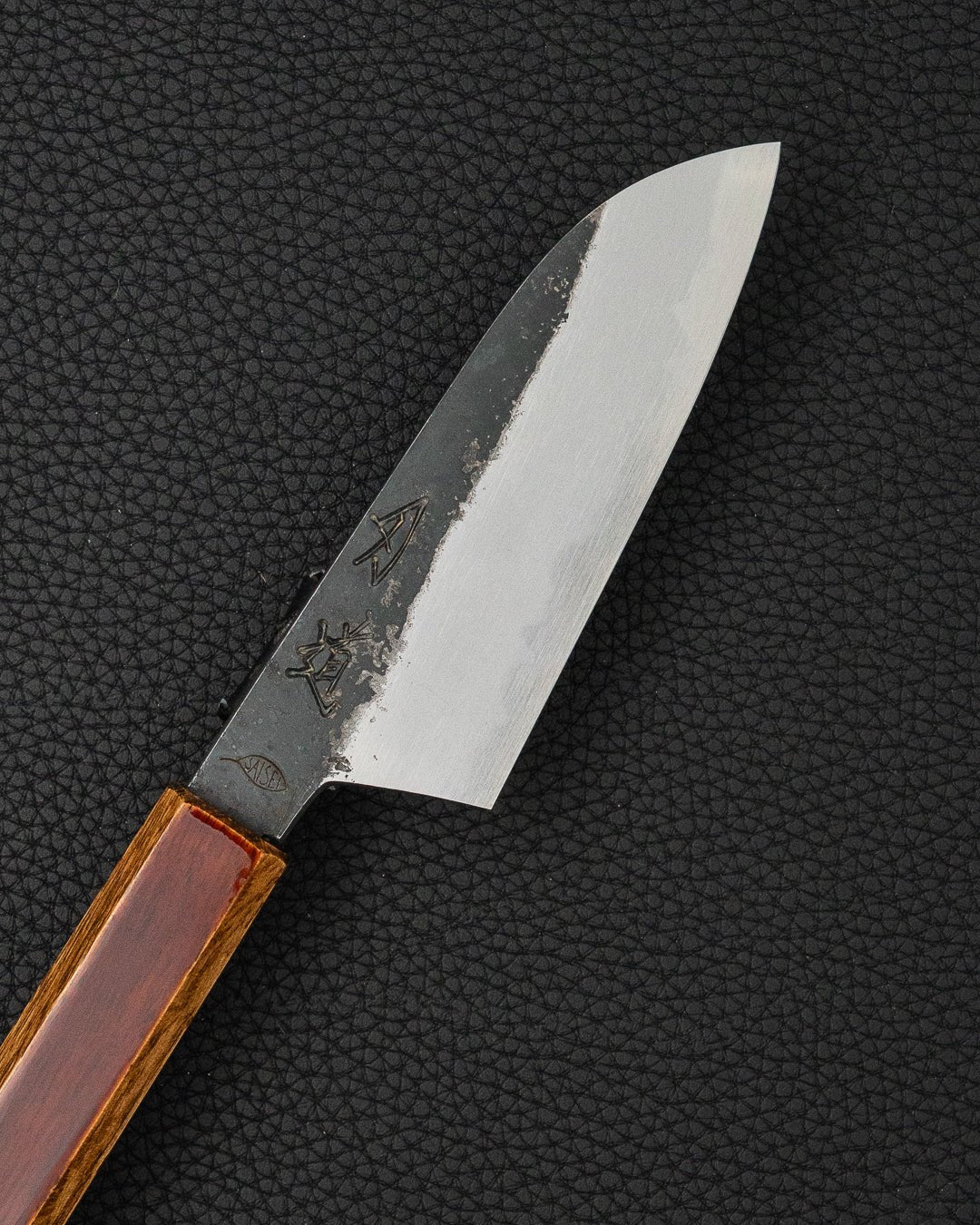
Small santoku (shou-santoku), 110 mm, from HADO in Sakai, sold as HADO Factory Seconds. The knife is new from the forge, with a cosmetic flaw. Ask us about the flaw on this particular knife.
The core is Shirogami 2 (White #2), a carbon steel, with iron cladding and kurouchi, the dark forge scale. The handle is Japanese (wa) in oak, and the edge is sharpened 50/50. The size suits vegetables and smaller jobs on the board.
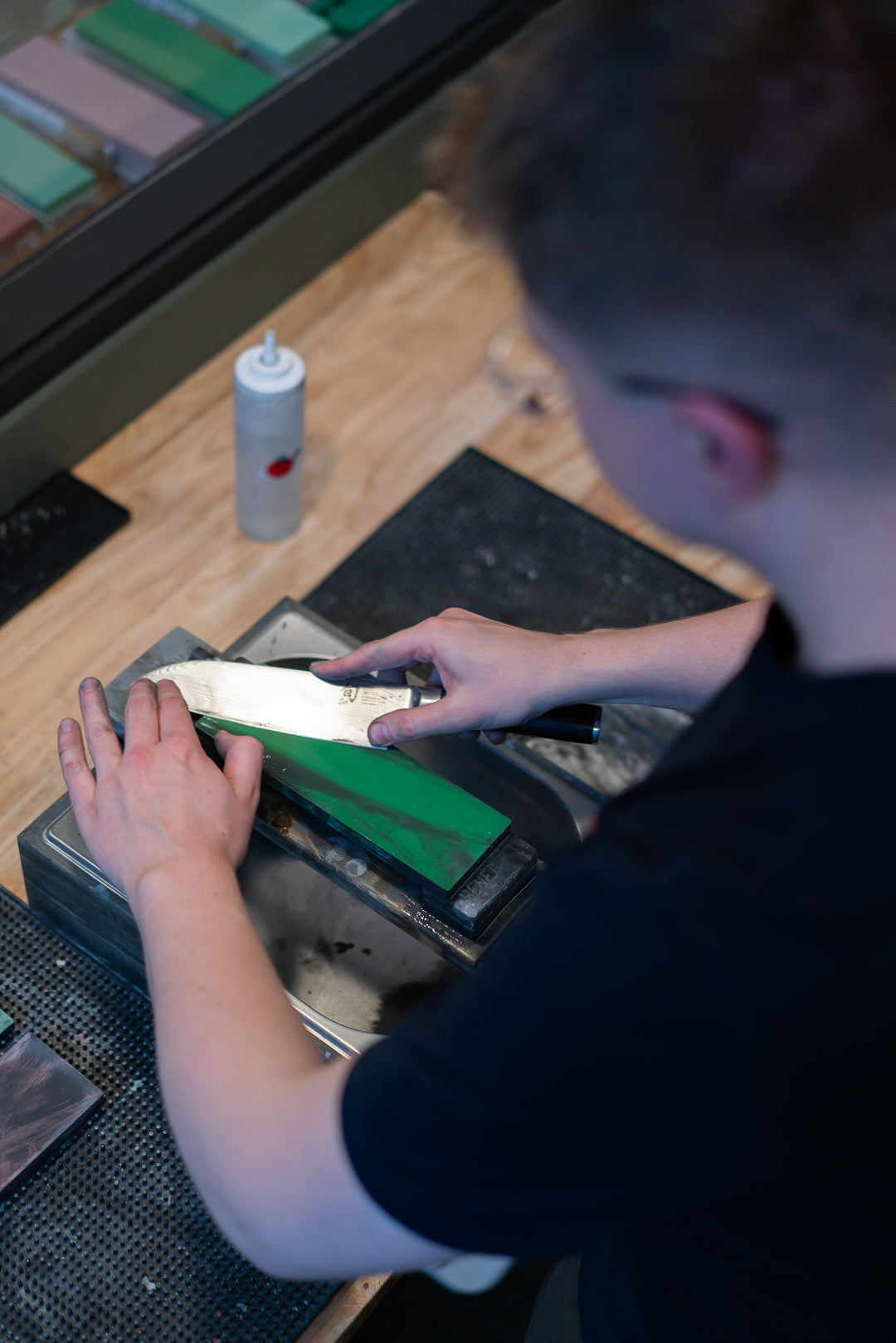
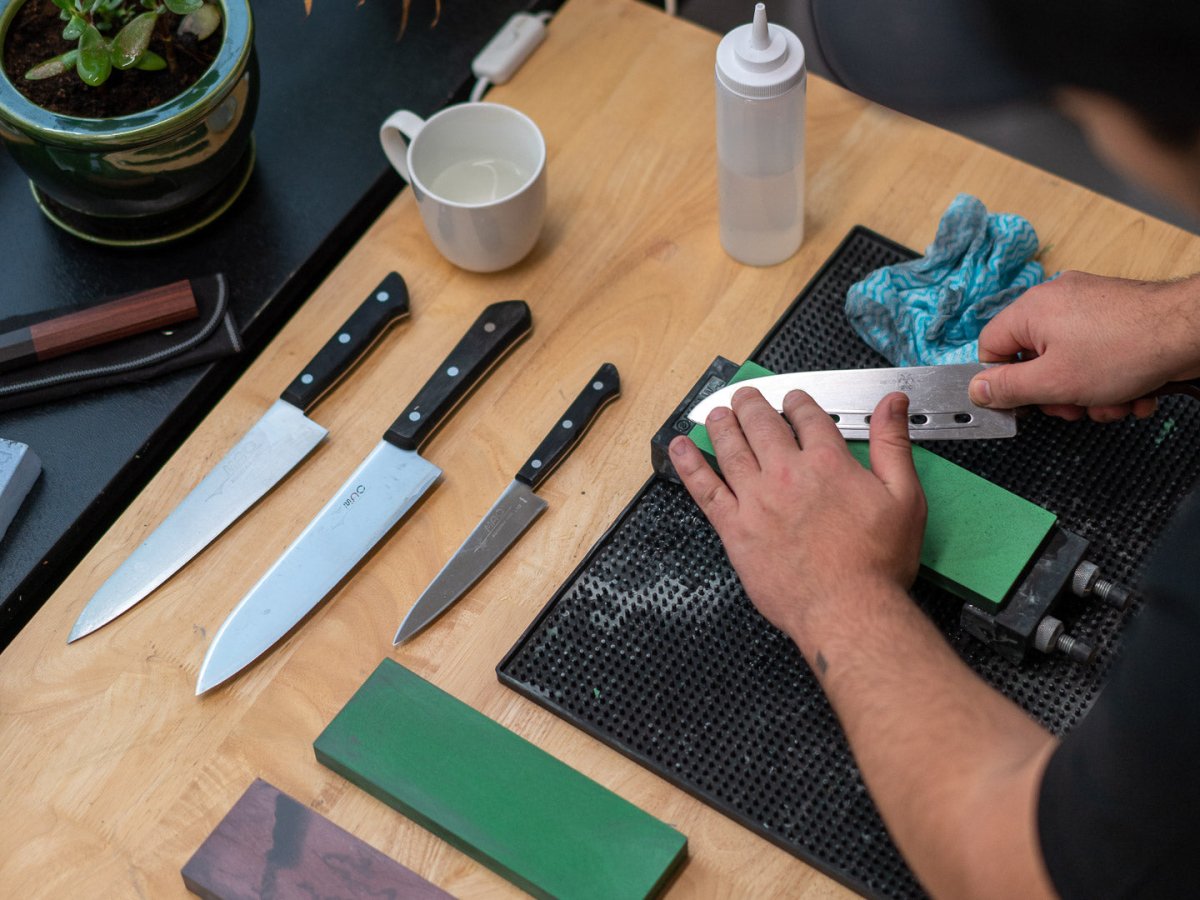
The iron cladding can rust. Dry the knife straight after use. We sharpen it in the workshop when it needs it.
HADO · Sakai, Osaka

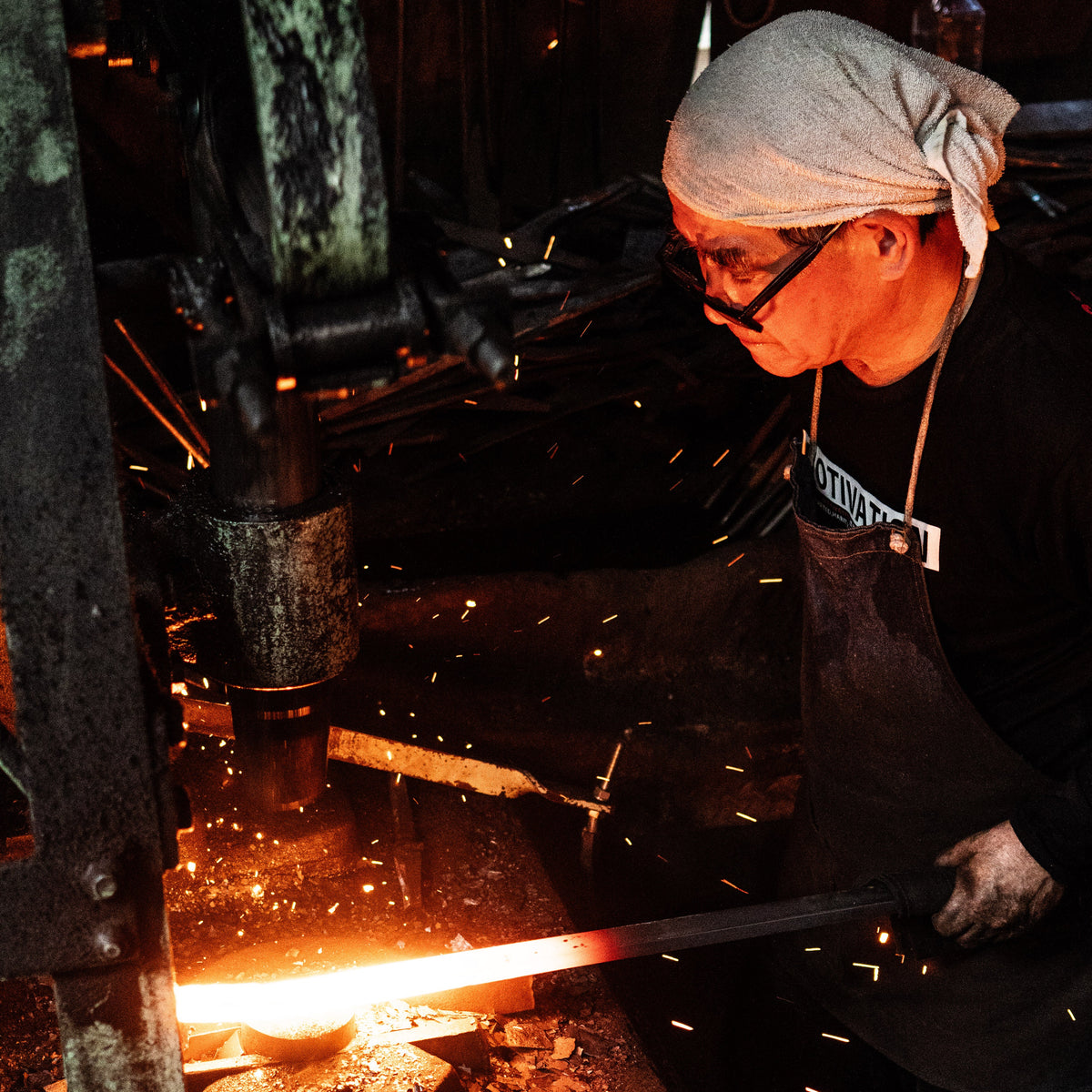
HADO was started in 2019 by Fukui Co. in Sakai. The team is six craftsmen who do almost everything themselves: sharpening, polishing and fitting handles, with blades forged by Sakai smiths such as Yoshikazu Tanaka and Shogo Yamatsuka.
All knives from HADOSpecifications
- Knife type
- Santoku (chef's knife)
- Region
- Sakai, Osaka
- Blade length
- 110 mm
- Handle
- Dark oak
- Edge
- 50/50
- Right-/left-handed
- Both
- Item number (SKU)
- 2200154
- Weight
- 77 g
About the knife type: Santoku (chef's knife)
Santoku is a Japanese all-purpose knife. The name means 'three uses': meat, fish and vegetables.
The blade is slightly wider than on a gyuto or a Western chef's knife, so there is room for large vegetables. The tip gives the edge a larger contact surface, and the knife cuts well with a push cut.
About the steel: White #2 (Shirogami #2)
Care and maintenance
Wash by hand in warm water, and dry it straight away.
Never the dishwasher. Use a cutting board of wood or plastic, not glass or stone.
Similar knives