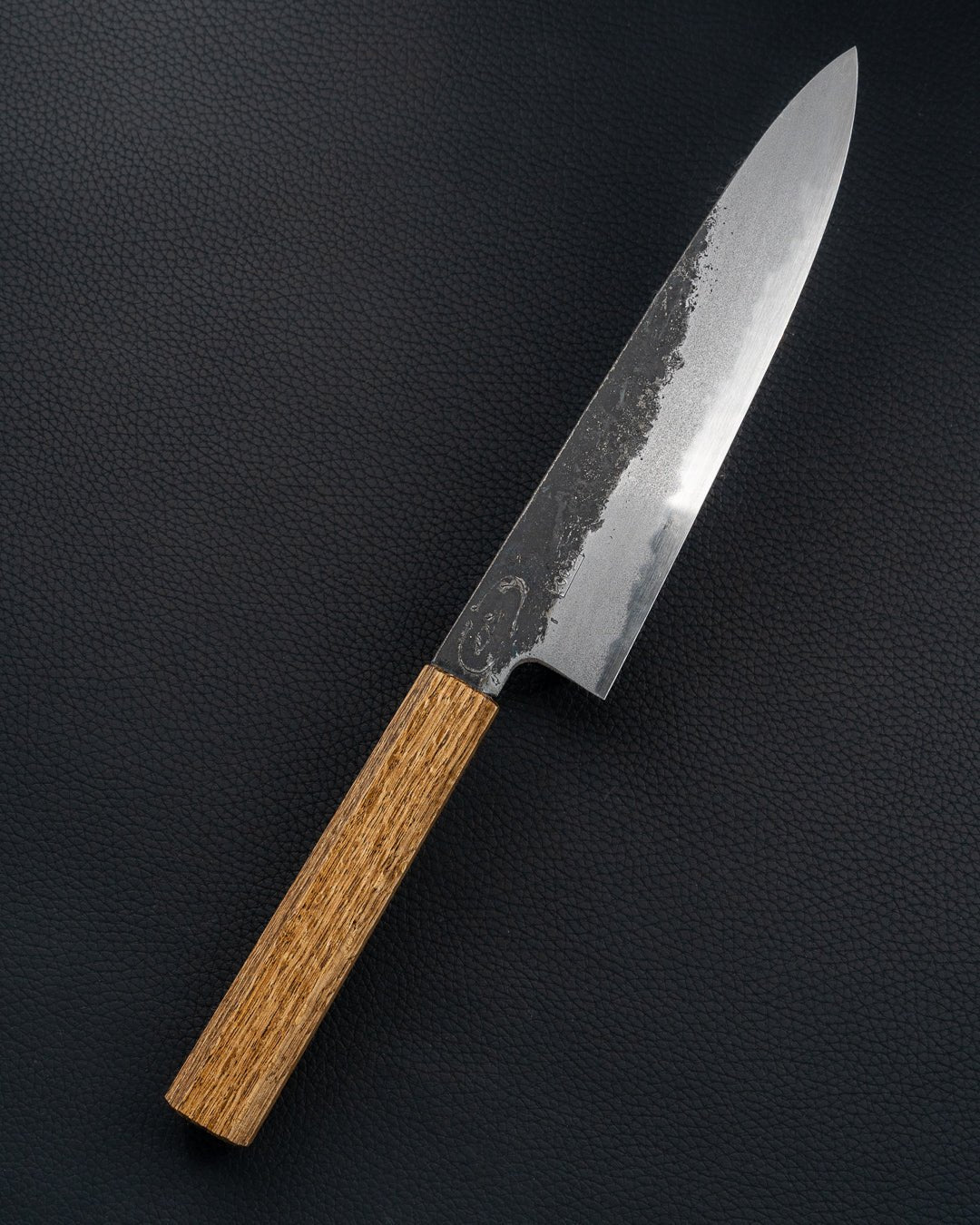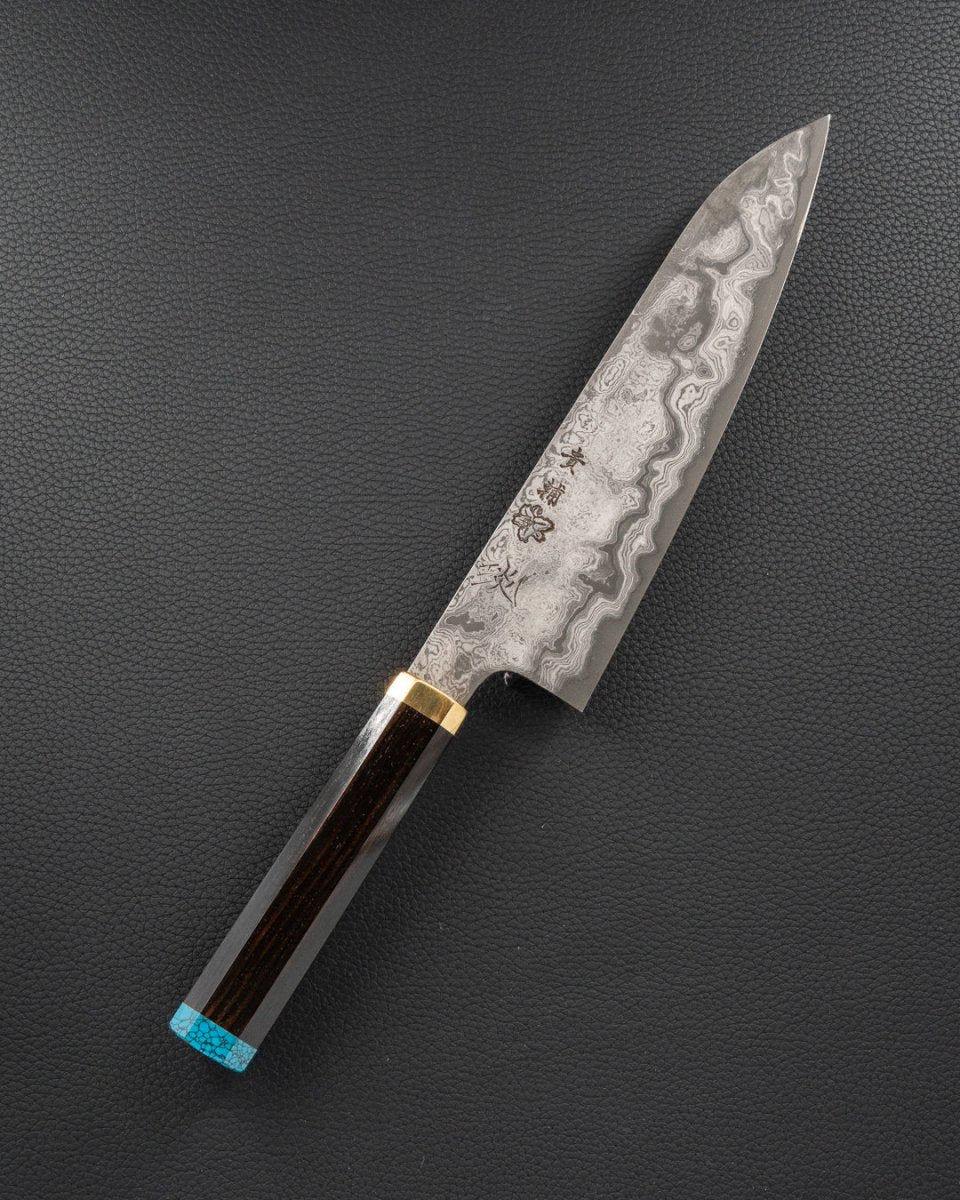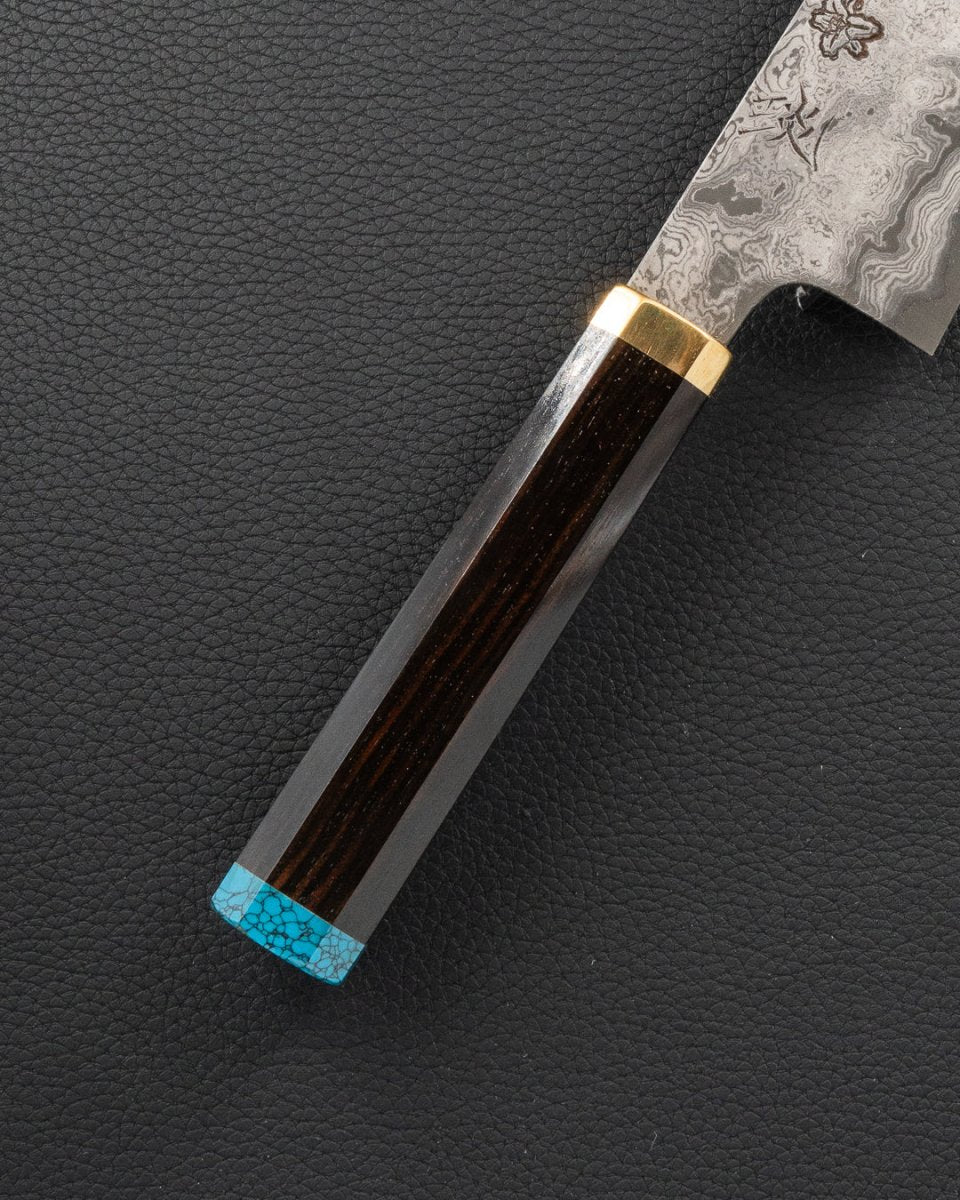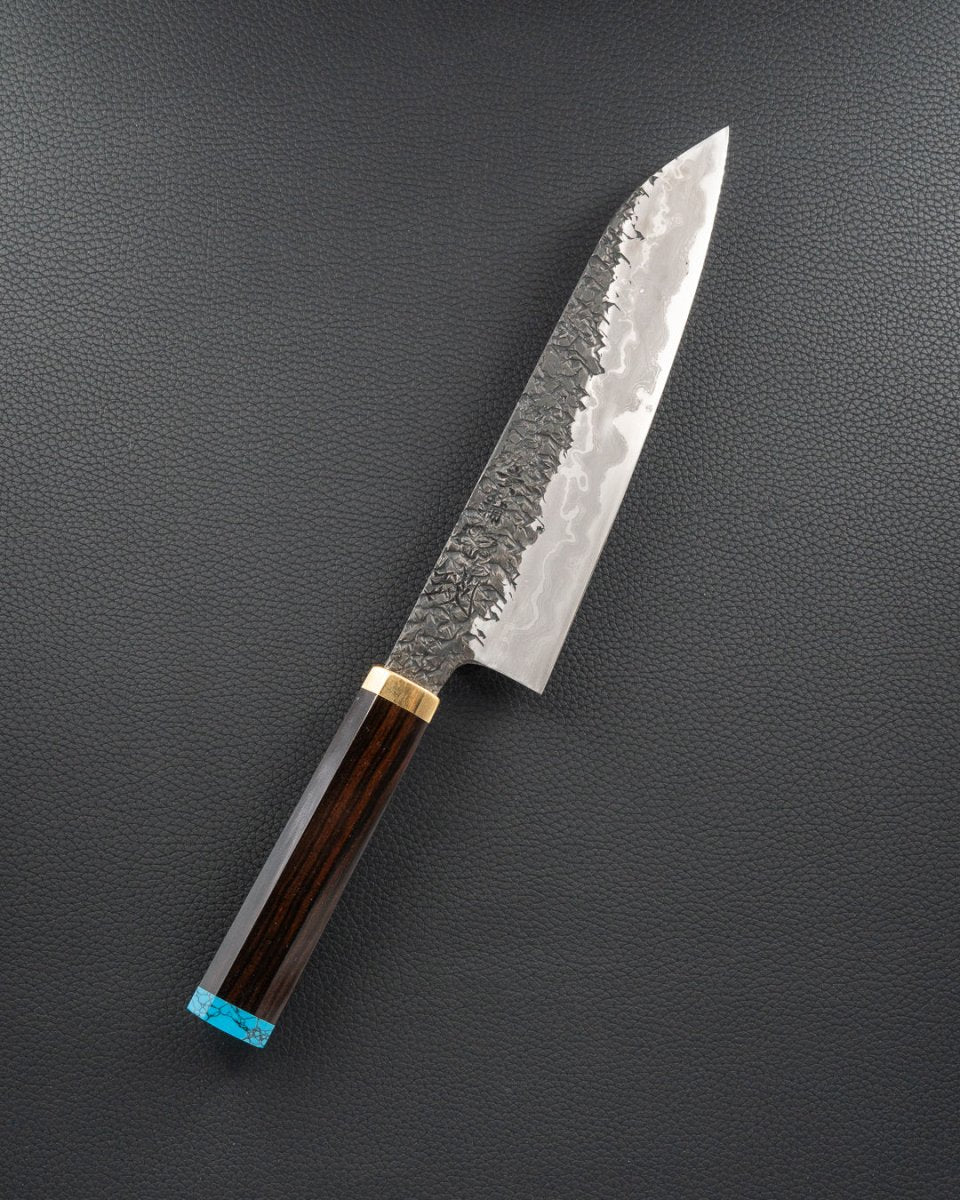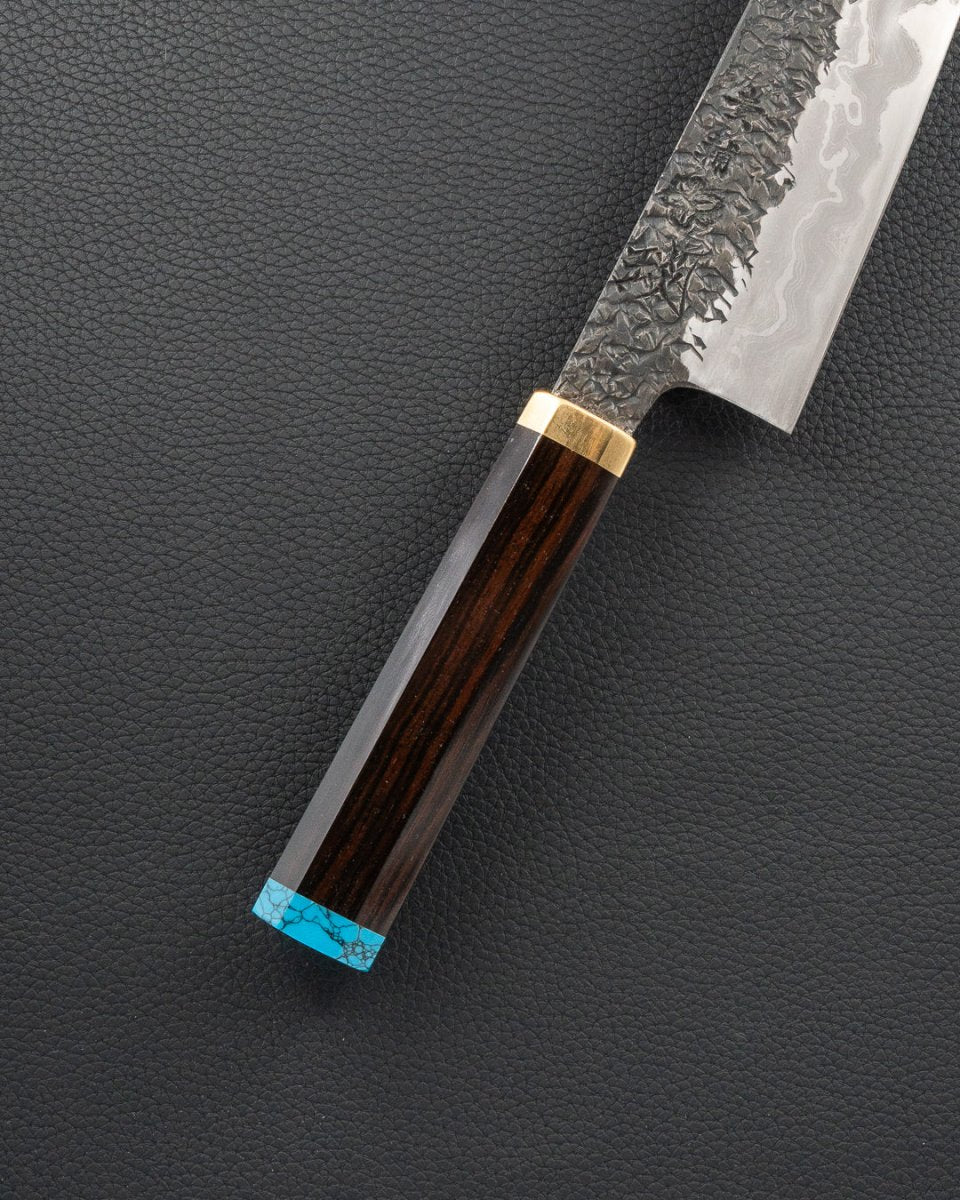

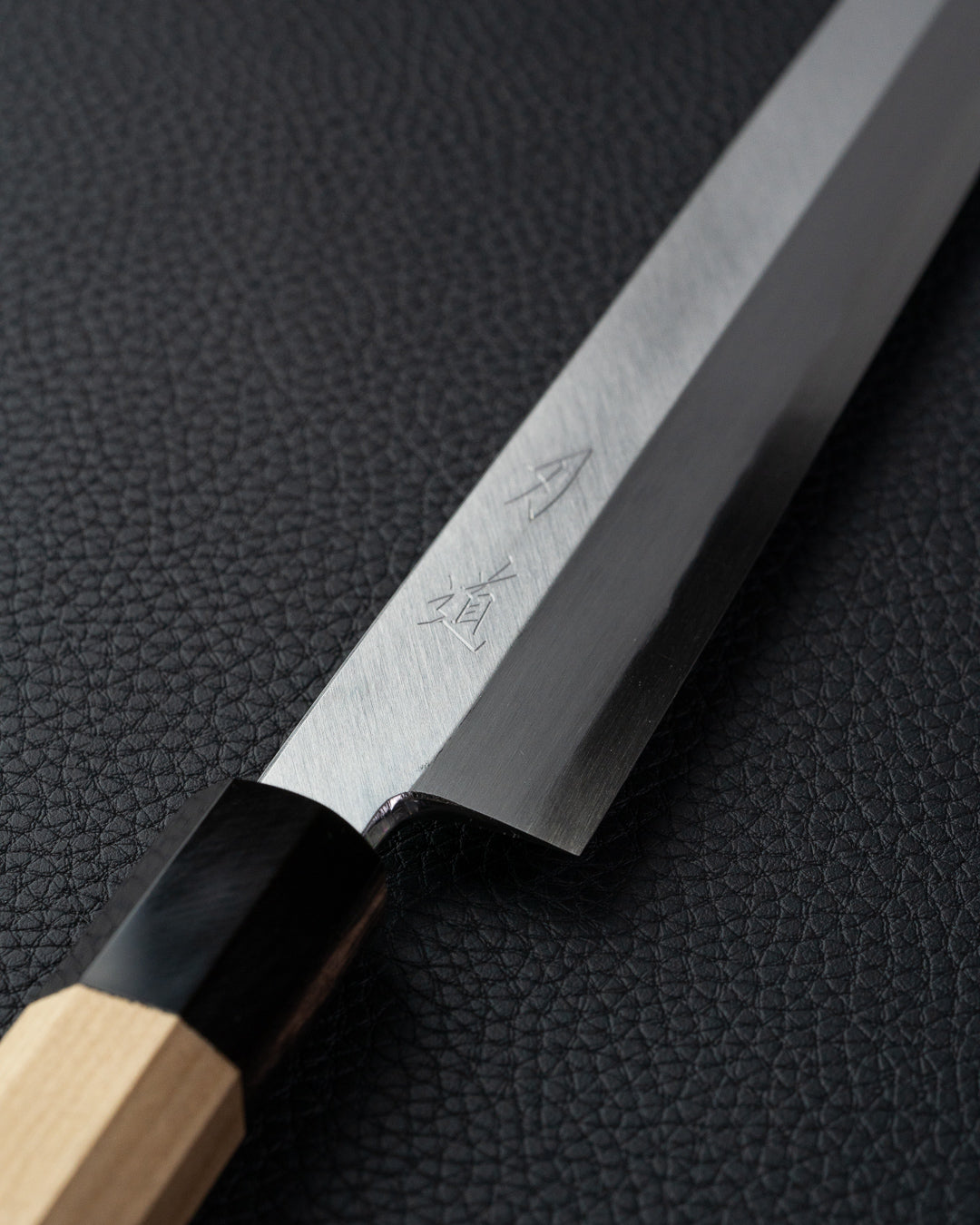


Gyuto 210 mm, YOSHIKANE HAMONO White2 Kuro Nashiji Kiritsuke Gyuto
For those who want a gyuto with a straighter edge and a pointed tip.
You have another variant of this item in your wishlist.
Goes with the knife
Choose options
You have another variant of this item in your wishlist.
Description
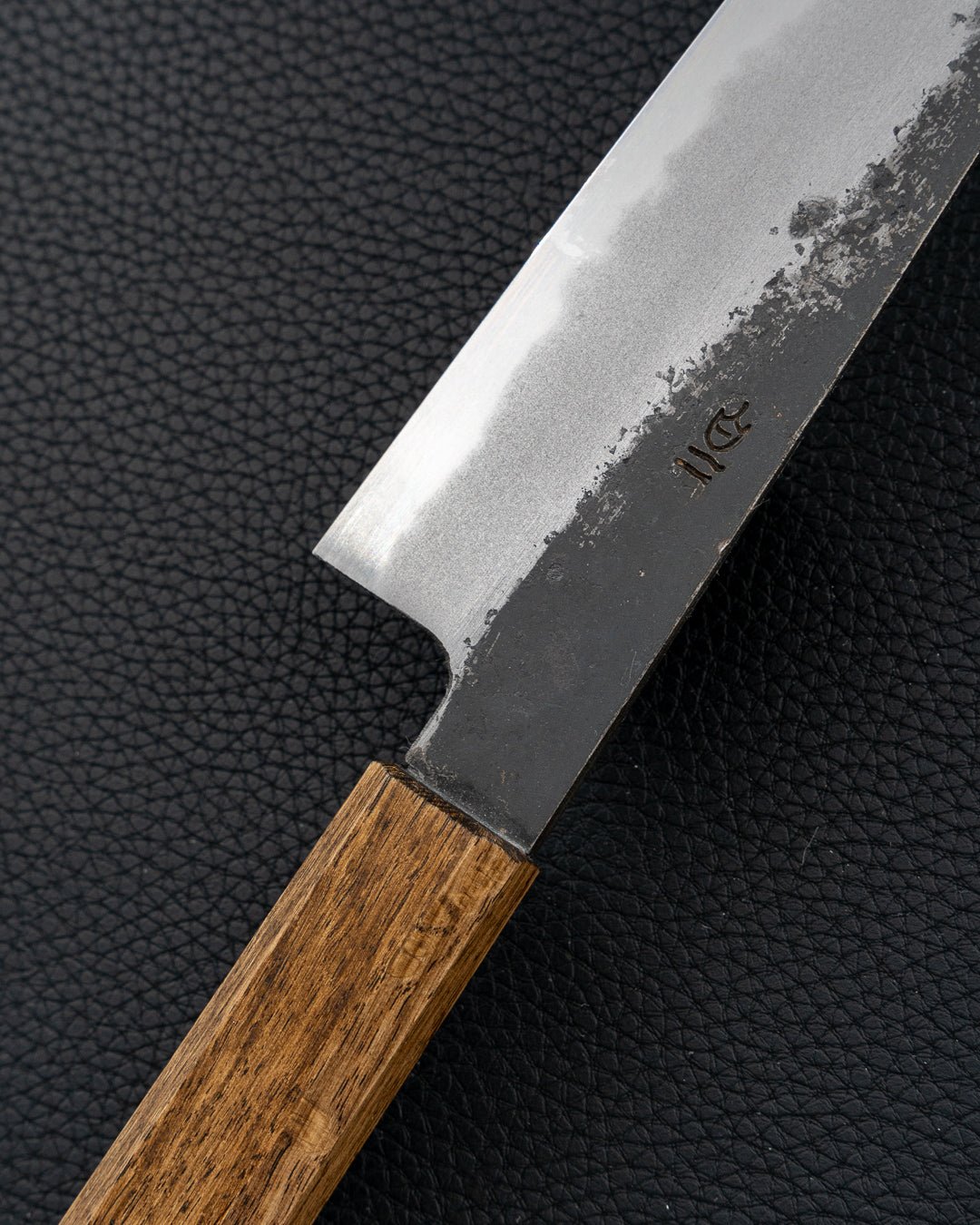
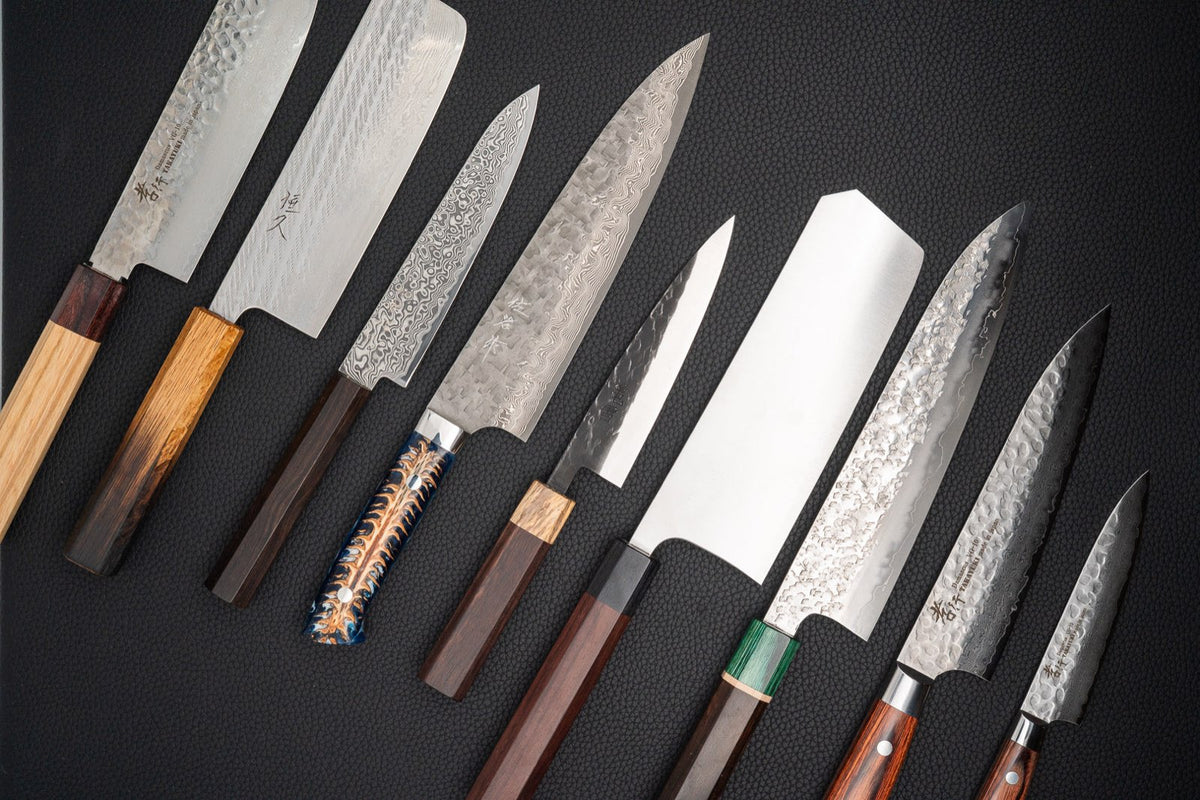
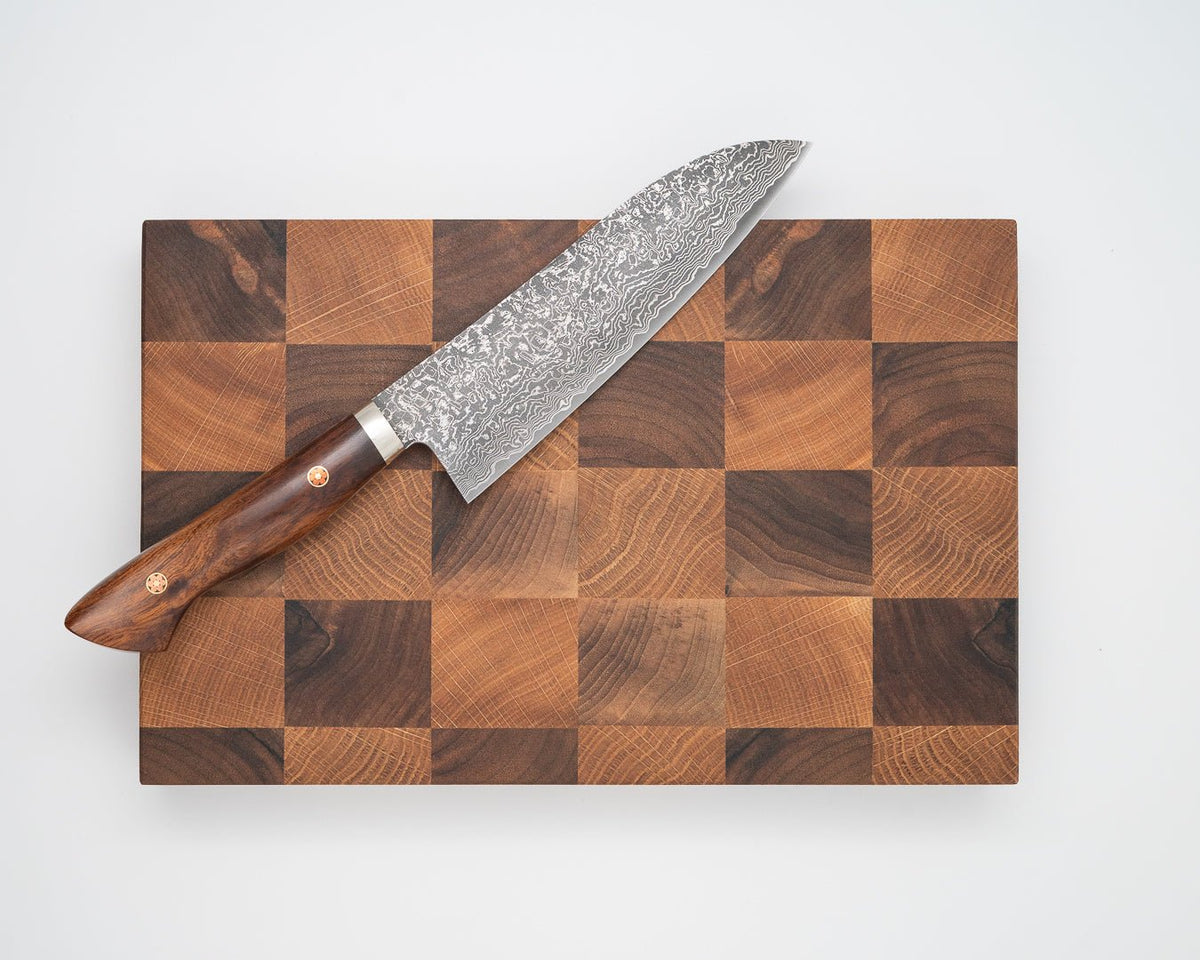
This is a handmade Japanese chef's knife that combines traditional craft with modern performance. It is made from Shirogami #2 (White #2) carbon steel, known for taking and holding a very sharp edge. The blade is clad in several layers of stainless steel and etched to bring out a nashiji finish with a rustic surface.
Yoshikane Hamono · Sanjo, Niigata
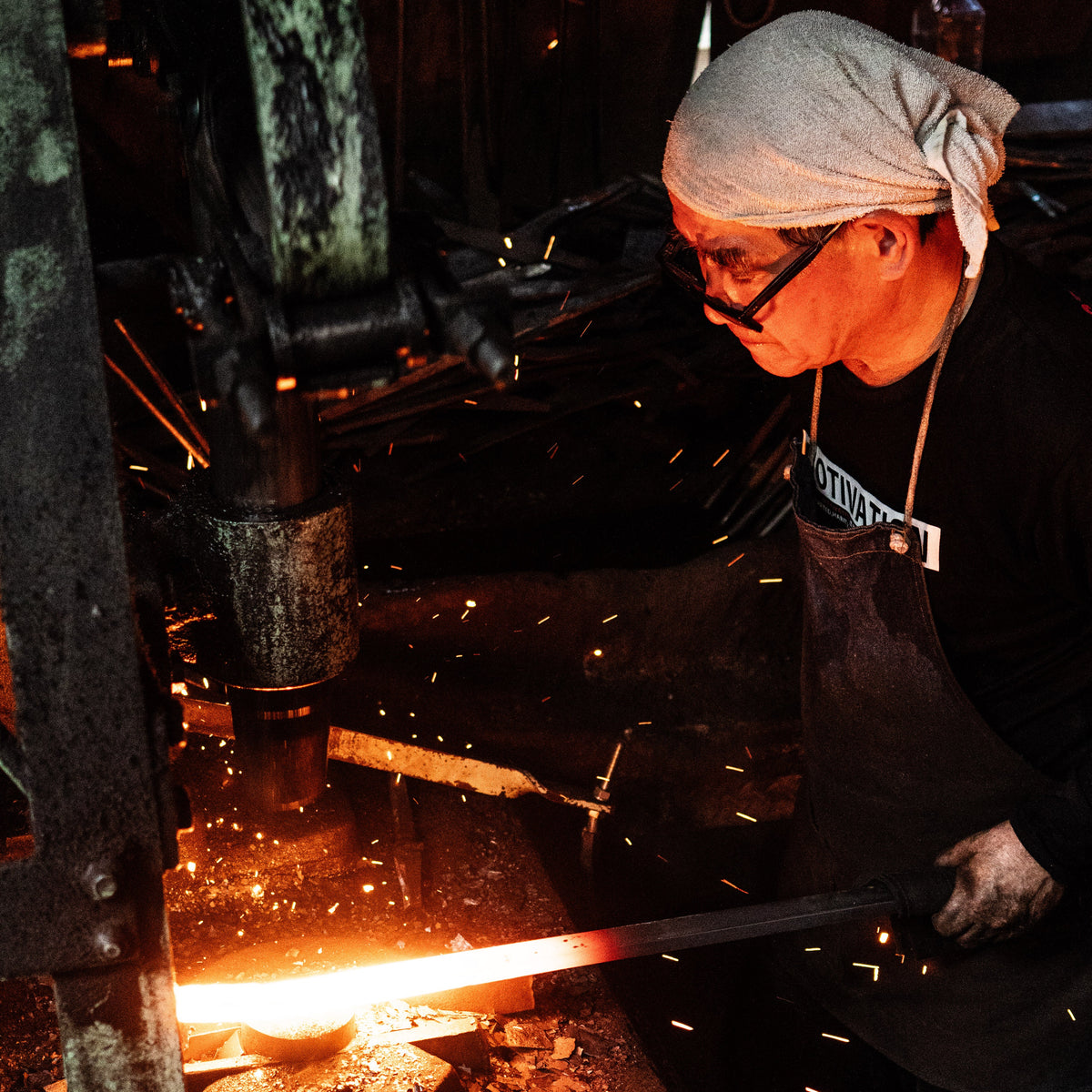
Led by fourth-generation knife maker Kazuomi Yamamoto, Yoshikane Hamono is a Japanese knife maker with over 100 years of history, based in Sanjo City in Niigata.
All knives from Yoshikane HamonoSpecifications
- Knife type
- Gyuto (chef's knife)
- Region
- Sanjo, Niigata
- Blade length
- 210 mm
- Edge
- 50/50
- Right-/left-handed
- Both
- Item number (SKU)
- YK-W2-KN-210KG
- Weight
- 173 g
About the knife type: Gyuto (chef's knife)
The kiritsuke gyuto is a Japanese chef's knife that combines features of two common knife types: the kiritsuke and the gyuto.
The kiritsuke is a single-bevel knife with a long, straight edge that narrows towards the tip. Traditionally it has been used only by sushi chefs or head chefs, because of its complex shape and demanding handling.
The gyuto, on the other hand, is a Japanese chef's knife similar to a Western chef's knife. It has a long, slim profile with a pointed tip and a thinner blade than the kiritsuke.
The kiritsuke gyuto has the look of a kiritsuke with the versatility of a gyuto.
About the steel: White #2 (Shirogami #2)
Care and maintenance
Wash by hand in warm water, and dry it straight away.
Never the dishwasher. Use a cutting board of wood or plastic, not glass or stone.
Similar knives