


Honesuki: the boning knife for chicken and poultry
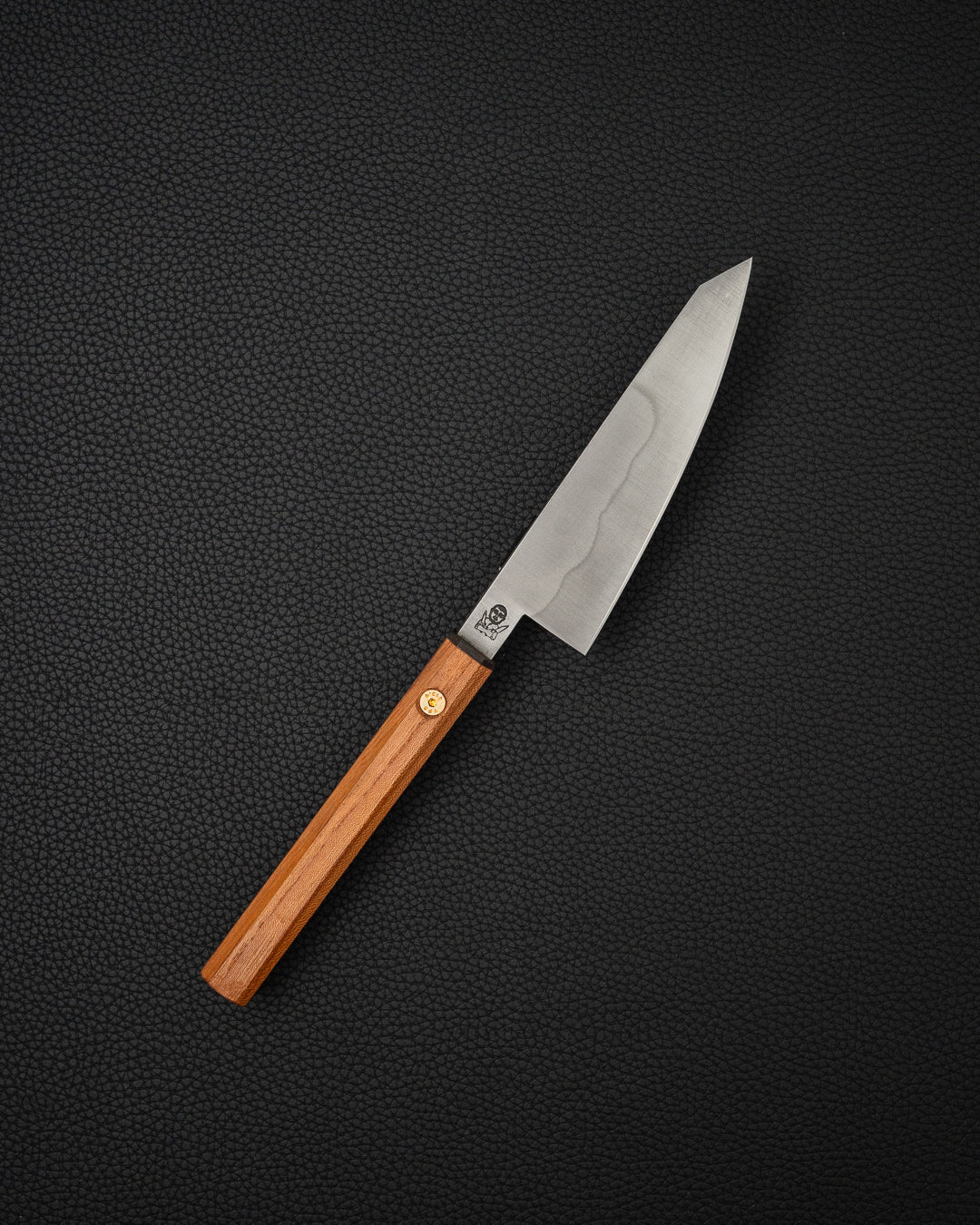
The honesuki is a Japanese boning knife for chicken and other poultry. The blade is around 150 mm, triangular and stiff, with a pointed tip and a thick spine. The tip finds the joints, the blade goes through cartilage, and the heel scrapes meat off the bone. It does not go through bone. If you want to joint whole chickens yourself, this is the knife to look for.
The shape
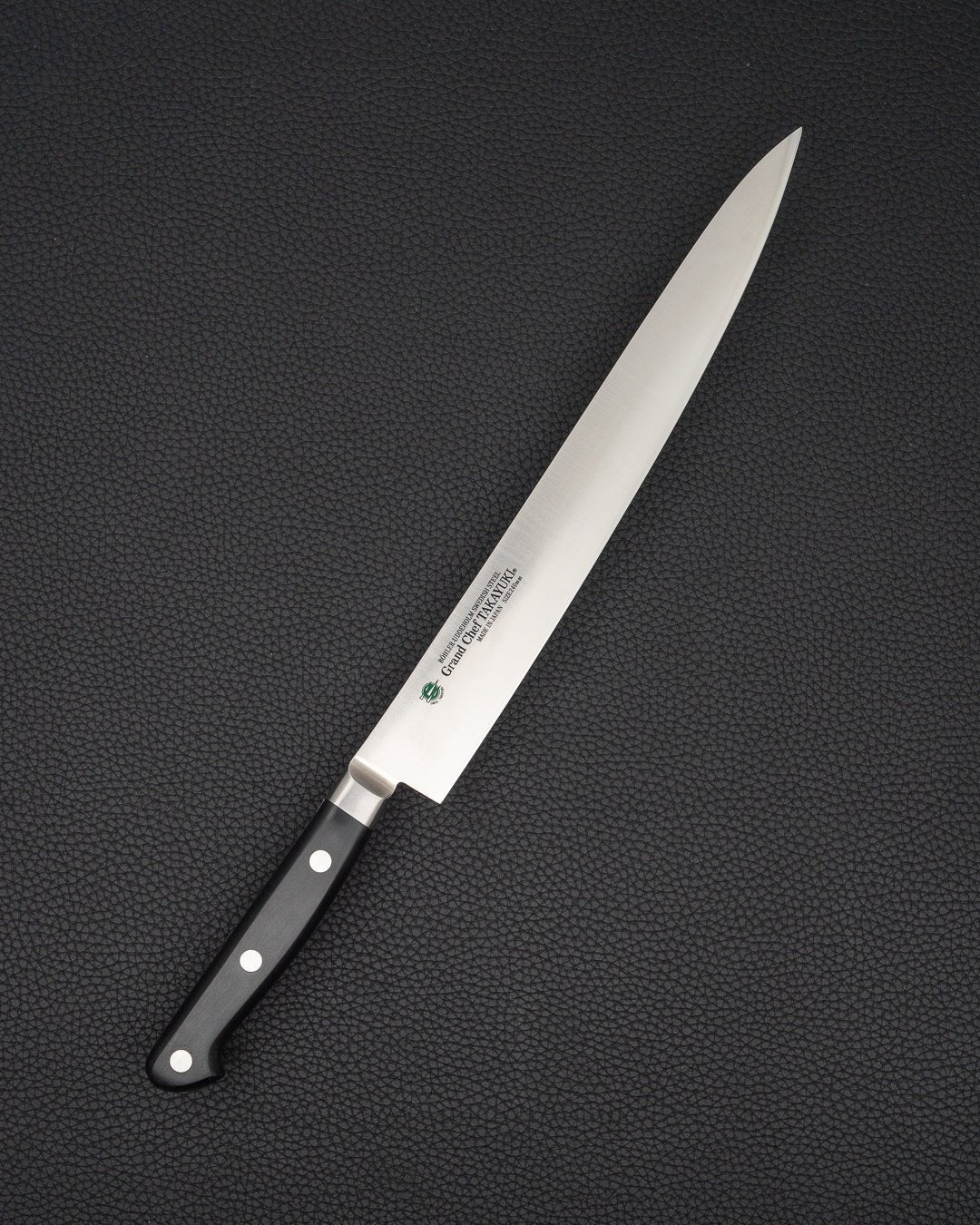
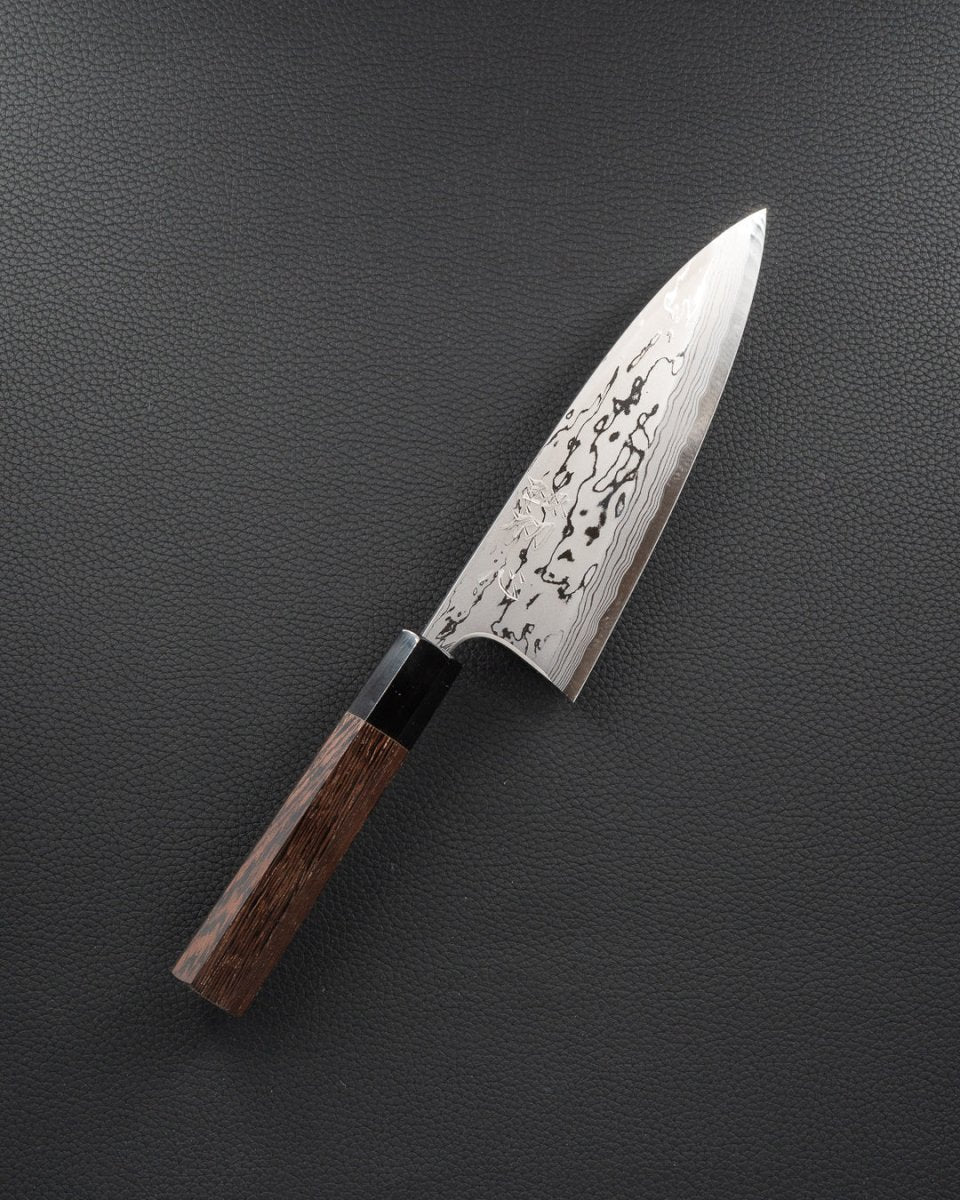
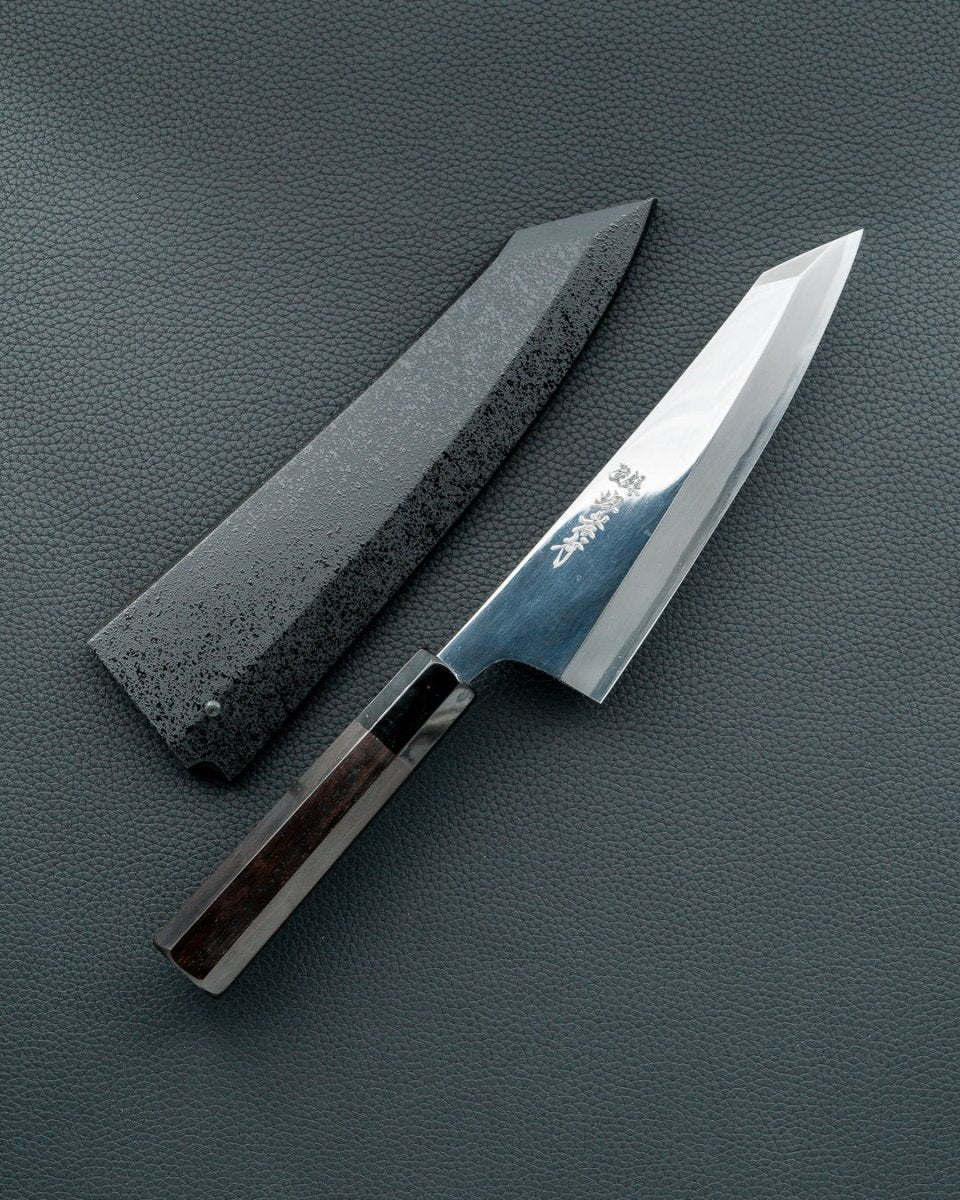
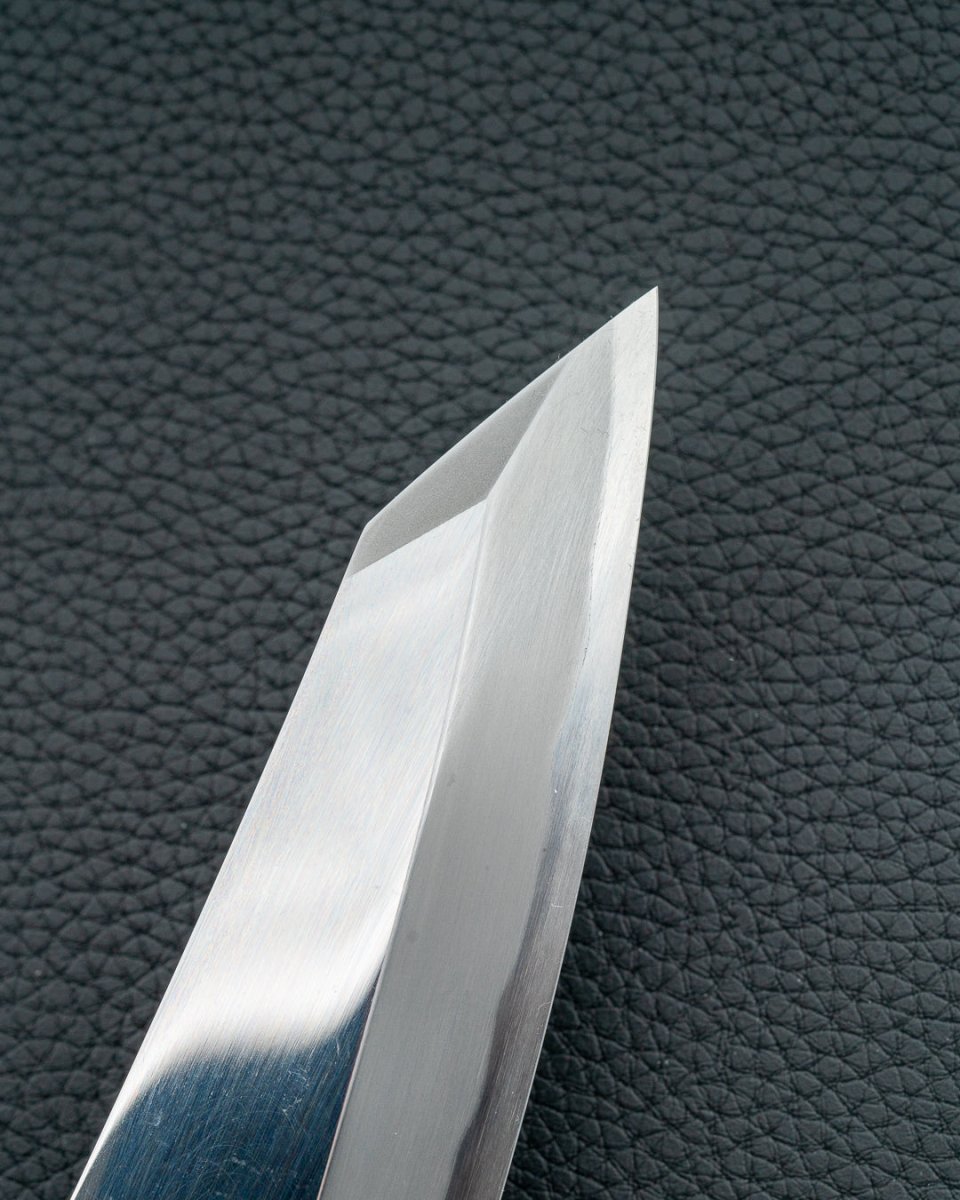
The blade is short and triangular, with a k-tip. The spine is thicker than on other Japanese knives of the same length, and the blade has no flex. The weight sits back towards the handle.
The heel is the thickest part. It adds weight towards the handle and can be used to scrape meat clean off the bone. The tip is narrow enough to find the joint without you seeing it.
Many honesuki on sale are thin, almost like a petty. If the knife is going to see a lot of poultry or game, check the spine thickness before you buy. A thin honesuki is fine for chicken, but it tolerates less twisting.
Honesuki come in carbon steel and stainless. If you joint a lot, stainless is easiest, because the knife lies damp on the worktop while you work. Carbon steel has to be dried between each bird, or rust sets in.
How to joint a chicken
Lay the chicken on its back on a large cutting board. Hold the honesuki with the tip down and your fingers well behind the heel. The knife does most of the work with the tip.
- Cut through the skin between the leg and the breast. Bend the leg out until the joint pops, and cut through the joint with the tip.
- Split the leg into thigh and drumstick at the knee joint. Feel for the joint with the tip before you cut.
- Take the wings off at the shoulder joint. Twist the wing a little, and guide the tip in where the joint opens.
- Follow the breastbone with the tip, and cut the fillets free in calm strokes along the ribs. Keep the blade against the bone.
- Scrape the last of the meat off the carcass with the heel. The carcass can go into stock.
None of the steps goes through bone. If you get stuck, you have missed the joint. Move the tip a little and feel again. Wash the knife and the board before you move on to vegetables.
What it cannot take
The honesuki goes through cartilage and joints. Large bones you separate at the joint, never straight across. If the backbone has to be split in two, use a cleaver or a heavy chopper. Frozen food, sawing through bone and twisting with the tip stuck in bone chip the edge.
Nor is it suited to tunnel boning, where you cut the bone out of a whole piece of meat. A European boning knife is better there, because the blade is longer and narrower. For flatfish, a flexible filleting knife is the right choice.
Kevin Kent writes in the Knifenerd book that he has used a honesuki to break down beef, goat, lamb, duck, pork and rabbit. He only reaches for the European boning knife for tunnel boning.
Like other Japanese knives, the honesuki cannot go in the dishwasher. Wash it by hand after raw meat, and dry it straight away. The reasons are in the article on the dishwasher.
Single-bevel or double-bevel
Honesuki come both single-bevel and double-bevel. Most of those used in Japan are mass-produced monosteel, single-bevel but with a flat back. Many users grind a small bevel on the back themselves.
At home, double-bevel is the simplest choice. It suits either hand and is sharpened like an ordinary knife. If you are left-handed and considering a single-bevel honesuki, it has to be made for the left hand.
The relatives
The garasuki is a larger and thicker honesuki for bigger birds. The hankotsu is a butcher's knife for large animals and hanging meat. It is almost always single-bevel and is not used against a board.
The deba is the other Japanese knife for poultry and fish. It is heavier and has a thick spine that can take small bones. The difference is covered in the article on the deba. If you want a small knife for everything else, see the petty.
From the workshop
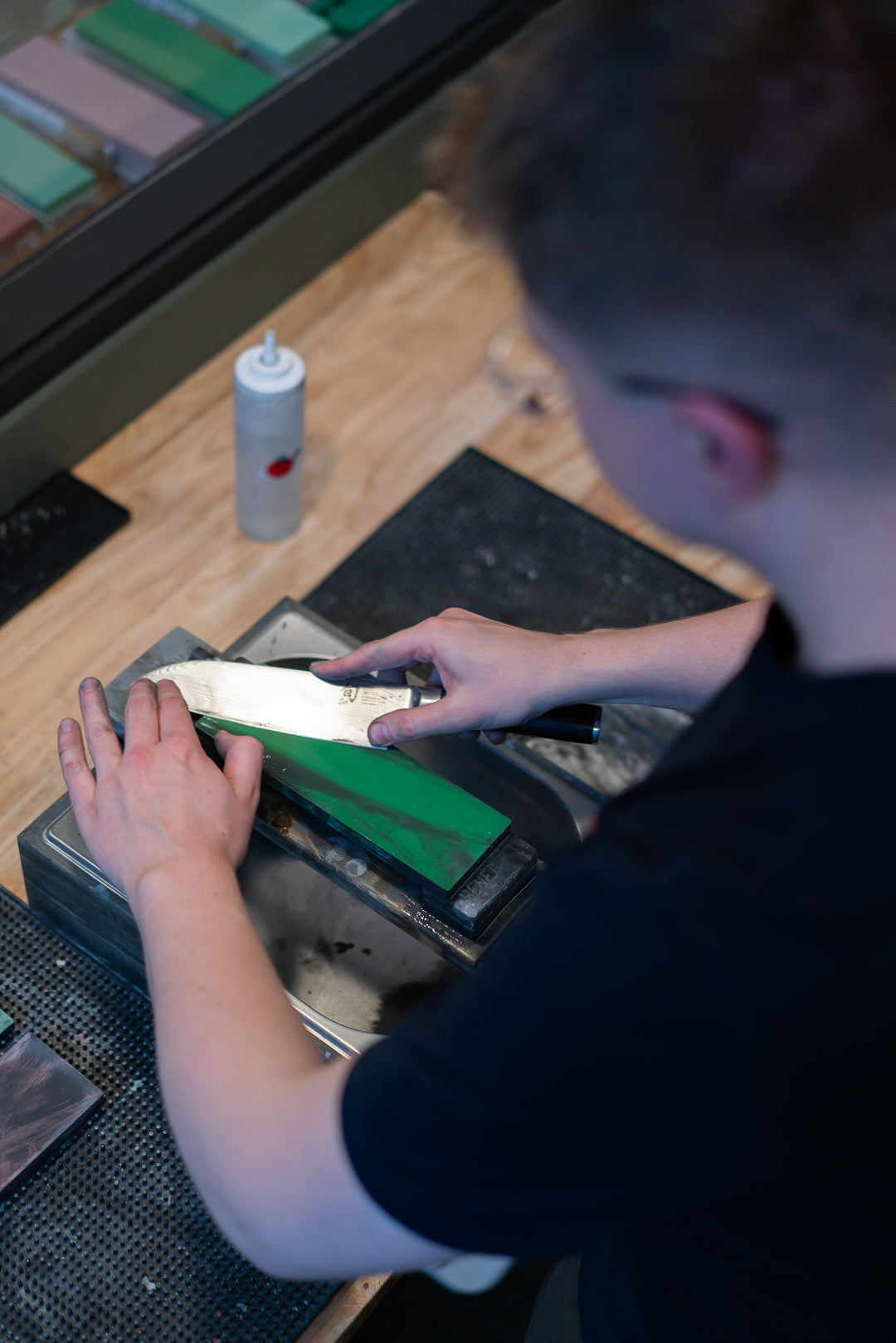
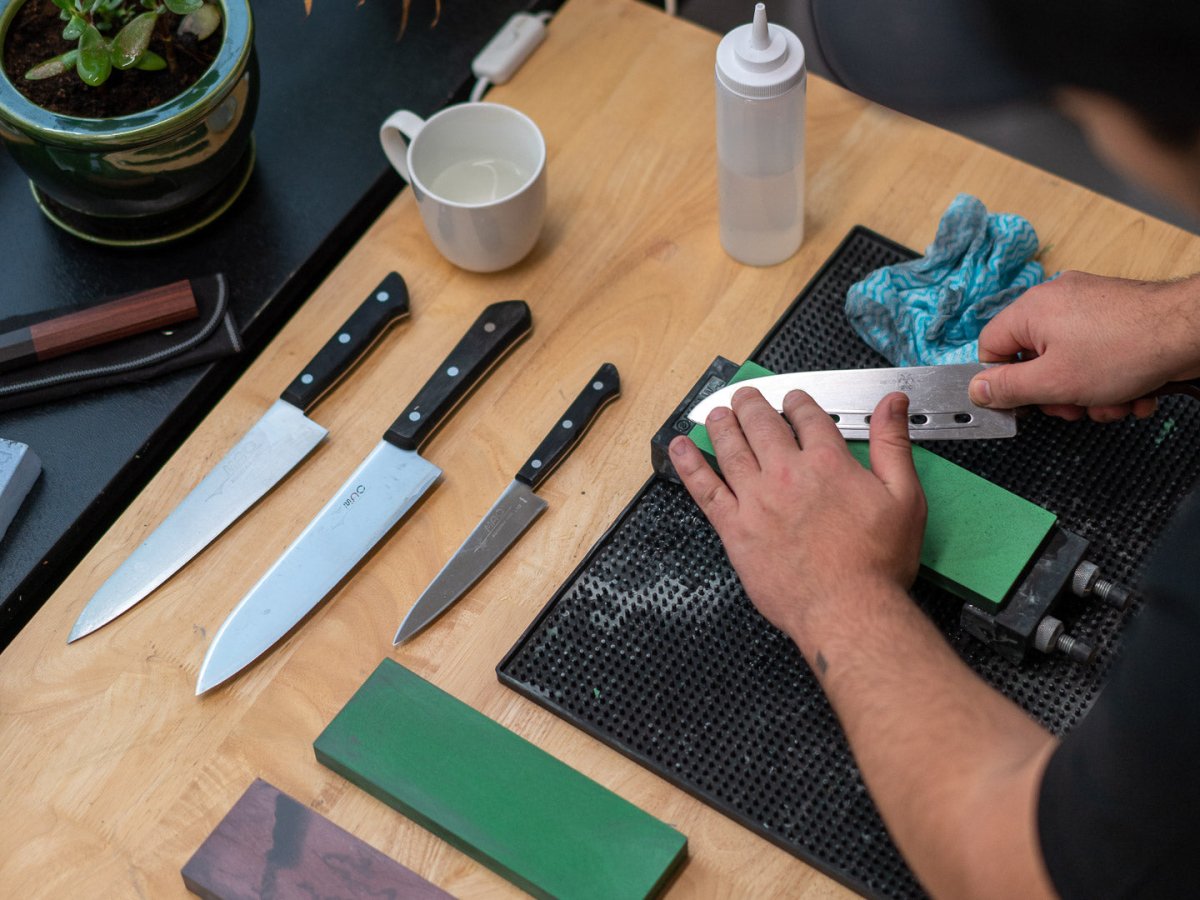
Boning knives come in with chips in the tip more often than other knives. The chips happen when the tip hits bone and the blade twists. We grind small chips away on the whetstone, and the tip gets its shape back. Whetstone sharpening costs NOK 249.
What we tell people when they collect the knife: let the tip find the joint, and leave the bone alone. Chicken for yakitori is cut with the same knife, and the grill is covered in the article on the konro grill.
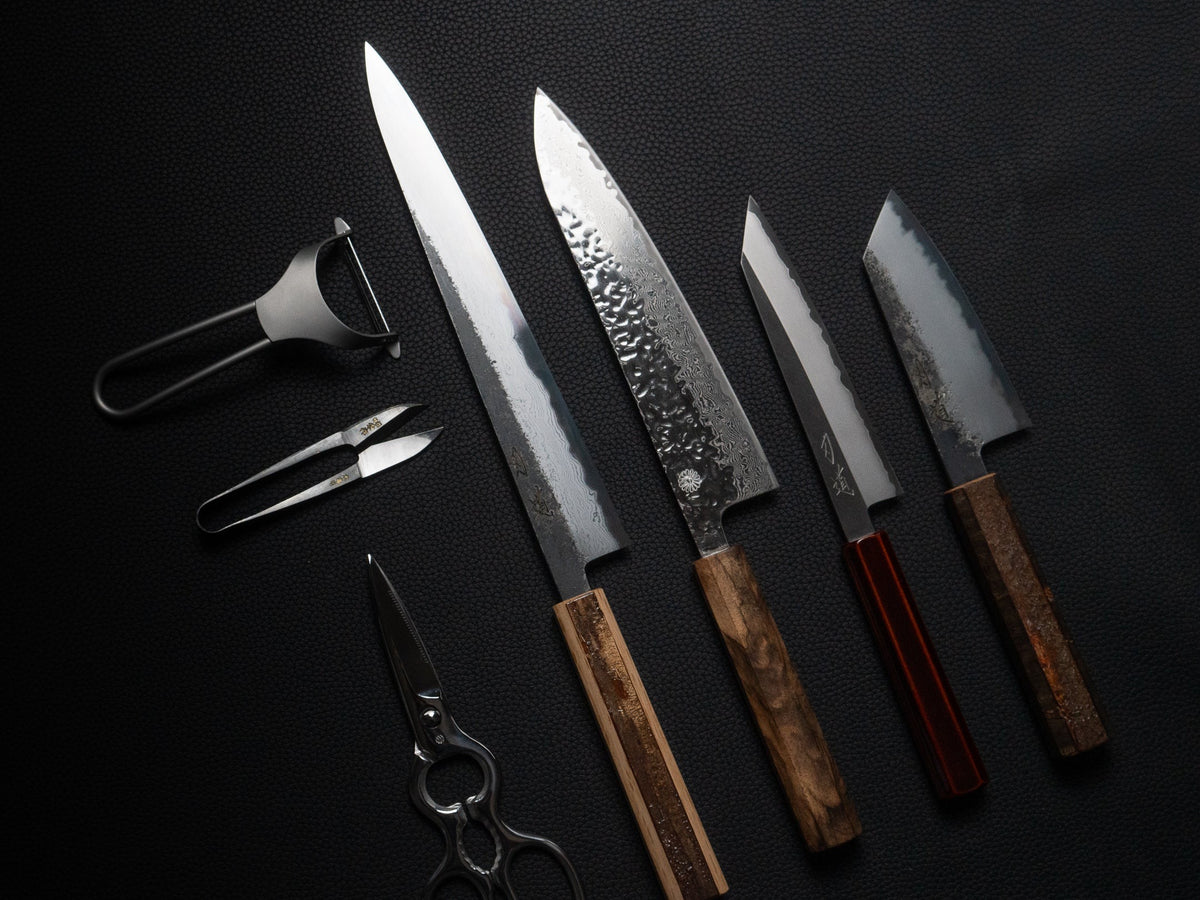
You will find honesuki and other boning knives under filleting and boning.
Questions and answers
Can a honesuki go through bone?
No. It goes through cartilage and joints. Joint the chicken at the joints and leave the bones whole. If you need to cut through bone, use a cleaver or a heavy chopper.
Honesuki or deba for chicken?
For jointing chicken the honesuki is the easiest to control, because the tip is narrow and the blade short. The deba is heavier and can take small fish bones. If you mostly fillet fish, choose a deba. If you mostly joint poultry, choose a honesuki.
How long should a honesuki be?
Around 150 mm is the most common and suits chicken and duck. For larger birds there is the garasuki, which is longer and thicker. Any shorter and the knife becomes more of a petty.
Can a honesuki be used for anything other than chicken?
Yes. It is made for poultry and small animals such as rabbit, and it works for trimming and cleaning up meat. For vegetables and bread it is too short and too thick behind the edge.