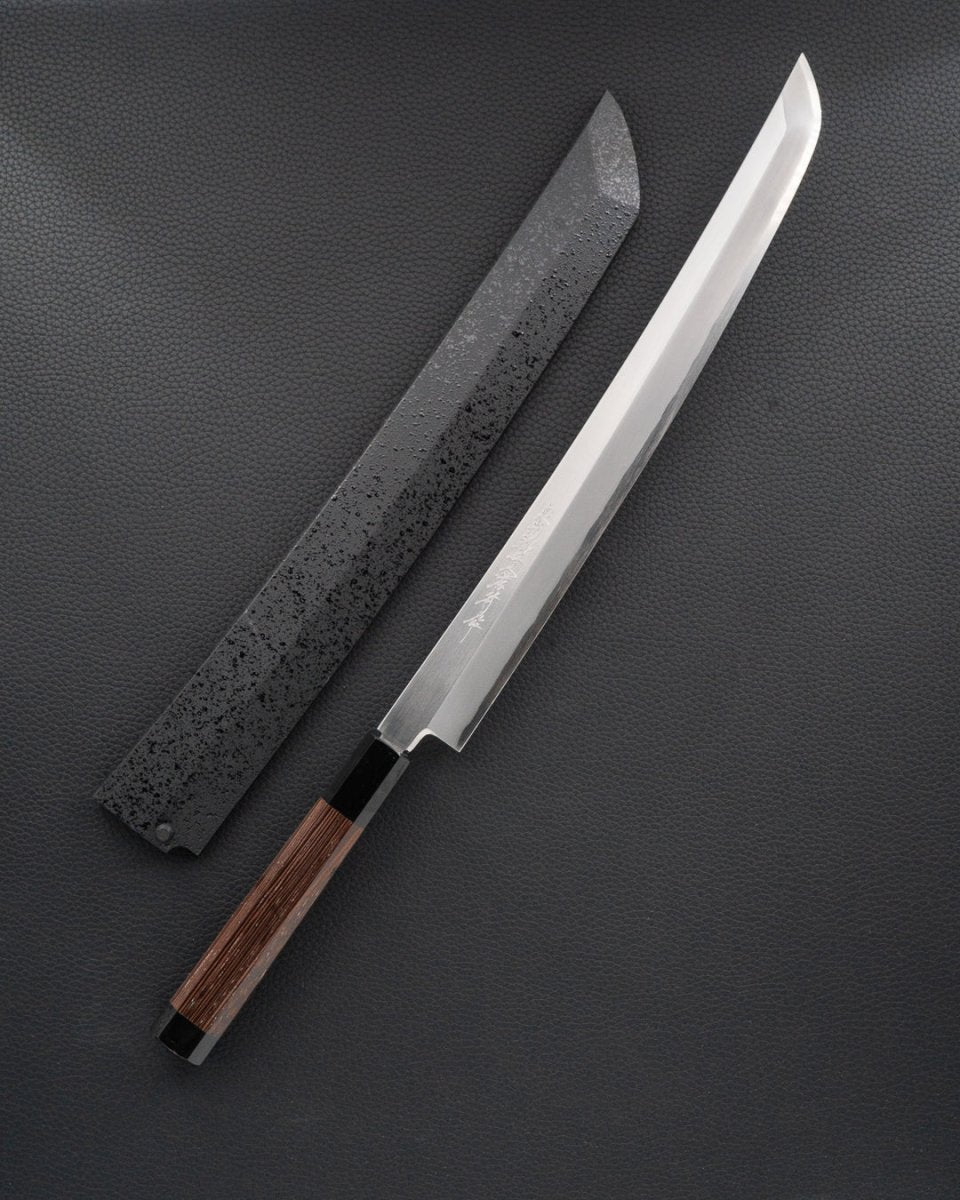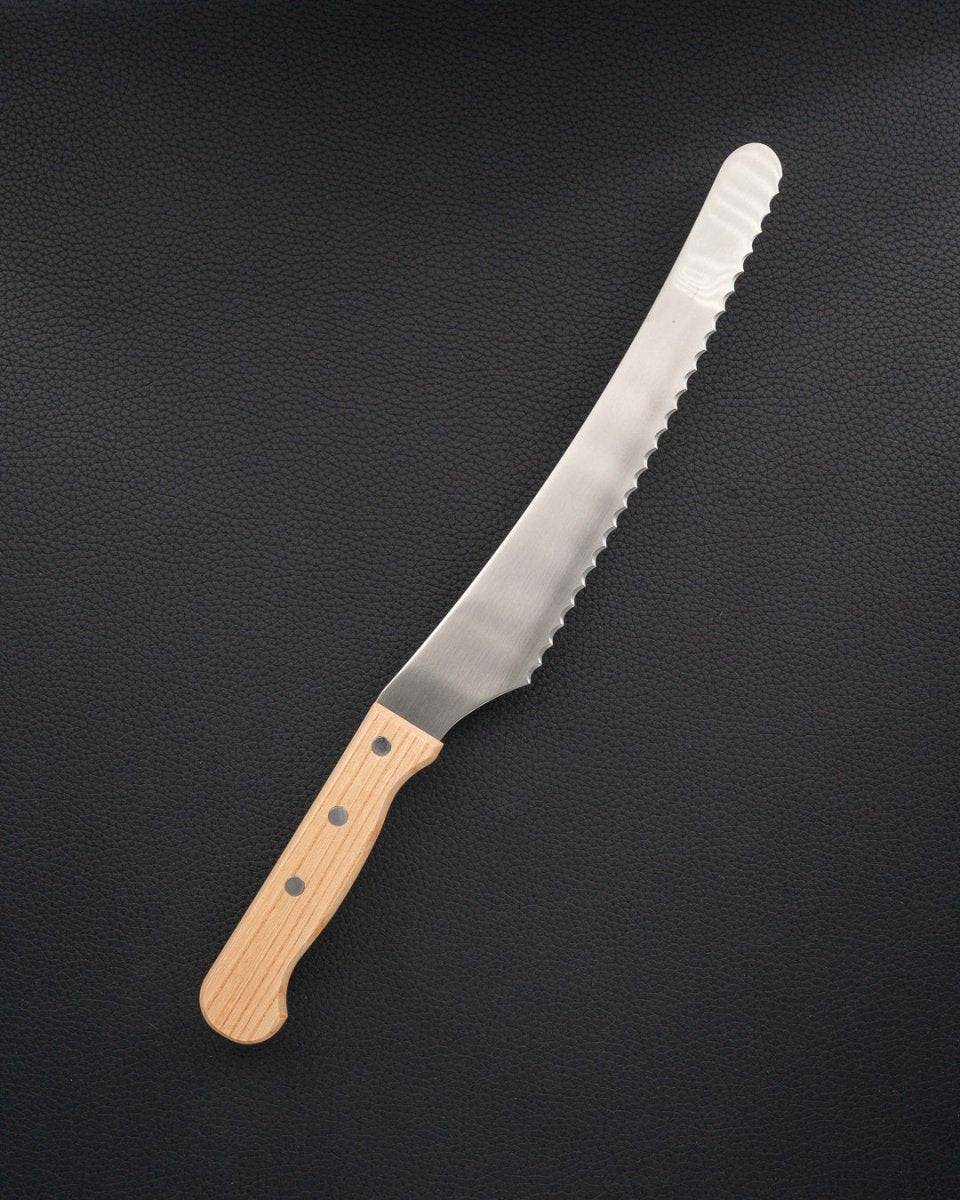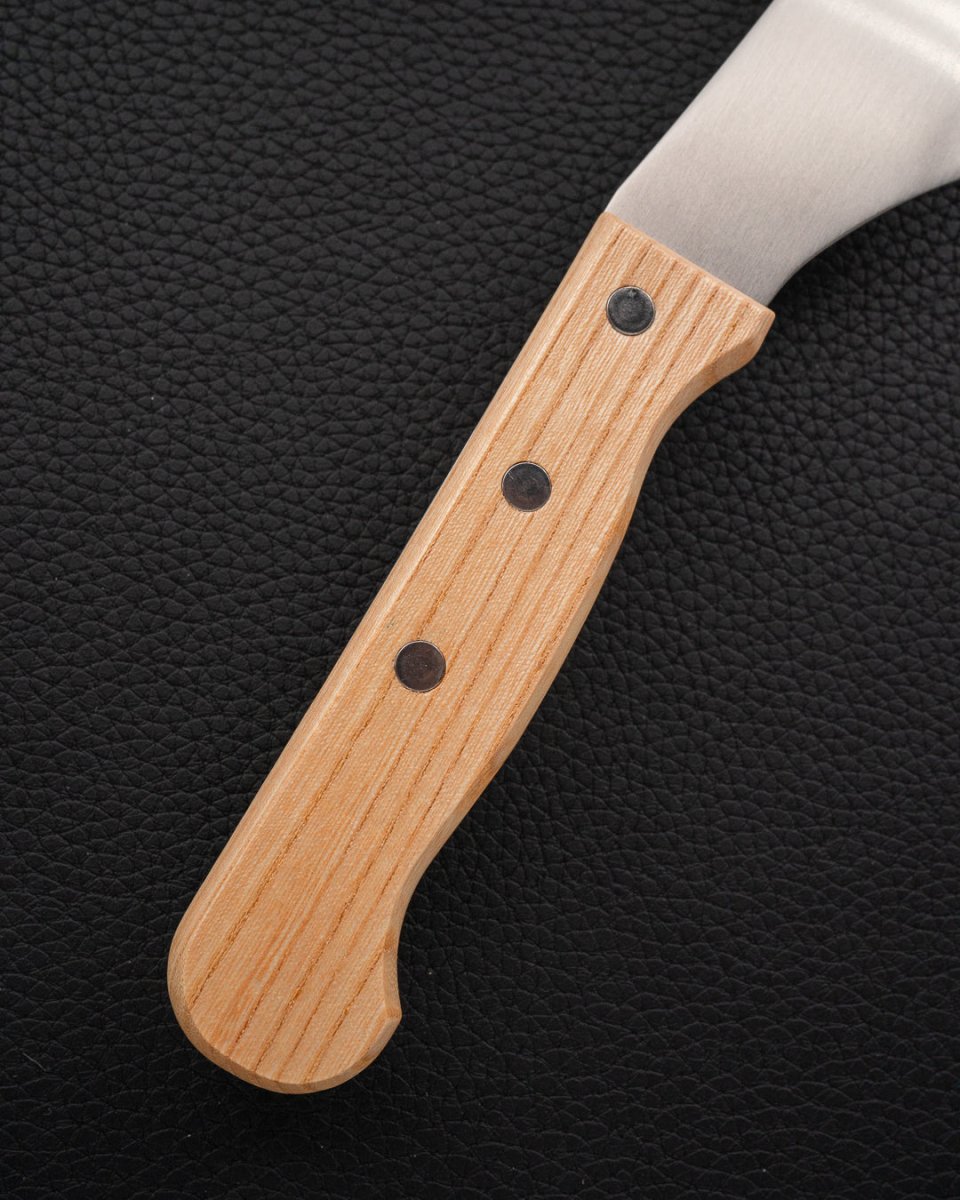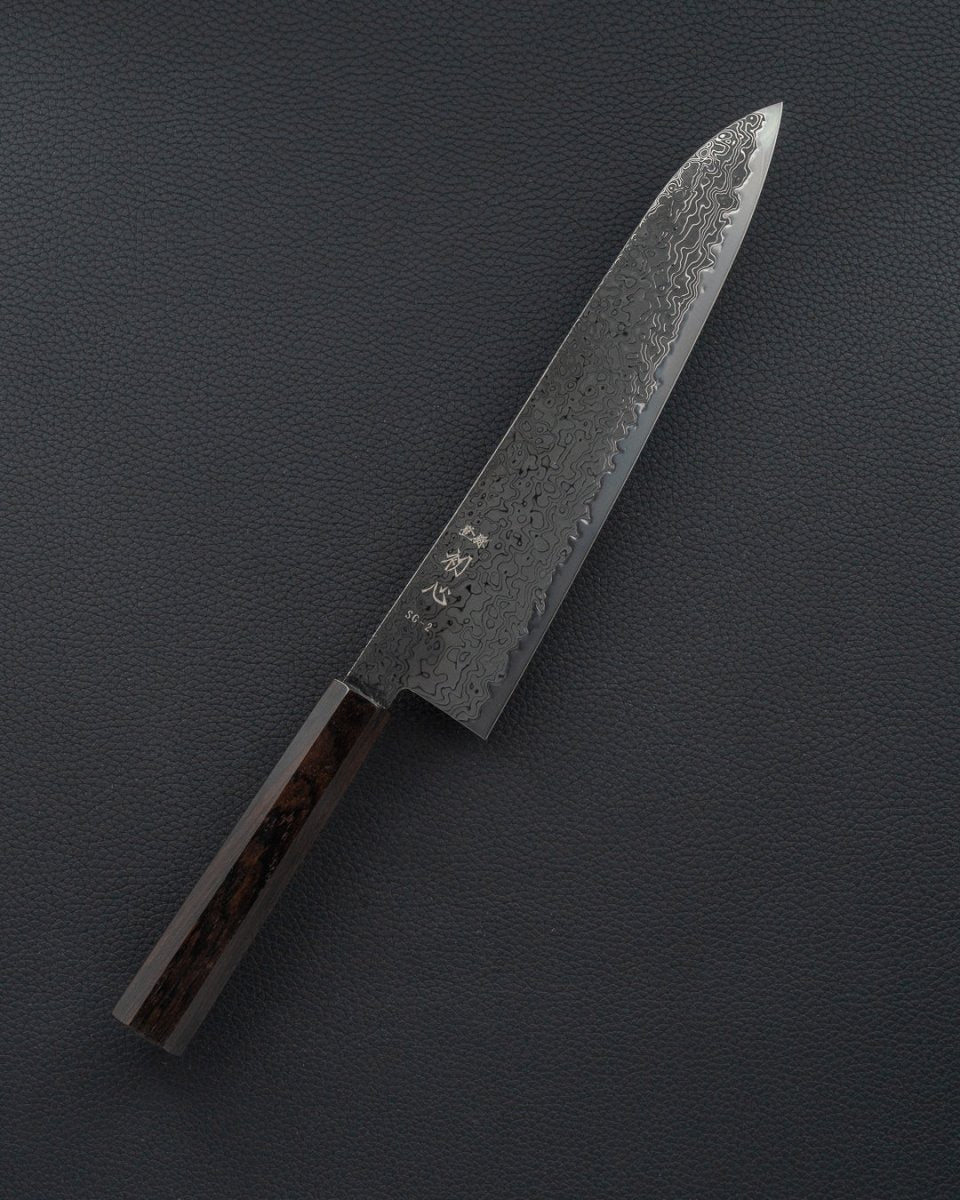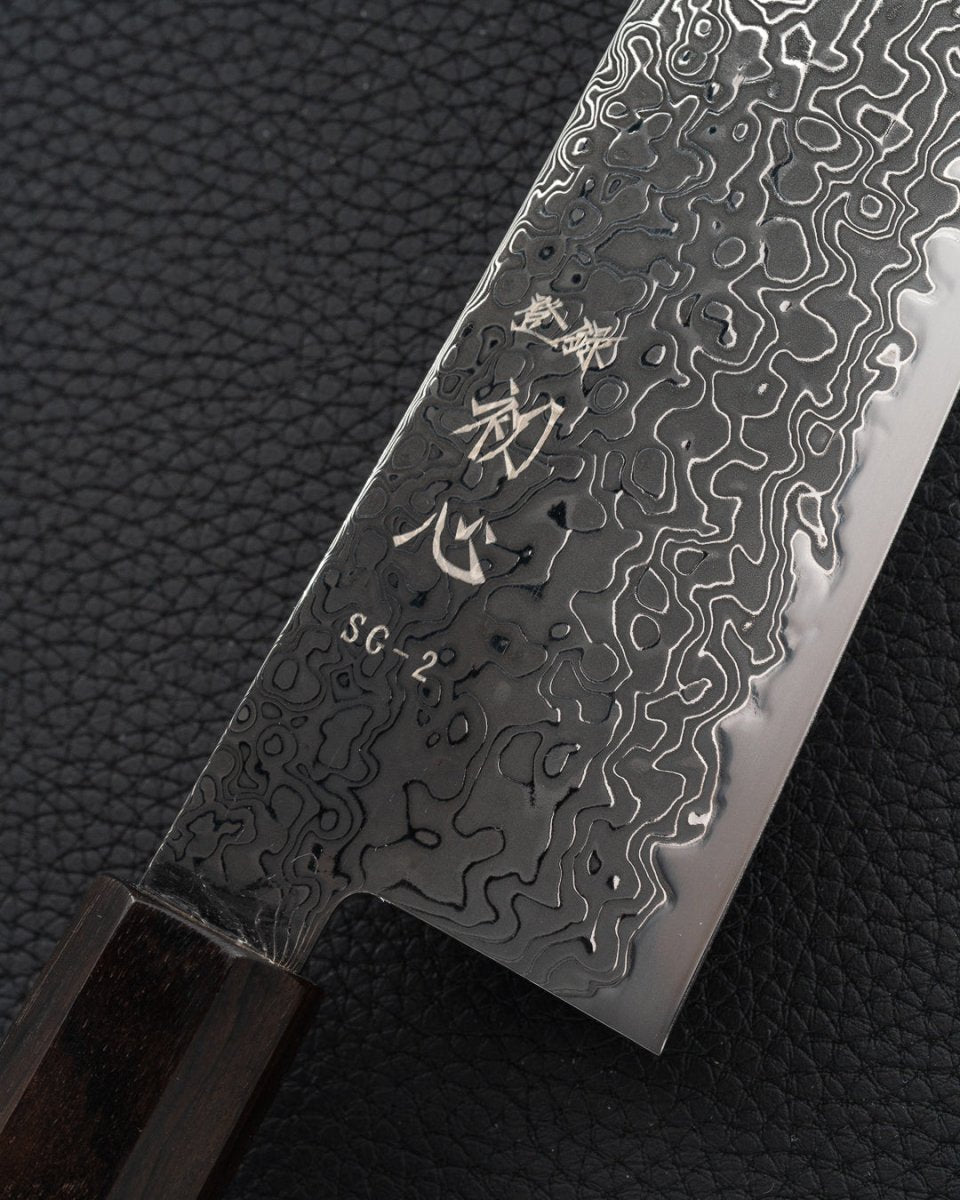






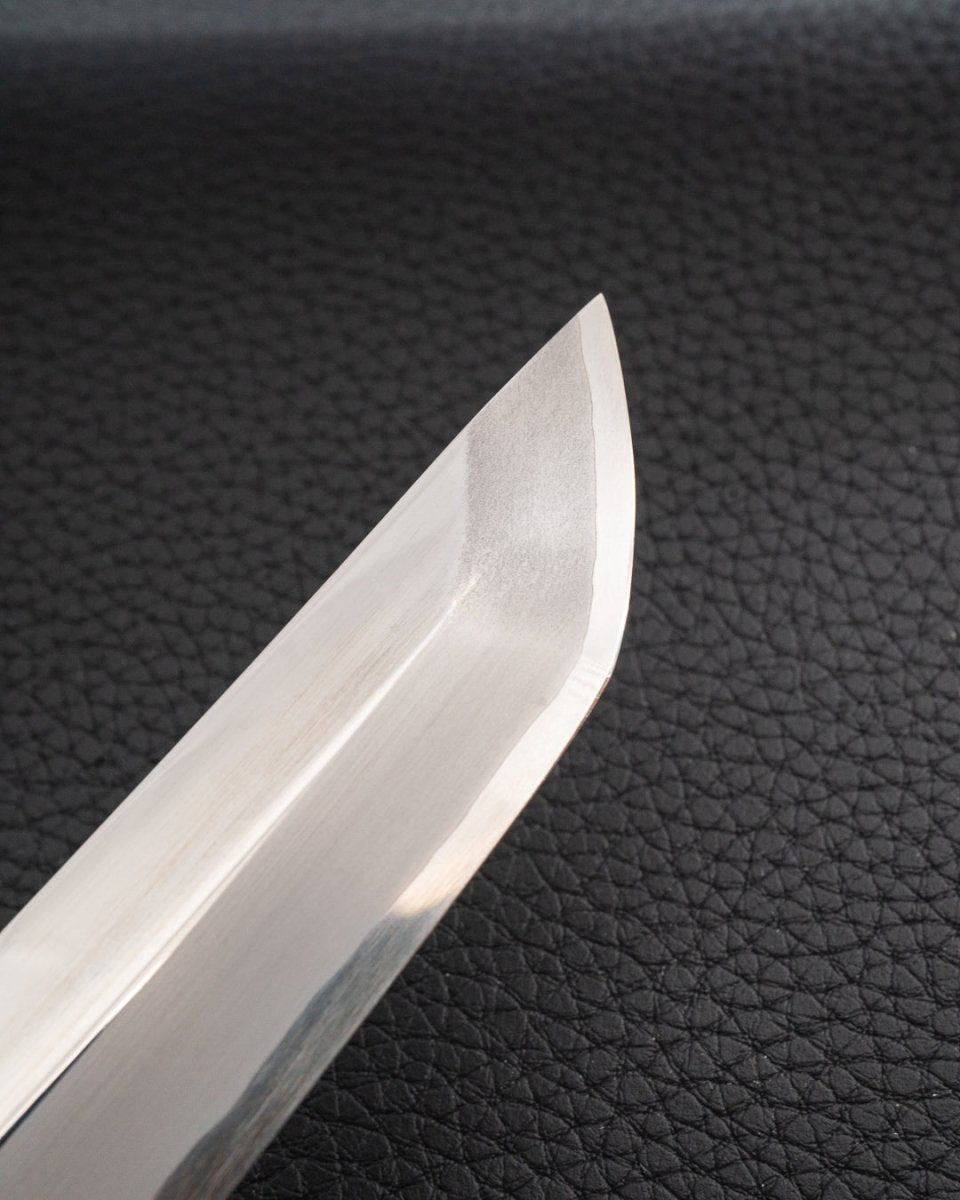


SAKAI TAKAYUKI Zangetsu Ginsan Mirror Sakimaru 330 mm
For those who slice sashimi and want a tip that can take more.
You have another variant of this item in your wishlist.
Goes with the knife


Choose options
You have another variant of this item in your wishlist.
Description
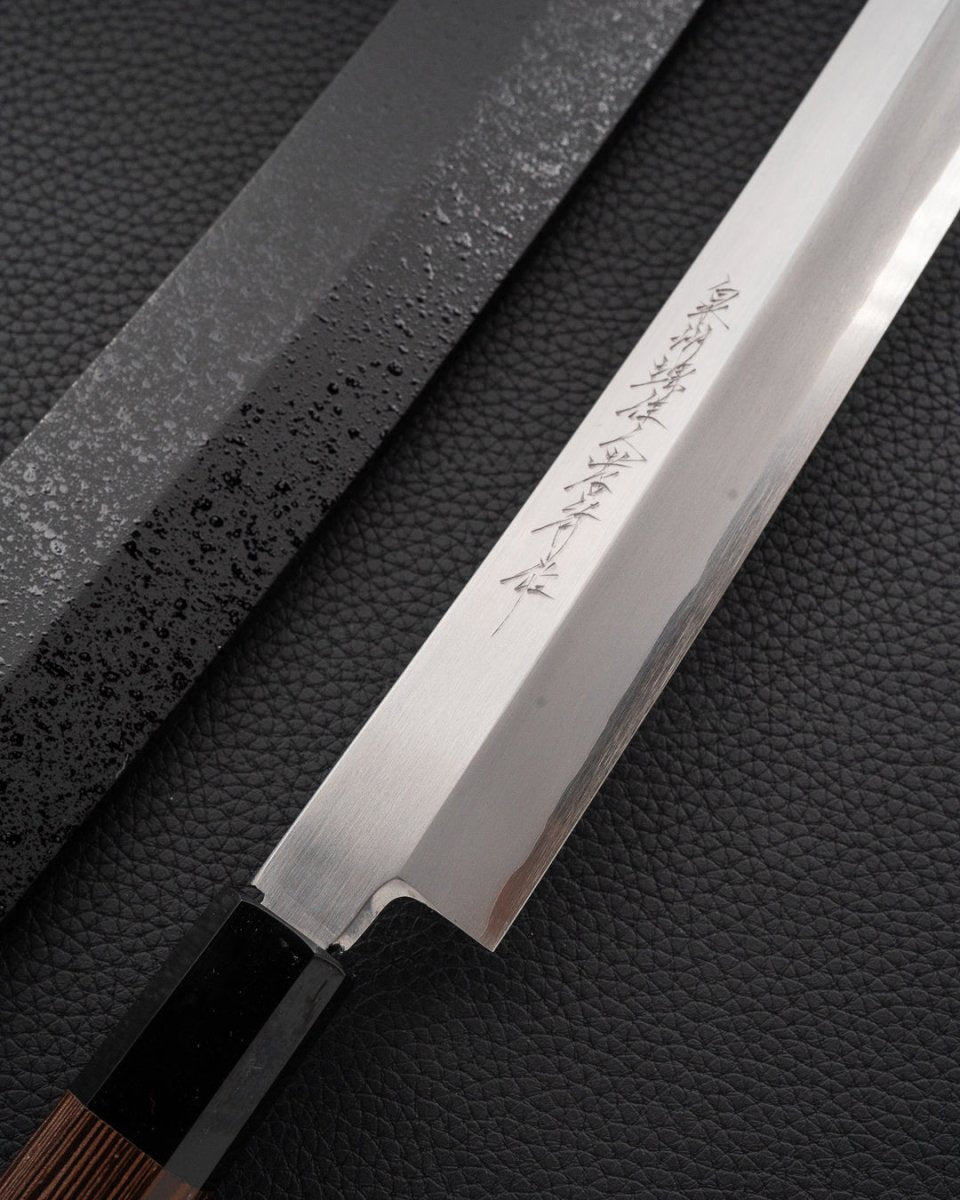
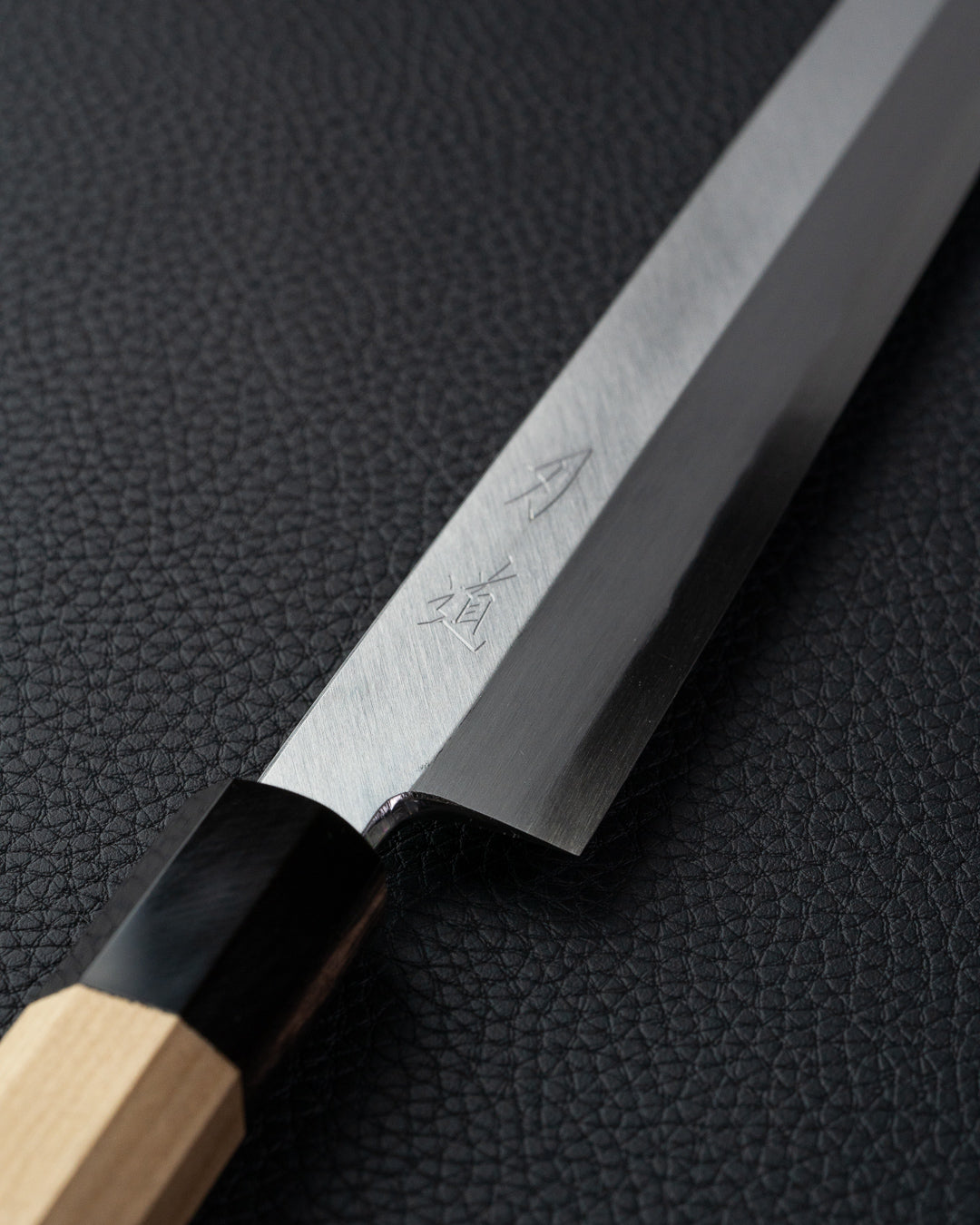
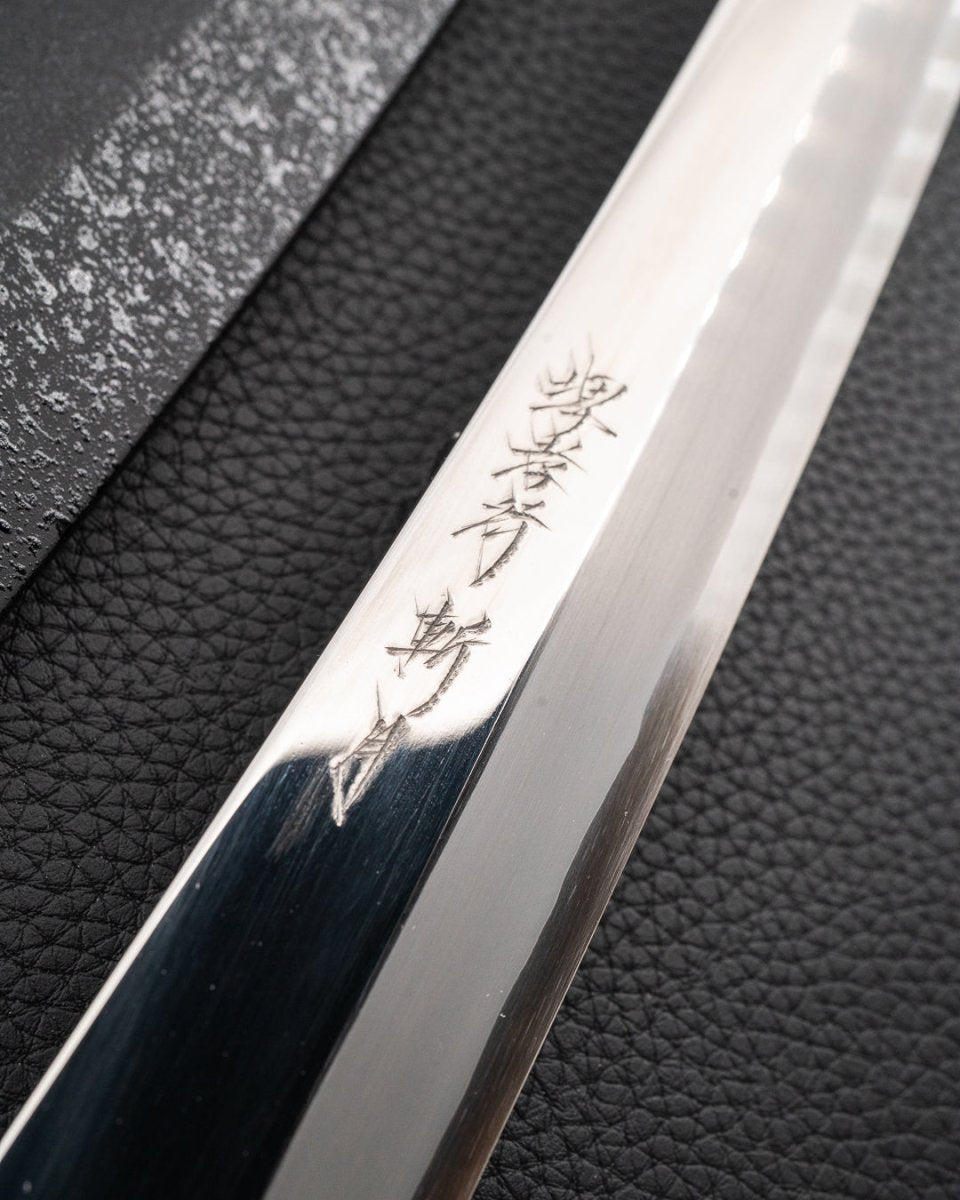
This sashimi knife is handmade in Sakai, Japan, by Aoki Hamono. The blade is Ginsan (Silver Paper) No.3 stainless steel, known for its sharpness, durability and rust resistance. The knife is polished to a mirror finish and has a traditional Kasumi look with a curved shape. The handle is octagonal wenge wood with a buffalo horn ferrule, which gives a balanced, comfortable grip. Comes with a magnolia saya for safe storage.
Made for precise cutting of sashimi and sushi, and the result of traditional Japanese craft combined with modern technology.
Sakai Takayuki · Sakai, Osaka

Sakai Takayuki is Sakai's best-known knife brand, made by Aoki Hamono in a city that has forged knives for 600 years.
All knives from Sakai TakayukiSpecifications
- Knife type
- Sakimaru
- Region
- Sakai, Osaka
- Blade length
- 330 mm
- Edge
- Single bevel
- Right-/left-handed
- Right-handed
- Item number (SKU)
- ST4238-M
- Weight
- 263 g
About the knife type: Sakimaru
A sakimaru is a traditional Japanese knife with a straight spine and a tip that resembles a katana. It is a variant of the yanagiba and takohiki, used mainly to slice raw fish for sushi and sashimi. The long, narrow shape lets you slice through fish in one smooth movement, giving precise, clean cuts.
About the steel: Ginsan (Silver #3)
Care and maintenance
Wash by hand in warm water, and dry it straight away.
Never the dishwasher. Use a cutting board of wood or plastic, not glass or stone.
Similar knives