
Leather strop and honing rod: keeping the edge between sharpenings
A leather strop and a honing rod straighten the edge between sharpenings. They do not create a new edge. For Japanese knives, use a leather strop or a ceramic rod. A steel rod can chip a hard edge. Run the knife over the strop about once a week, and send it for sharpening when the strop no longer helps.
What happens to the edge
The very tip of the edge is so thin that it bends a little every time it hits the board. After a while it stands crooked, and the knife feels dull even though the steel is still there. The strop and the rod straighten it again.
Neither removes much steel. In the end the edge wears round, and then neither of them helps. The knife has to go on a stone, where a new edge is ground from both sides. If you keep the edge up, the knife needs the stone less often, and each sharpening takes less steel, so the blade lasts longer.
The board decides how fast this happens. Glass, stone and bamboo dull the edge quickly, wood and rubber are kind to it. There is more on this in the article about cutting boards.
Three tools
| Leather strop | Ceramic rod | Steel rod | |
|---|---|---|---|
| Removes steel | No, straightens and polishes | A little | A little, unevenly |
| Japanese knives | Yes | Yes, with a light hand | No |
| The angle | Forgives a little, the leather gives | Must be the same every time | Must be the same every time |
| When | Weekly, and after sharpening | When the edge feels slightly dull | European knives |
The leather strop
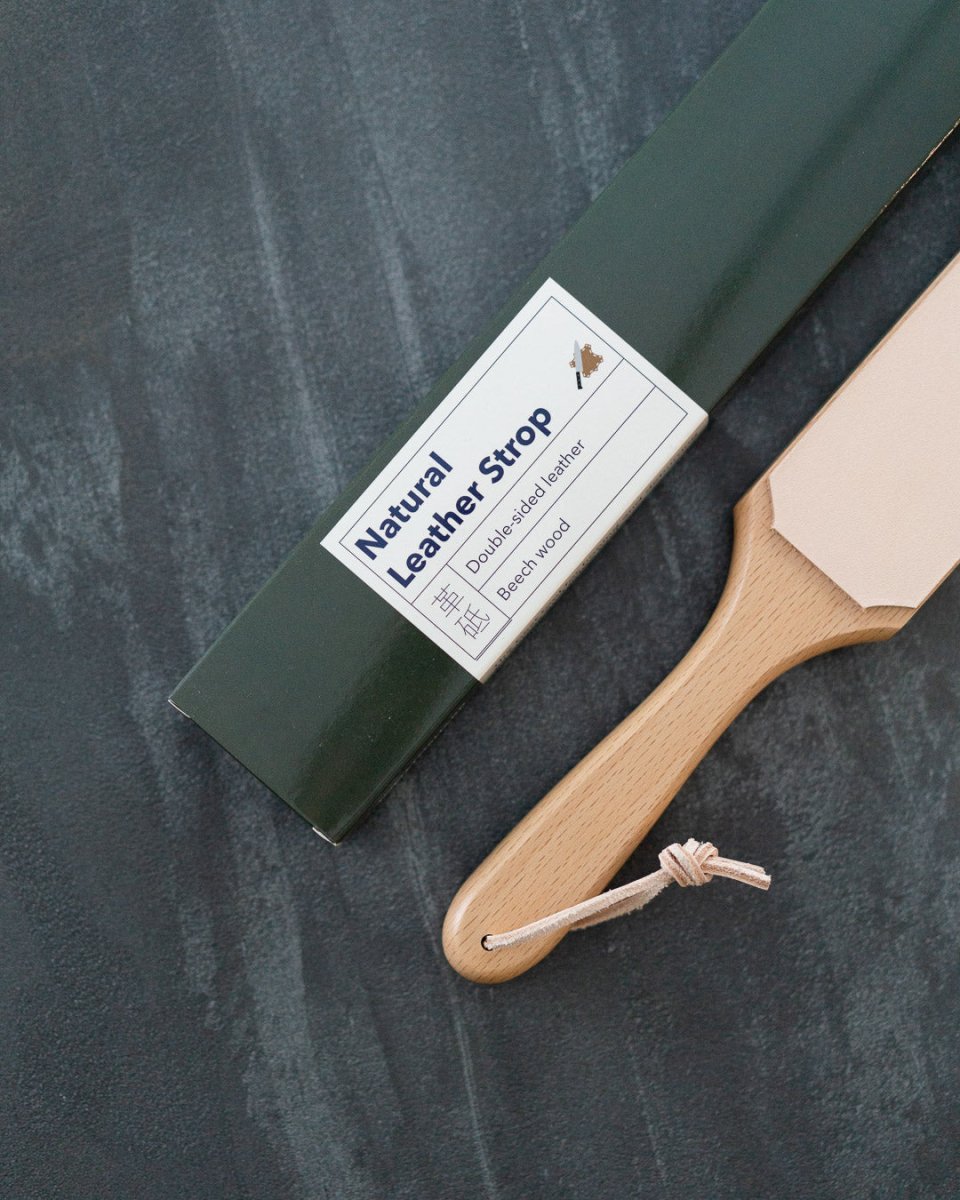
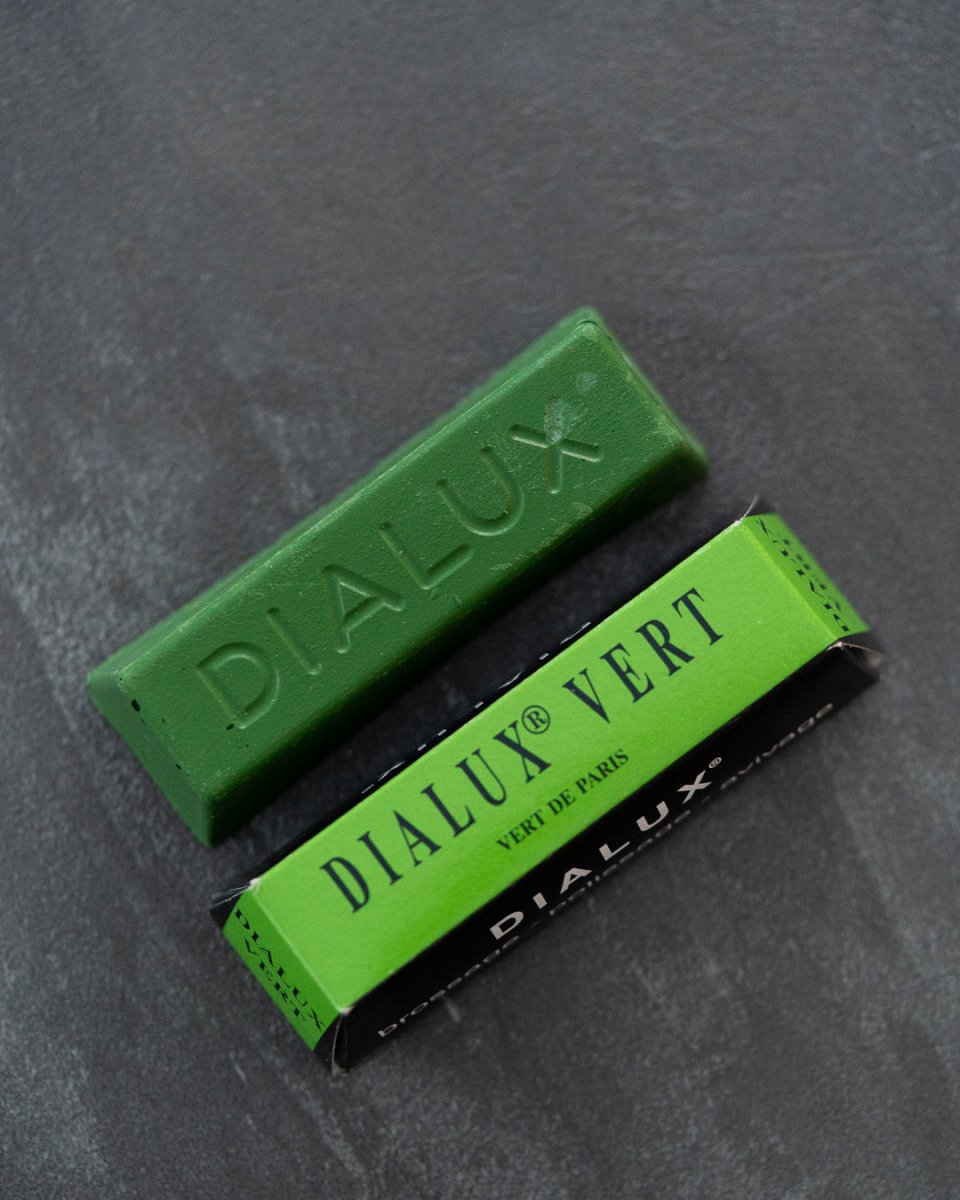
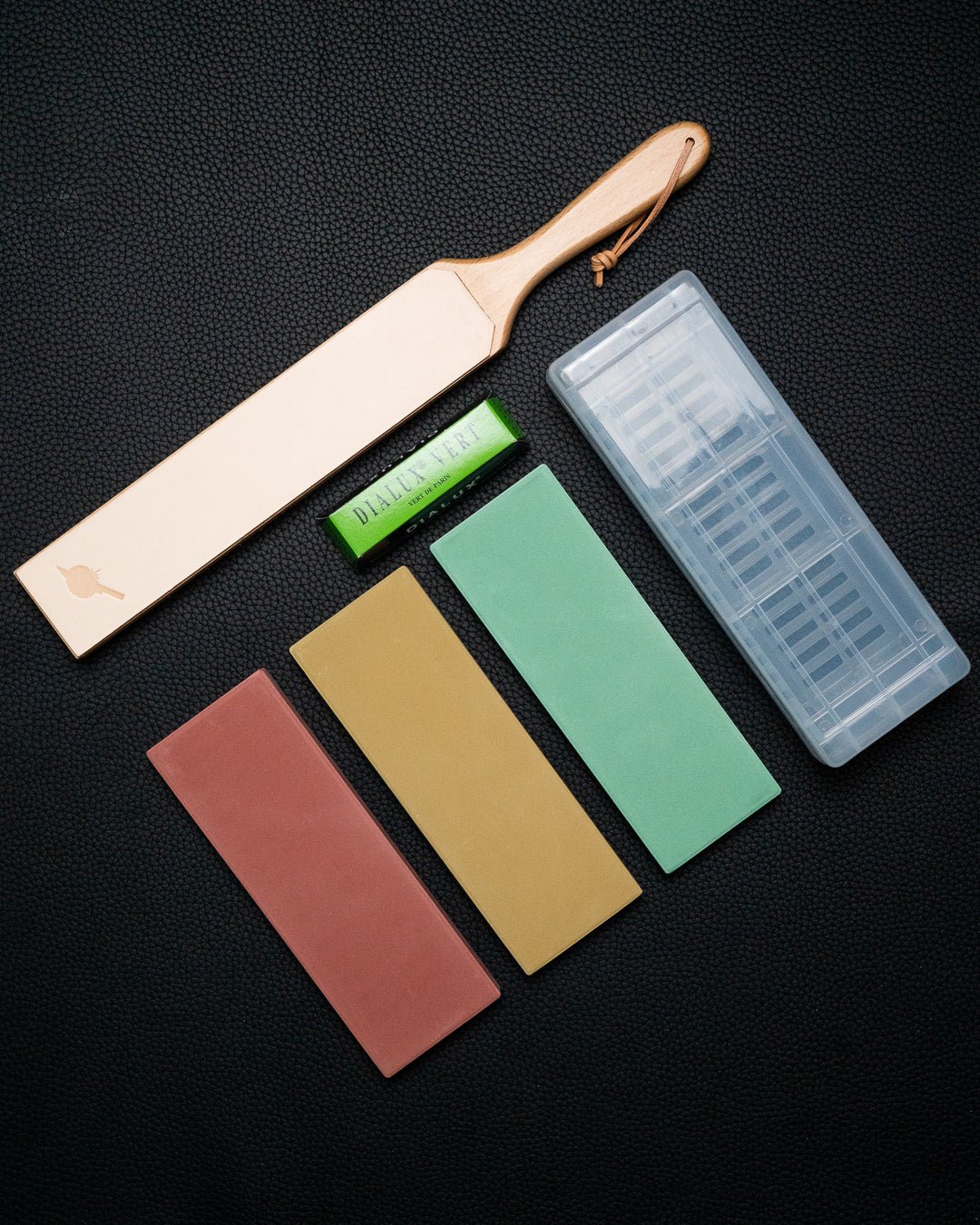
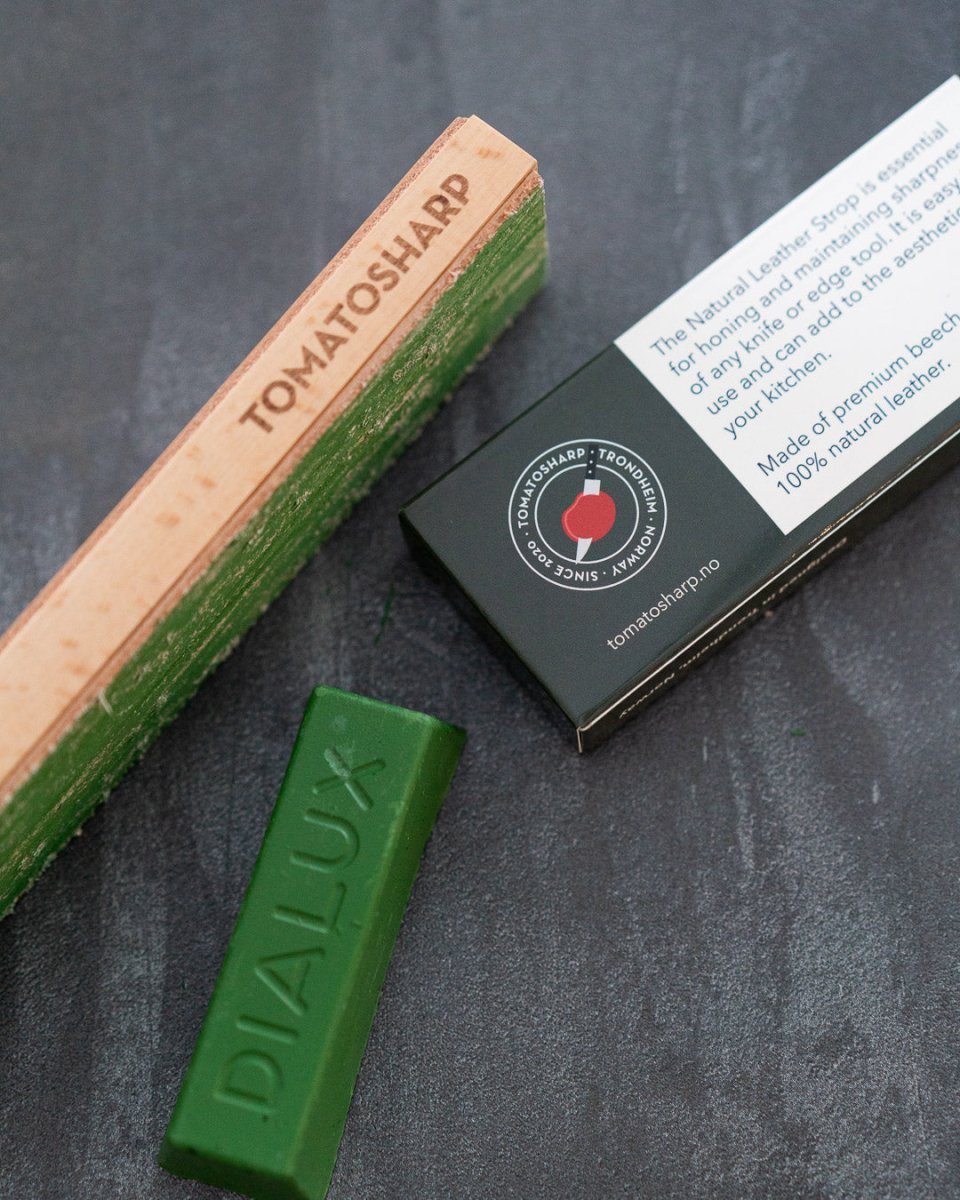
A strop is a piece of leather on a flat block. Many people rub the leather with a mildly abrasive compound, which polishes the edge a little more. Stropping takes a couple of minutes and removes no metal.
- Lay the strop on the worktop, leather side up.
- Lay the blade flat on the leather and lift the spine to roughly the same angle the edge is sharpened at, around 15 degrees for most Japanese knives.
- Pull the knife spine first, with the edge trailing. The edge should never cut into the leather.
- Do one stroke on each side, alternating, from heel to tip, around 20 strokes in all.
- Use light pressure. Heavy pressure rounds the edge.
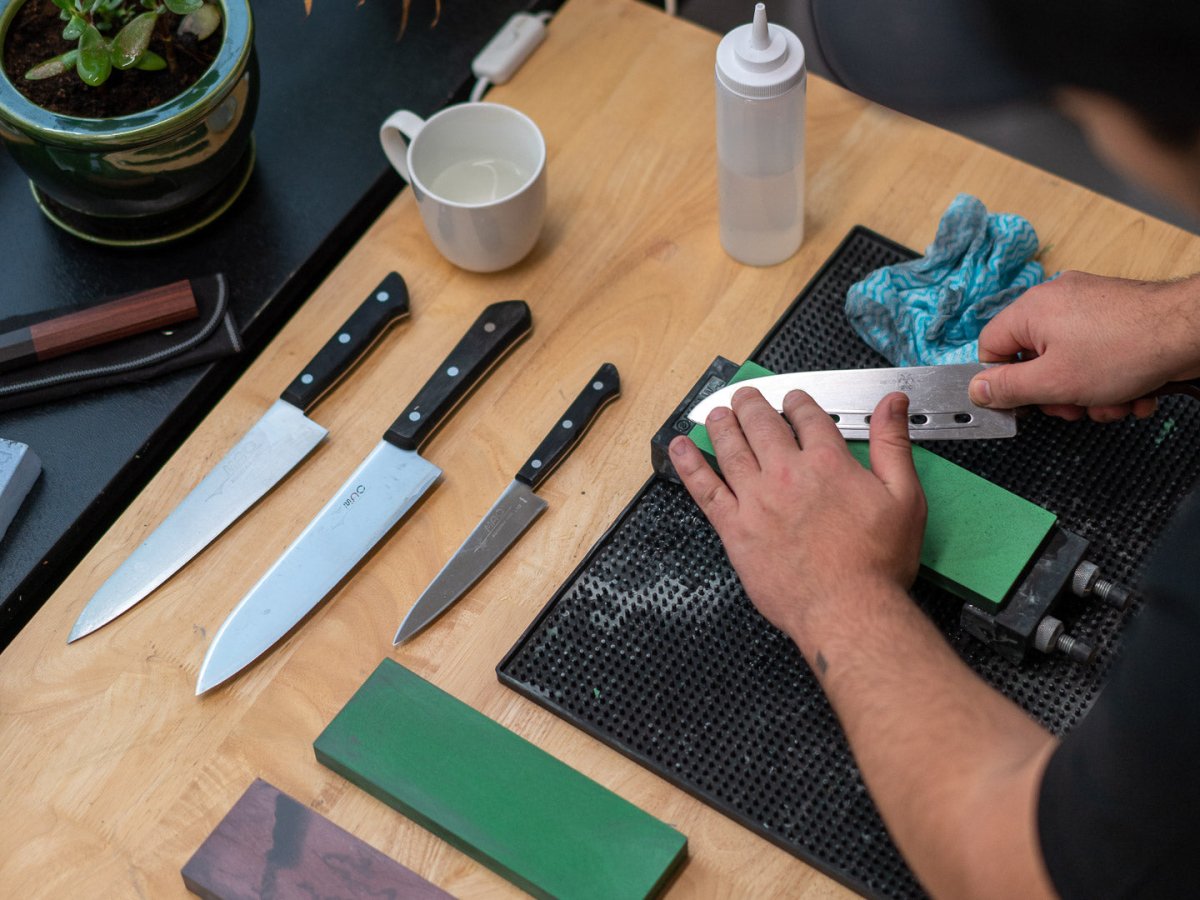
For the home cook, stropping once a week is enough. In the workshop we use the strop as the last step after the whetstones, so the burr disappears. The strop we sell is the natural leather strop.
The ceramic rod
A ceramic rod is harder than steel and has a fine surface that takes a little off the edge. It straightens the edge and removes a small burr. Kevin Kent recommends a ceramic rod over a steel rod in the Knifenerd book.
Hold the rod upright with the tip on a tea towel on the worktop. Put the heel of the edge against the rod at the same angle as the edge, and draw the knife down and towards you, from heel to tip. Switch sides with every stroke, and do five or six strokes on each side.
The Quadrille book only mentions a leather strop between sharpenings, and advises against a steel rod. If you are unsure about the angle, the strop is the safest choice.
If you have both, use the rod first and the strop last. That is how Kevin Kent shows it in the Knifenerd book, where the strop is the final step.
The steel rod
The steel rod is made for softer European knives. Metal against metal on a hard, thin edge can cause small chips. Used hard, it also sharpens unevenly and leaves a dip in the middle of the blade, so the edge no longer sits flat on the board.
We get knives in with exactly that kind of dip after years on a steel rod. It can be ground out, but it costs steel. If you have a steel rod from a knife set, use it on the European knives and leave the Japanese one alone. There too, light pressure and the same angle on both sides do the job.
When the knife needs sharpening
When the strop gives back less and less, the edge is worn. Test the knife on paper or a tomato, or do the three tests in Sharp knife.

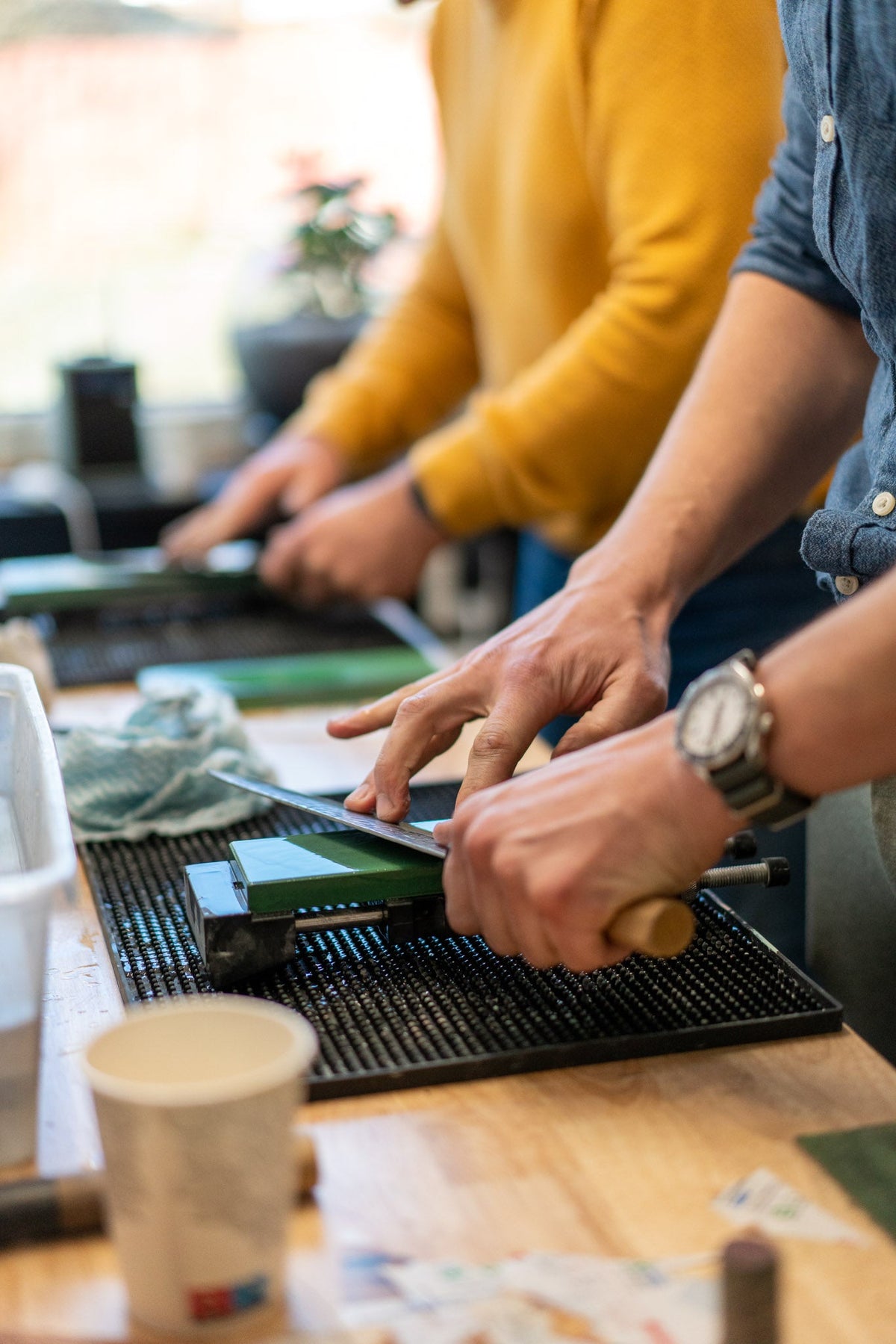
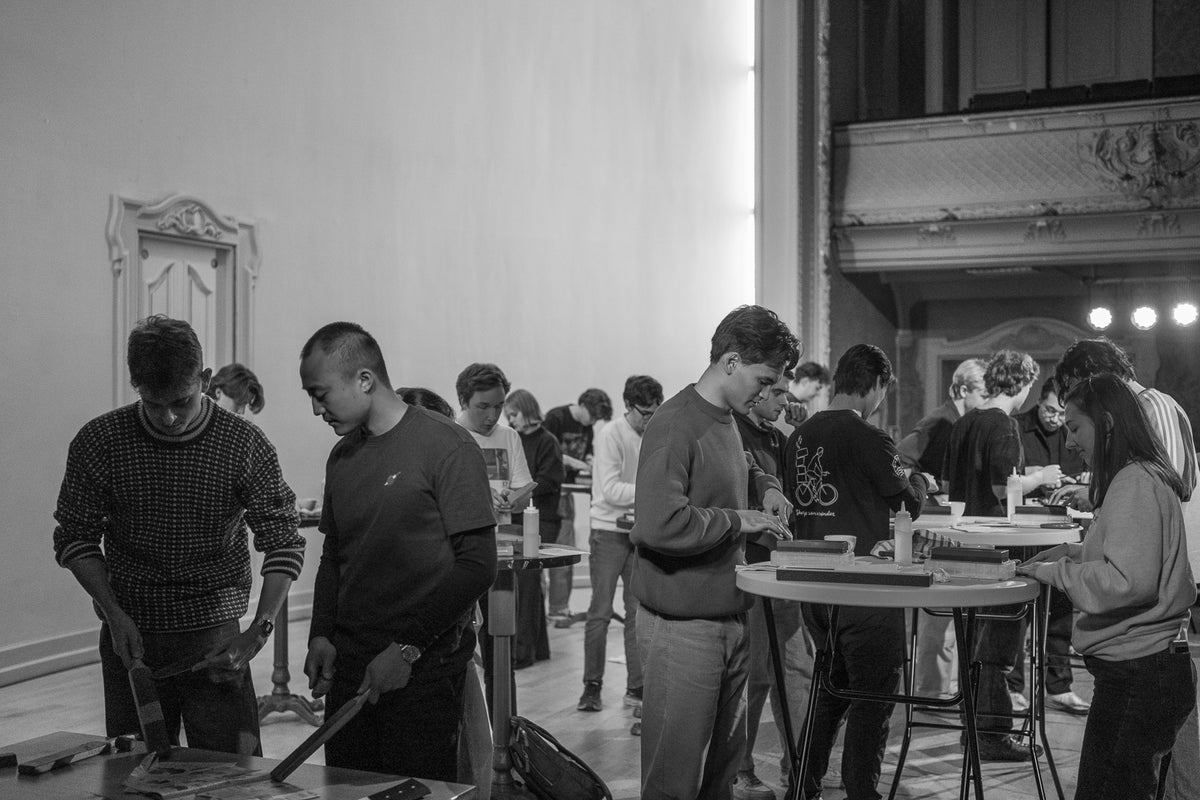
You can drop the knife off at the shop at Teknostallen or send it in with sharpening by post. Standard sharpening costs NOK 149, whetstone sharpening NOK 249. What decides the price is in What does knife sharpening cost. If you want to sharpen yourself, start with whetstones, and learn it on the knife sharpening course. Plenty of people strop a knife there for the first time.
Strops and rods are under honing rods and strops.
Questions and answers
How often should I strop the knife?
Once a week is enough for most people who cook at home. If you use the knife a lot every day, you can strop more often. It removes no steel, so stropping does not wear the knife down.
Can I use a steel rod on a Japanese knife?
We advise against it. Steel against a hard, thin edge can cause small chips and a dip in the middle of the blade. Use a leather strop or a ceramic rod, and keep the steel rod for European knives.
Which angle should I use?
The same angle the edge is sharpened at, around 15 degrees for most Japanese knives. Keep it the same every time. On the strop the leather forgives a little, on the rod it does not.
Does the leather strop need compound?
No, but it helps. A mildly abrasive compound polishes the edge a little more than bare leather. Use a small amount and spread it evenly. Bare leather is enough to straighten the edge.