



Natural whetstones: the stones from the mountains near Kyoto
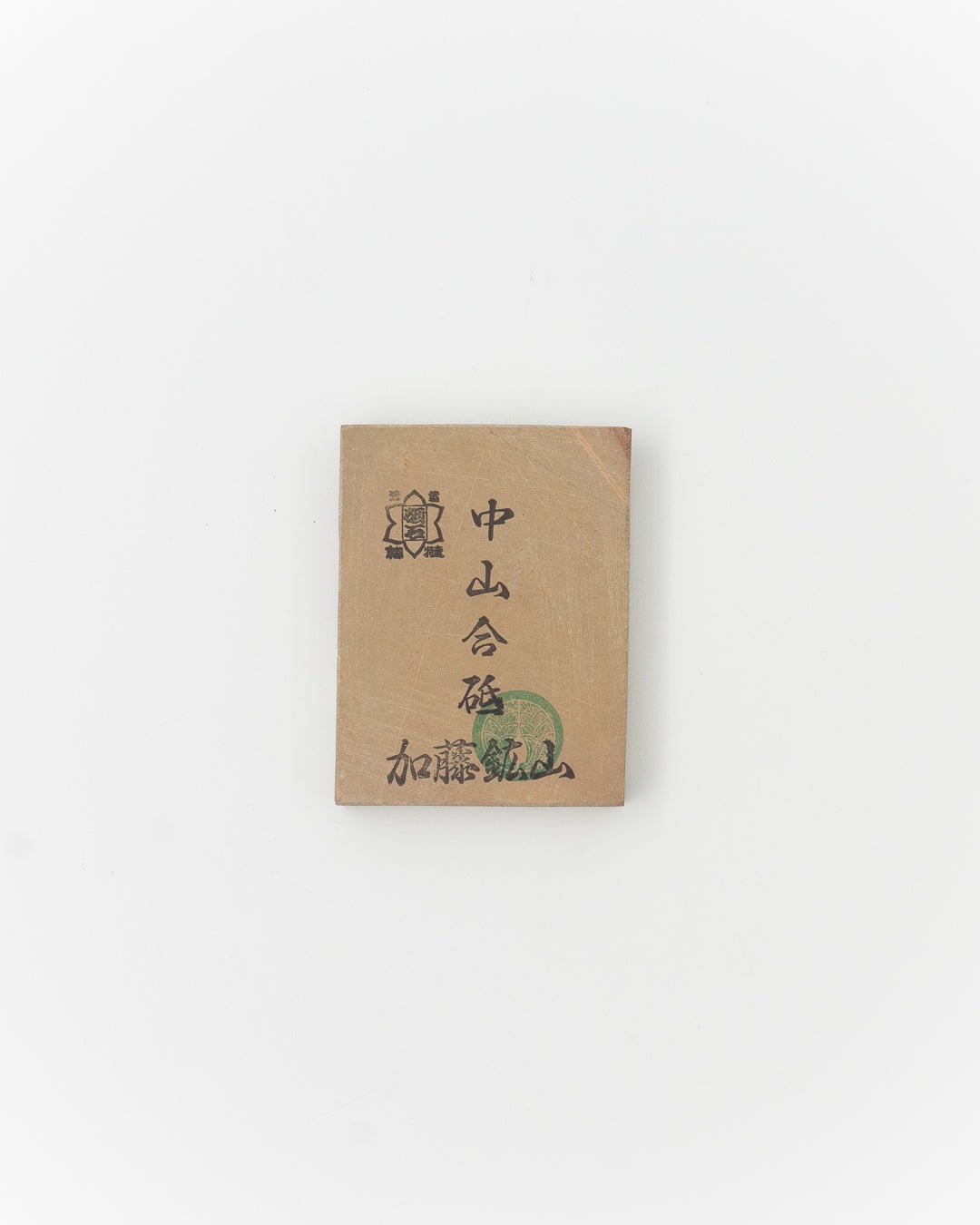
A natural whetstone, in Japanese tennen toishi, is a sharpening stone quarried from the mountain rather than pressed in a factory. The Japanese ones come from Kyoto Prefecture. Most are finishing stones that polish an edge you have already set on a synthetic stone. The effect varies from stone to stone, and they suit you once you have the basics.
The mountains north of Kyoto
Japanese natural stones are mined in the Narutaki area north of Kyoto. Mount Atago divides the mines in two. On the east side lies higashi mono, with names such as Nakayama and Shoubudani. On the west side lies nishi mono, with Ohira.
The stones need quartz and silica in the ground in the right deposits. According to The Anatomy of a Japanese Knife, that is why they are only found in a small area.
The mines are often named after the mountain, yama in Japanese. The stones are graded by the layer they are cut from, their appearance and their hardness. Two stones from the same mine can still behave differently.
When we were in Japan in 2023, we visited the natural stone museum in Kameoka. The trip is in With the smiths in Japan.
No grit scale
A synthetic stone is abrasive and binder pressed into a block, and the grit is given as a number. A 1000 is a 1000. A natural stone has no such scale. Like a diamond, it is judged by its impurities, and it is described in words, for example 'very hard finishing stone'.

| Synthetic stone | Natural stone | |
|---|---|---|
| Grit | Given as a number, from 220 to over 10,000 | No scale, judged stone by stone |
| Result | The same every time | Varies with the stone, the knife and the hand |
| The slurry | Even particles | Breaks down as you sharpen |
| Use | The whole job, from coarse to fine | Mostly as a finishing stone at the end |
| Suits | Everyone, beginners included | Those who have the basics |
The slurry and the edge
When you sharpen with water, the water mixes with particles from the stone into a slurry. On a natural stone the particles break down as you go. The stone then works finer the longer you keep at it, and you can control how fine the edge becomes.
Many people build up the slurry with a nagura, a small stone of the same kind that is rubbed against the main stone. The theory is that the uneven particles give an edge with tiny teeth. Such an edge is said to stay sharp longer than the even edge from a synthetic stone. Nobody has measured it.
The finish
On a knife with a hard core and soft cladding, a natural stone gives a hazy, matt cladding and a bright core. The finish is called kasumi, mist. The line between the two steels becomes clear, and that is why many people with single-bevel knives use natural stones.
The finest hand polishing is done with finger stones. These are small pieces of a soft uchigomori stone rubbed against the blade by hand. How the layers in the blade are built is in the article about san mai.
How to sharpen on a natural stone
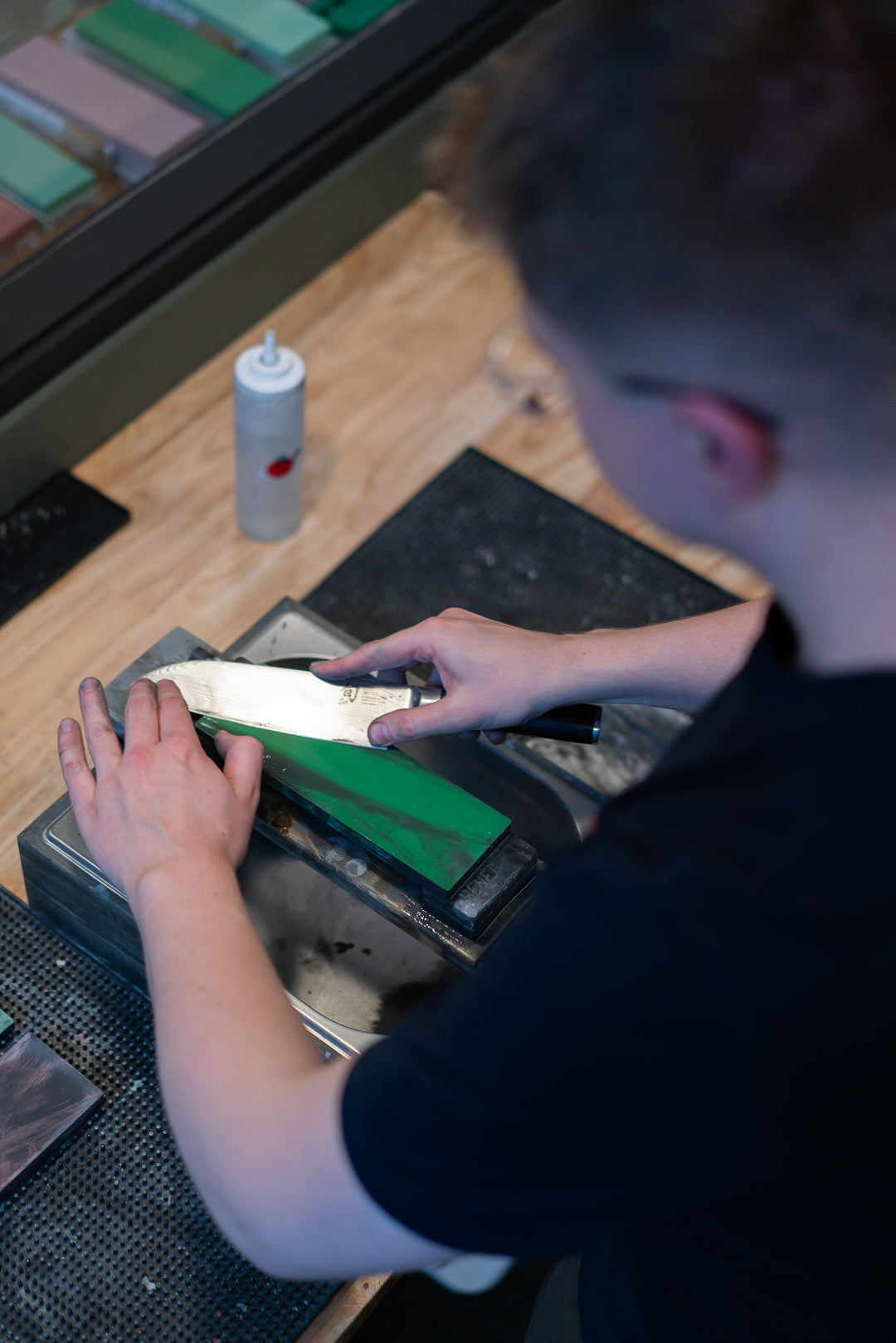
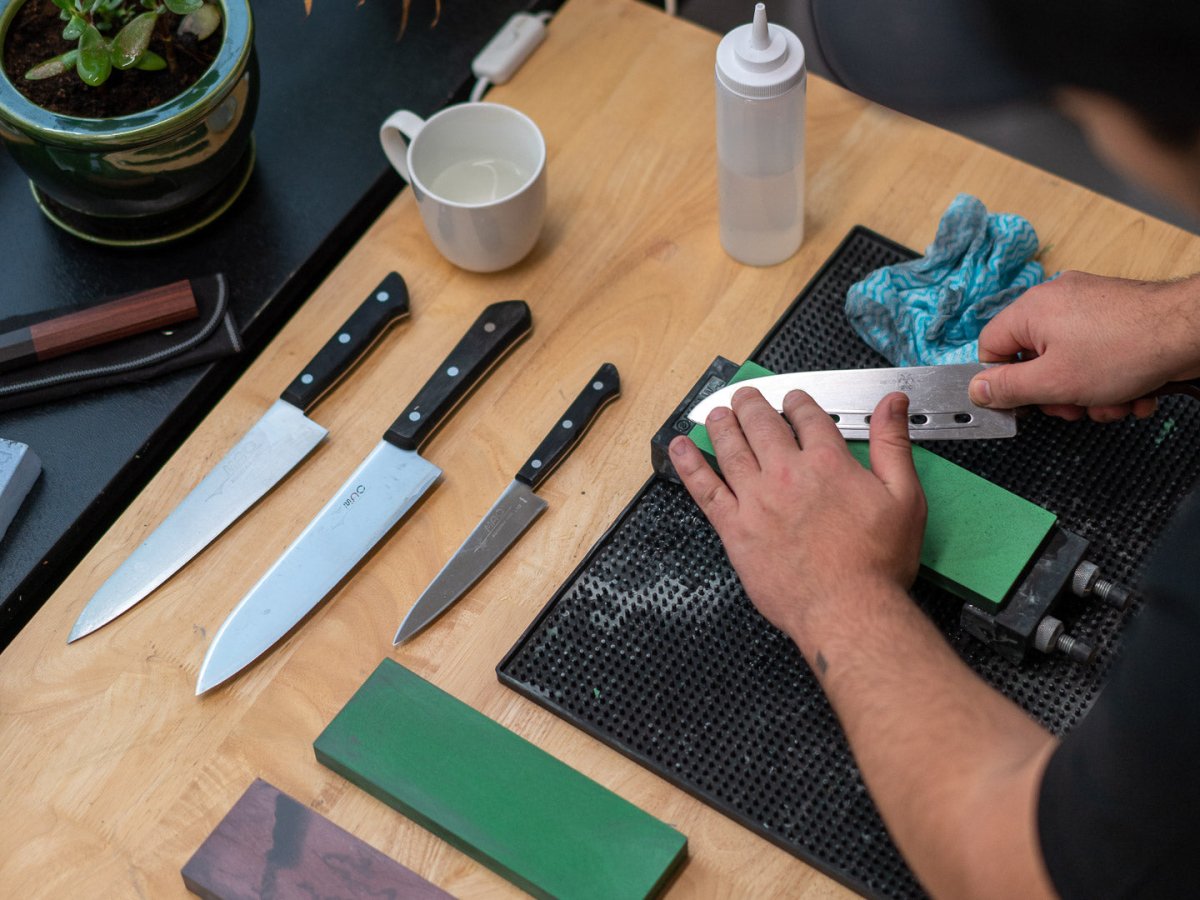
Set the edge on a synthetic 1000 first, until you feel the burr along the whole edge on both sides. The natural stone comes afterwards.
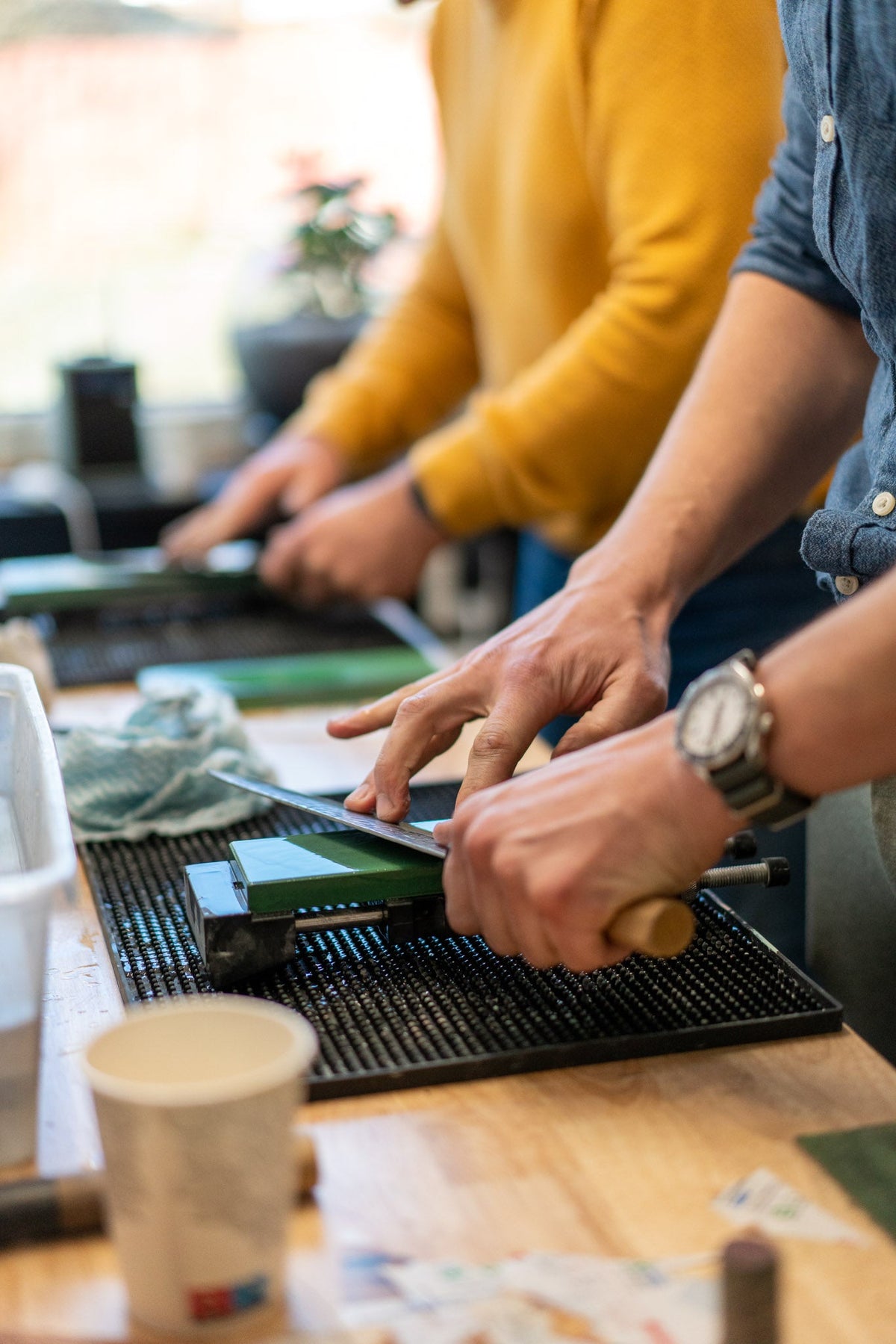
Put the natural stone on a damp towel, with water on the surface. Rub the nagura against it until a grey slurry appears. Sharpen with light pressure and the same angle as on the 1000 stone, section by section from heel to tip.
On a finishing stone you can barely feel a burr. Listen instead: the sound goes from crackling to silence when the stone has done its work. Keep the stone wet, or it turns noisy and rough.
From the workshop
We do whetstone sharpening in the workshop on synthetic Japanese stones. We need the same result on every knife, and the synthetic stones give us that. Whetstone sharpening costs NOK 249.
On the course we see that most people have their hands full keeping the same angle on a 1000 stone, and that is where you should start. Natural stones come once the angle is steady and you want to take the finish further.
When you are ready
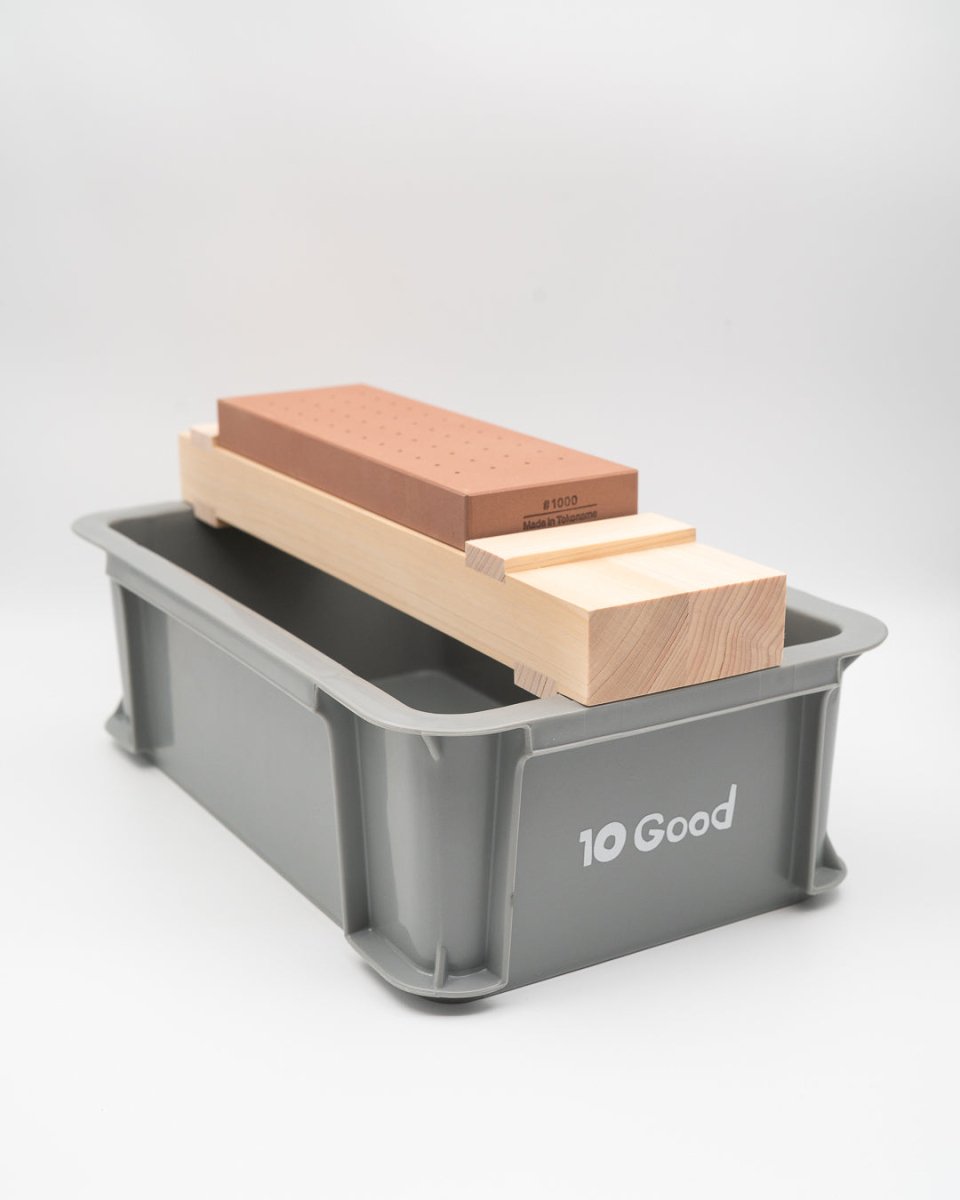
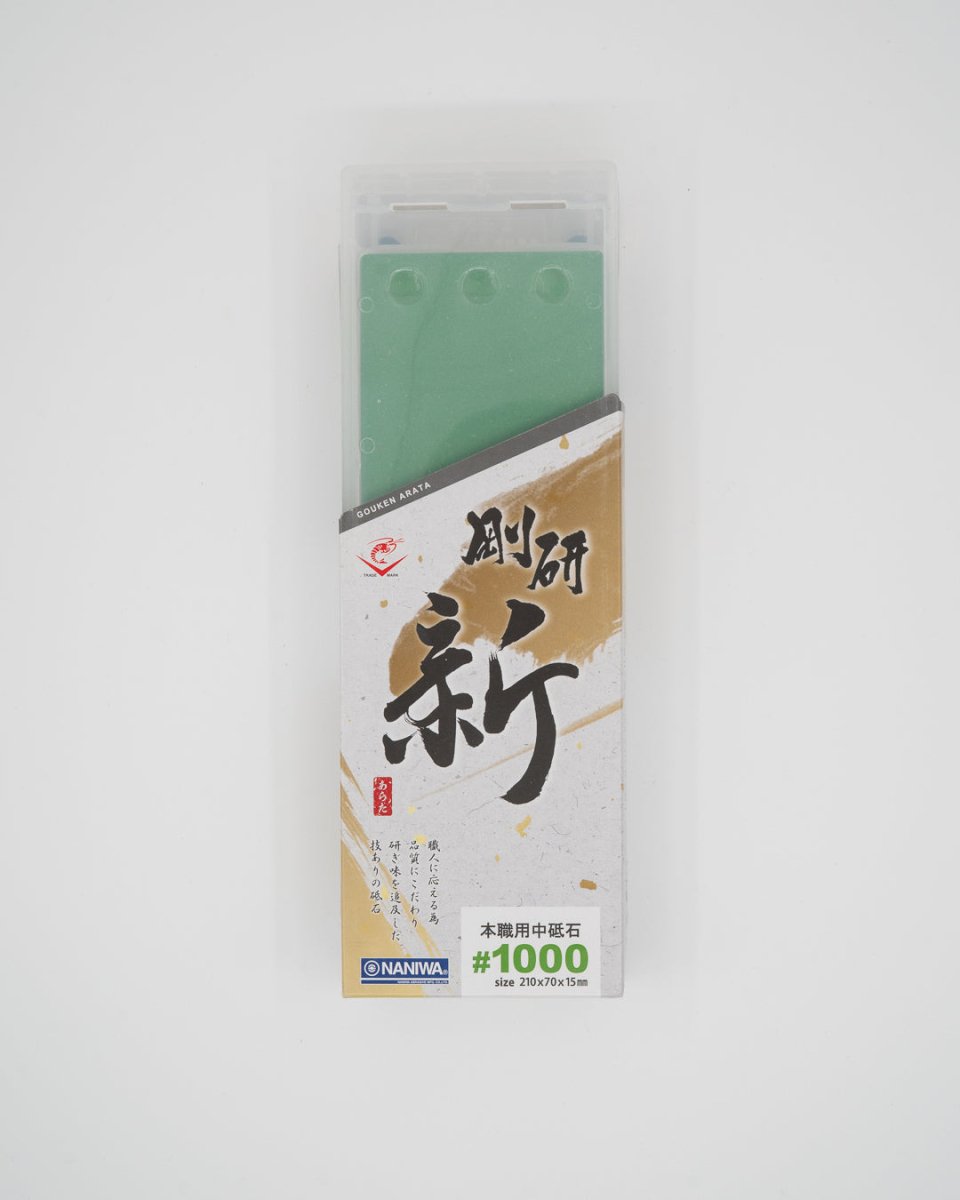
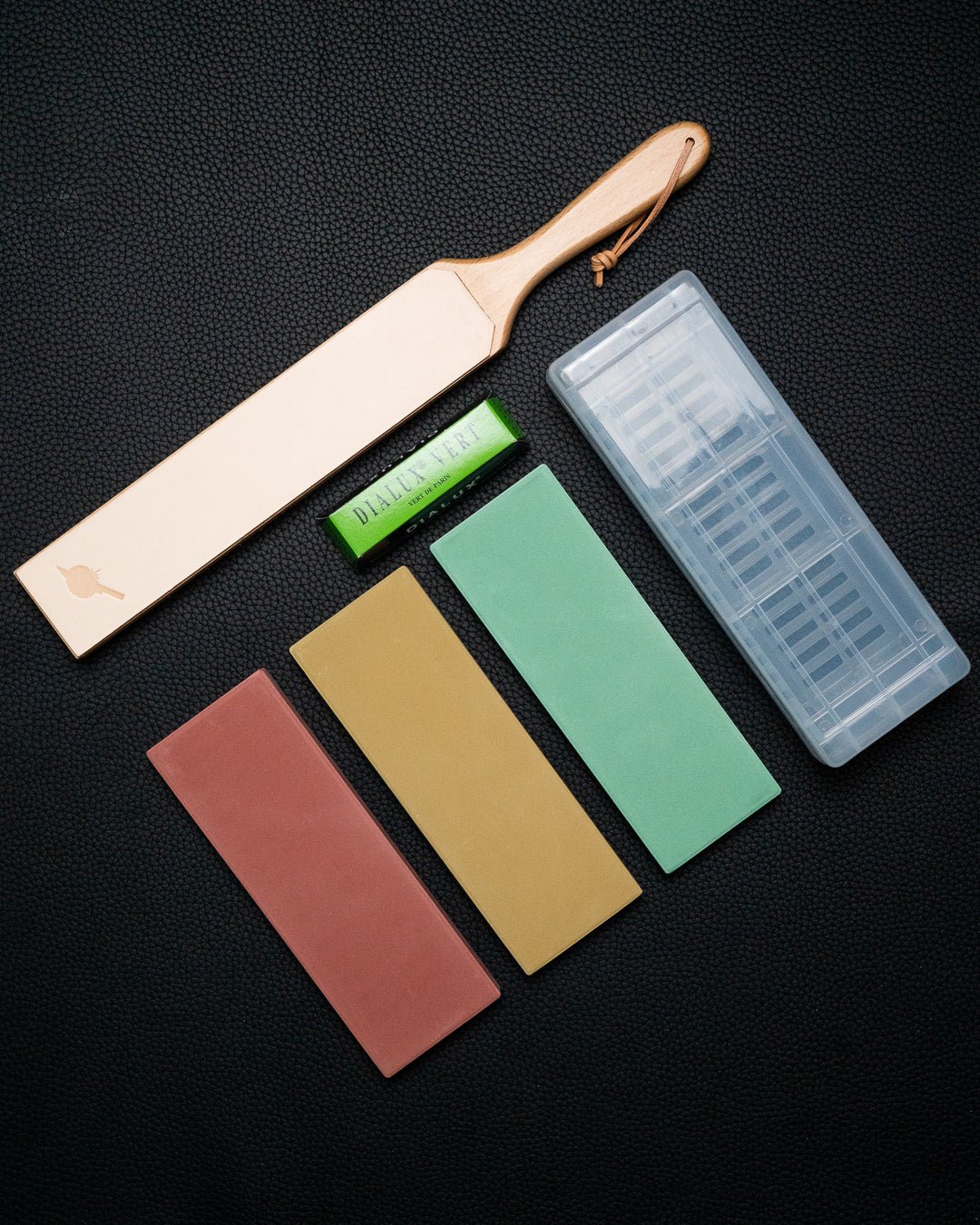
Most knives need two synthetic stones: around 1000 for the sharpening itself and a finishing stone between 3000 and 6000. The grits are in the article about whetstones, and the stones are under whetstones in the shop.
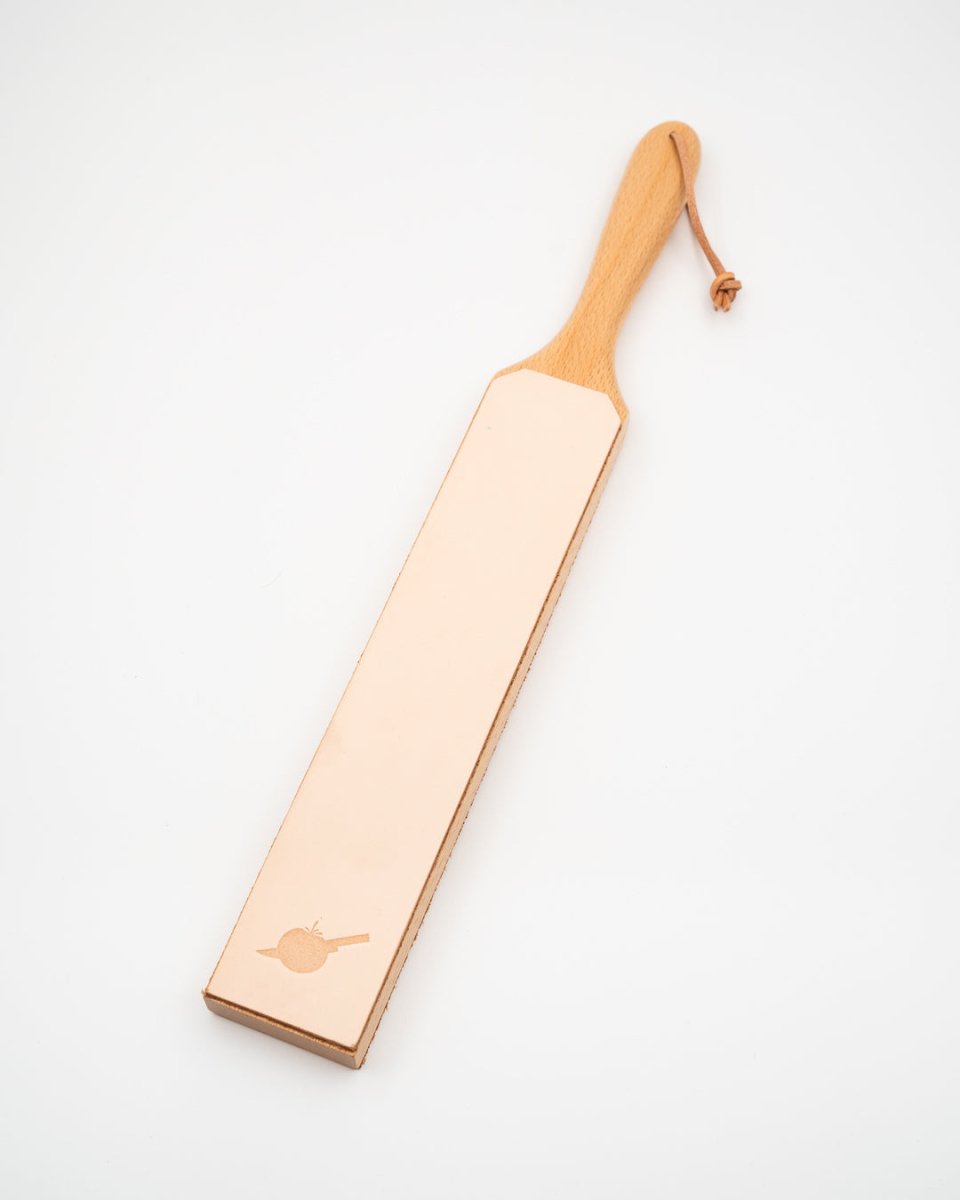
When the finishing stone no longer gives you anything new, a natural stone is the next step. We have a natural whetstone from Nakayama, one of the mines on the east side of Atago. Learn the basics first on the knife sharpening course, and take the burr off with a leather strop after the last stone.
A natural stone has to be kept flat like a synthetic one. A dished stone makes it impossible to hold the same angle. Flatten it with a coarser flattening stone at regular intervals.
Questions and answers
Is a natural stone better than a synthetic stone?
Not for most people. Synthetic stones give the same result every time and cover the whole job. A natural stone is mostly a finishing stone, and it gives an edge and a finish that vary with the stone. It suits you if you already sharpen well.
What grit does a natural stone correspond to?
There is no number. Natural stones are judged stone by stone on hardness and how finely they polish. Most are used where you would otherwise reach for a finishing stone, after a synthetic 1000.
Do I need a nagura?
It helps. A nagura is a small stone of the same kind that builds up the slurry on the main stone. The slurry does the work, and on hard natural stones it comes slowly without a nagura.
Can a beginner use a natural stone?
You can, but it is hard to tell whether the result comes from the stone or from you. Start on synthetic stones until you can hold the same angle and feel the burr. Move to a natural stone afterwards.