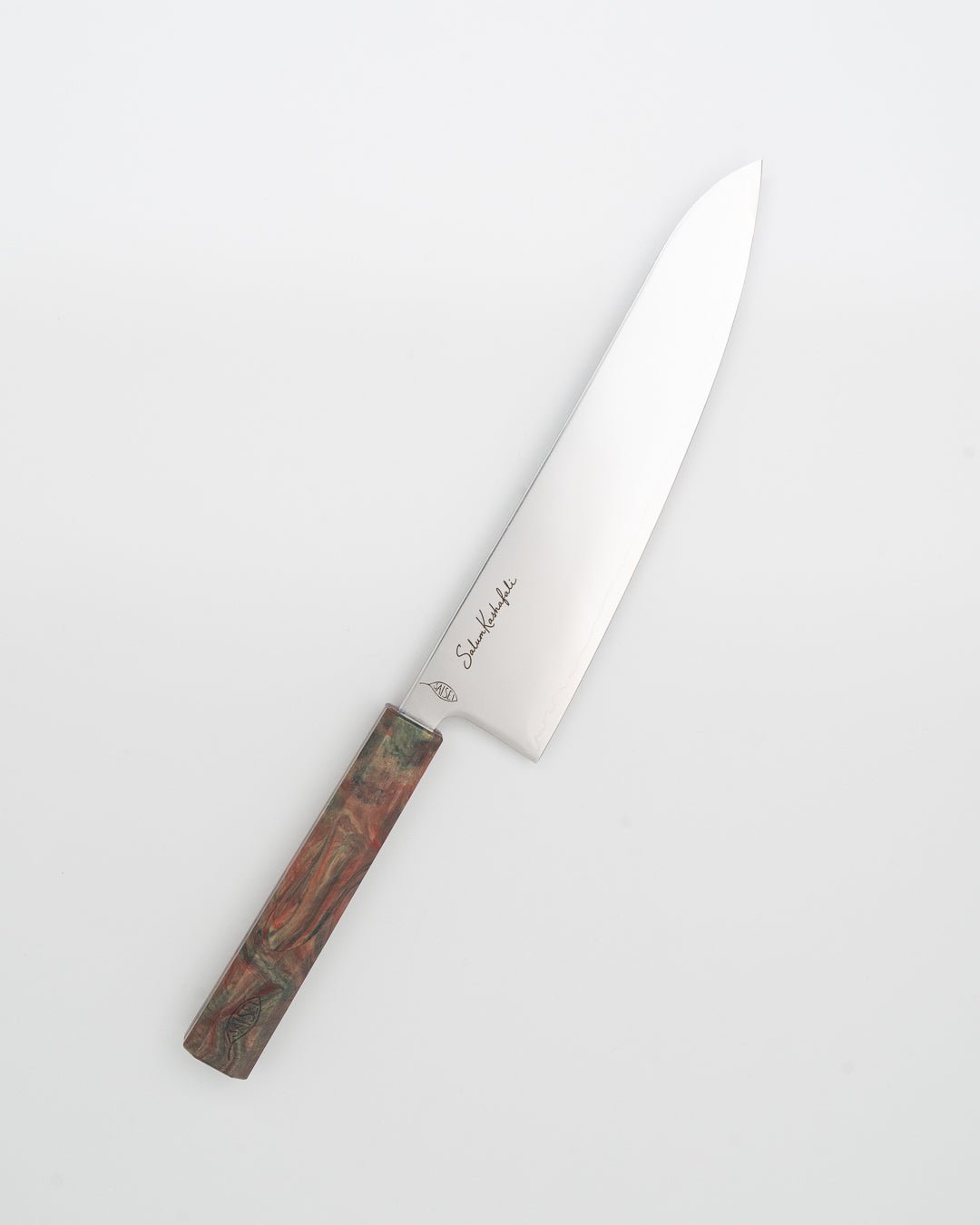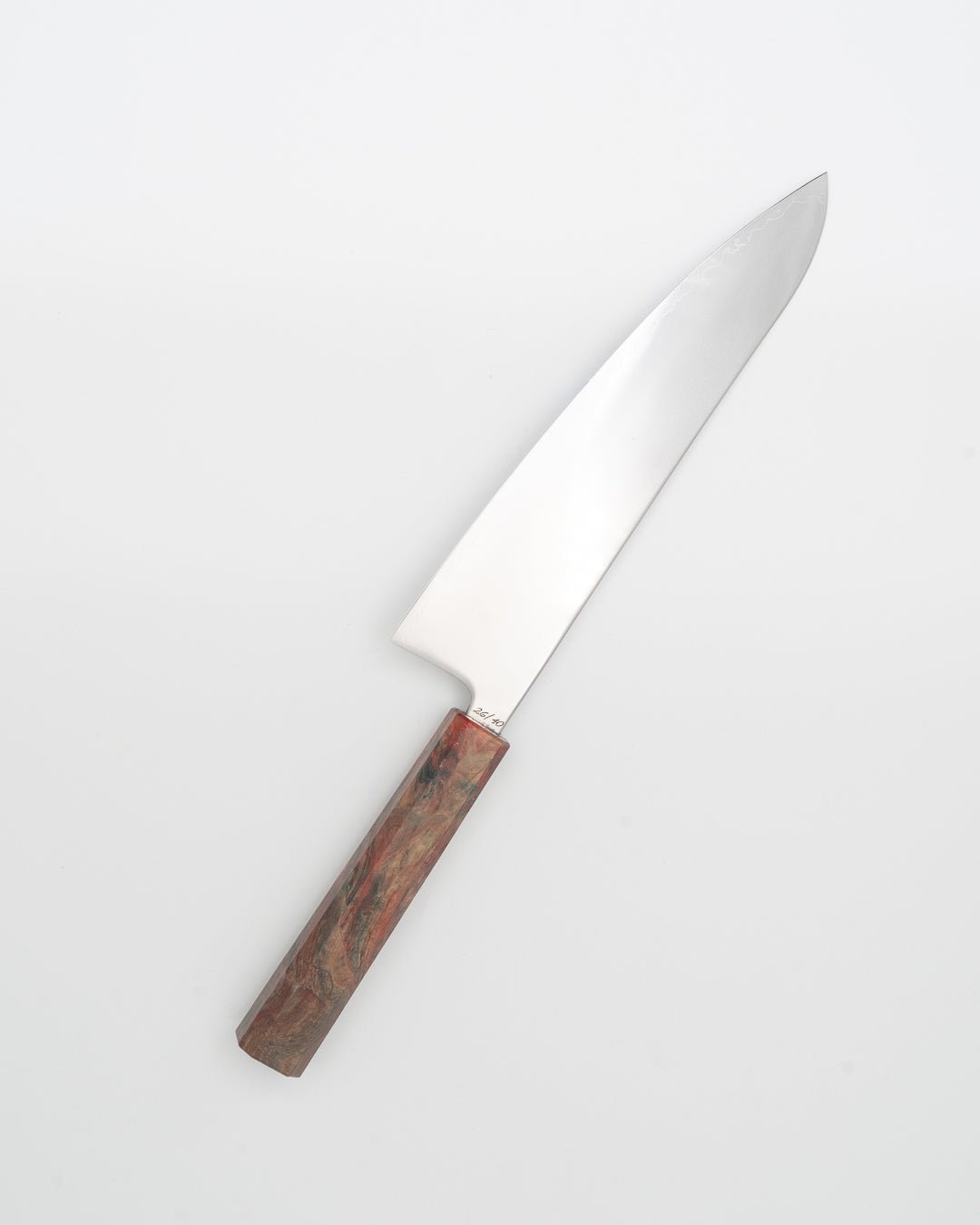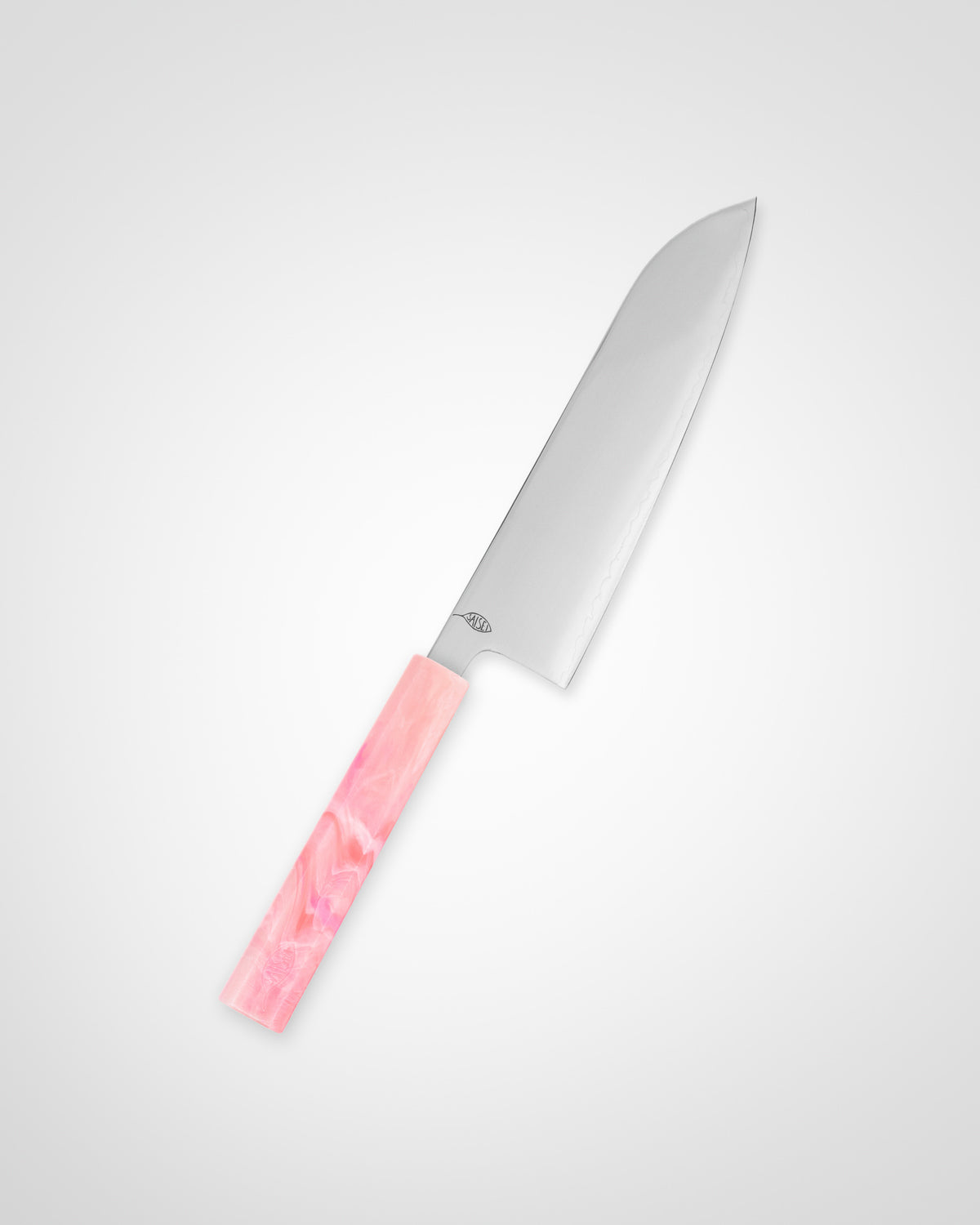


San mai: Japanese knives built in layers
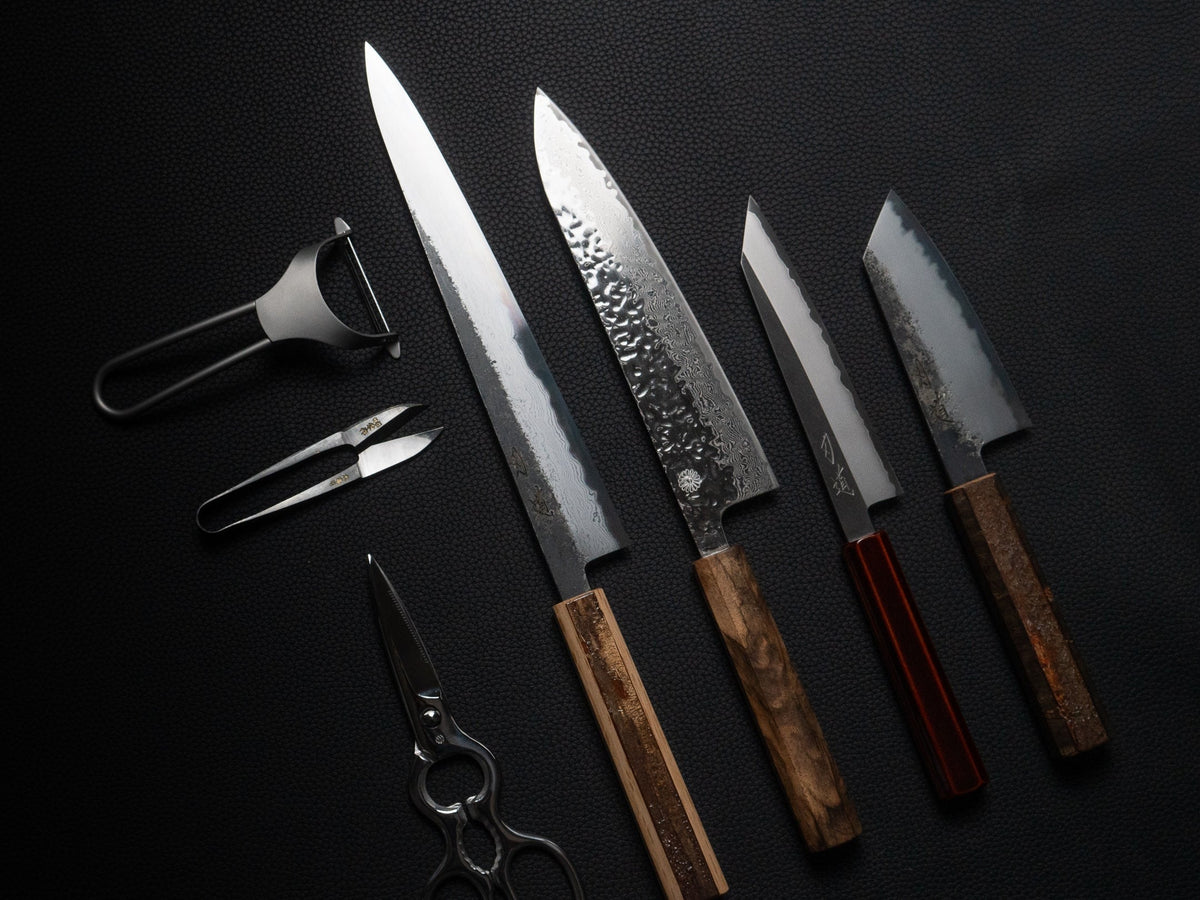
San mai is a laminated knife in three layers: a hard core of edge steel between two layers of softer steel. The core gives the edge, and the cladding takes knocks and protects it. Most double-bevel Japanese knives are built this way. Ni mai has two layers and belongs to single-bevel knives. Warikomi is another way of setting the core in.
Core and cladding
The core steel is called hagane. It is hard, takes a fine edge and holds it for a long time. On its own it would be too brittle for a whole blade. The cladding is called jigane and is softer and tougher.
The Knifenerd book calls the knife a sandwich: the cladding is the bread, the core is the filling. The edge is ground out of the filling. Because the cladding absorbs knocks, the smith can make the core harder than if the blade were a single steel.
The cladding can be chosen for different jobs. Tough steel protects, soft steel makes the blade easier to straighten, and stainless steel keeps rust away. The layers also save expensive edge steel, which is part of the reason the construction became common.
The constructions
The layers can be put together in several ways. The collective name for layered knives is awase, combined.
| Construction | Layers | Used for |
|---|---|---|
| San mai | Three: core in the middle, cladding on both sides | Double-bevel knives such as gyuto, santoku and petty |
| Ni mai | Two: core against the flat back, cladding on the front | Single-bevel knives such as deba and yanagiba |
| Warikomi | Three: the cladding is split, and the core is laid into the split | Niche technique, mostly in Kyushu |
| Monosteel | One steel, hardened evenly | Affordable knives, many honesuki |
| Honyaki | One steel, hardened in two zones under clay | A few expensive knives |
The honyaki solves the same problem as the layers, without cladding. It is covered in the article on honyaki.
Forge welding
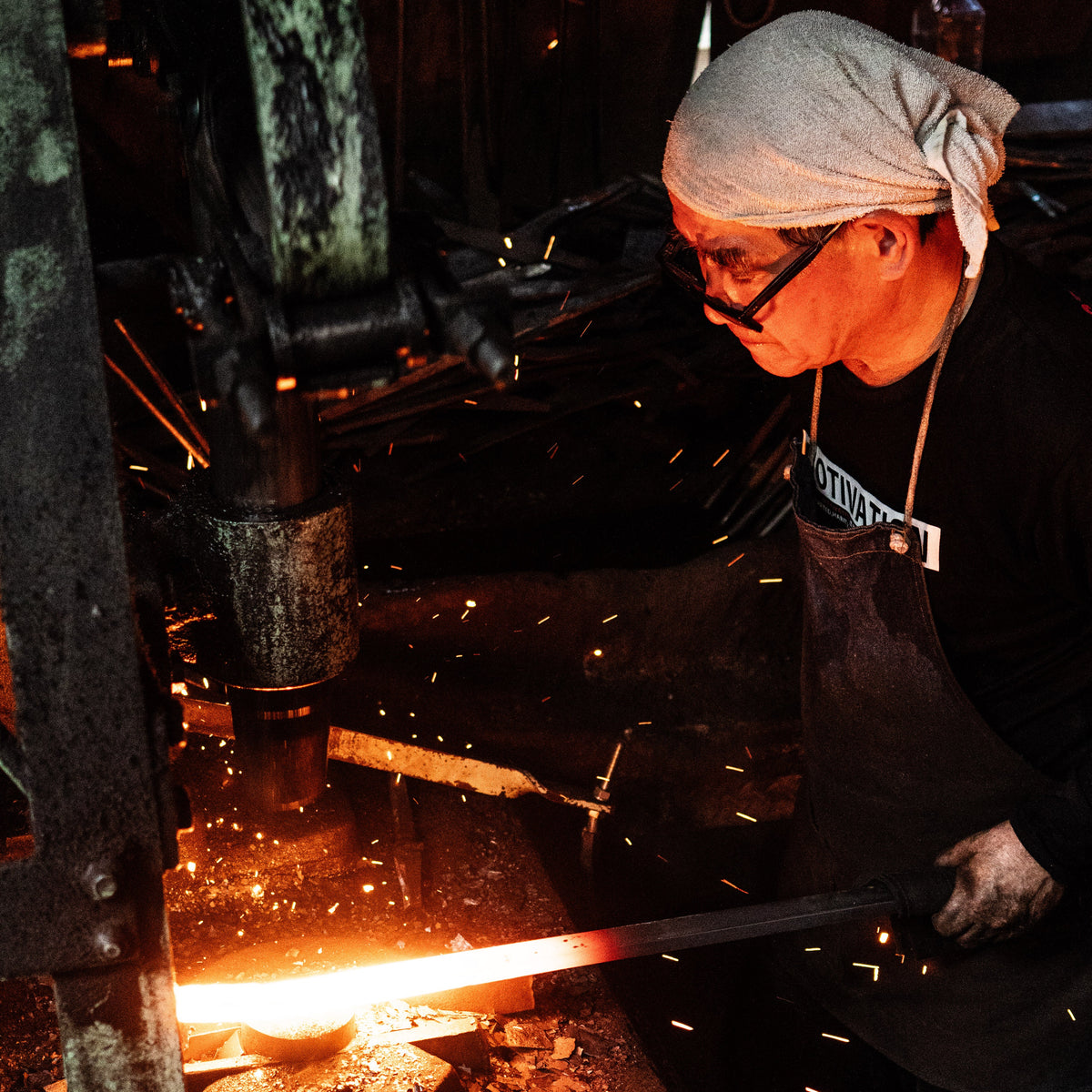
The layers are welded together hot under the hammer. If the steel is too hot, the carbides grow large and the blade becomes brittle. If it is too cold, the weld does not hold. So the smith heats as low as possible to avoid cracks and carbon loss.

When two carbon steels are welded together, carbon migrates from the rich steel to the poor one. The core then loses hardness. Many put a thin layer of nickel between the steels to stop the migration.
Few smiths weld the layers themselves today. Most buy ready-laminated steel from steel mills such as Takefu Special Steel, where the layers are bonded under pressure and heat and rolled out. Fujiwara is one of the few who laminate carbon steel and stainless themselves.
Rudolf Dick writes in Japanese Blacksmithing that roll-laminated steel need not be worse than hand-welded. The process is quick, so the edge loses little carbon.
Warikomi is done by hand. At Moritaka a bar of soft steel is split lengthwise. The core of aogami 2 is driven into the split with flux, and everything is hammered together into one bar with no voids.
Stainless cladding on a carbon core
A common combination is carbon steel in the core and stainless on the outside. Then only the edge can rust. Kent believes it gives the advantages of both steels, and the smith Takeda says the stainless cladding makes the blade stiffer.
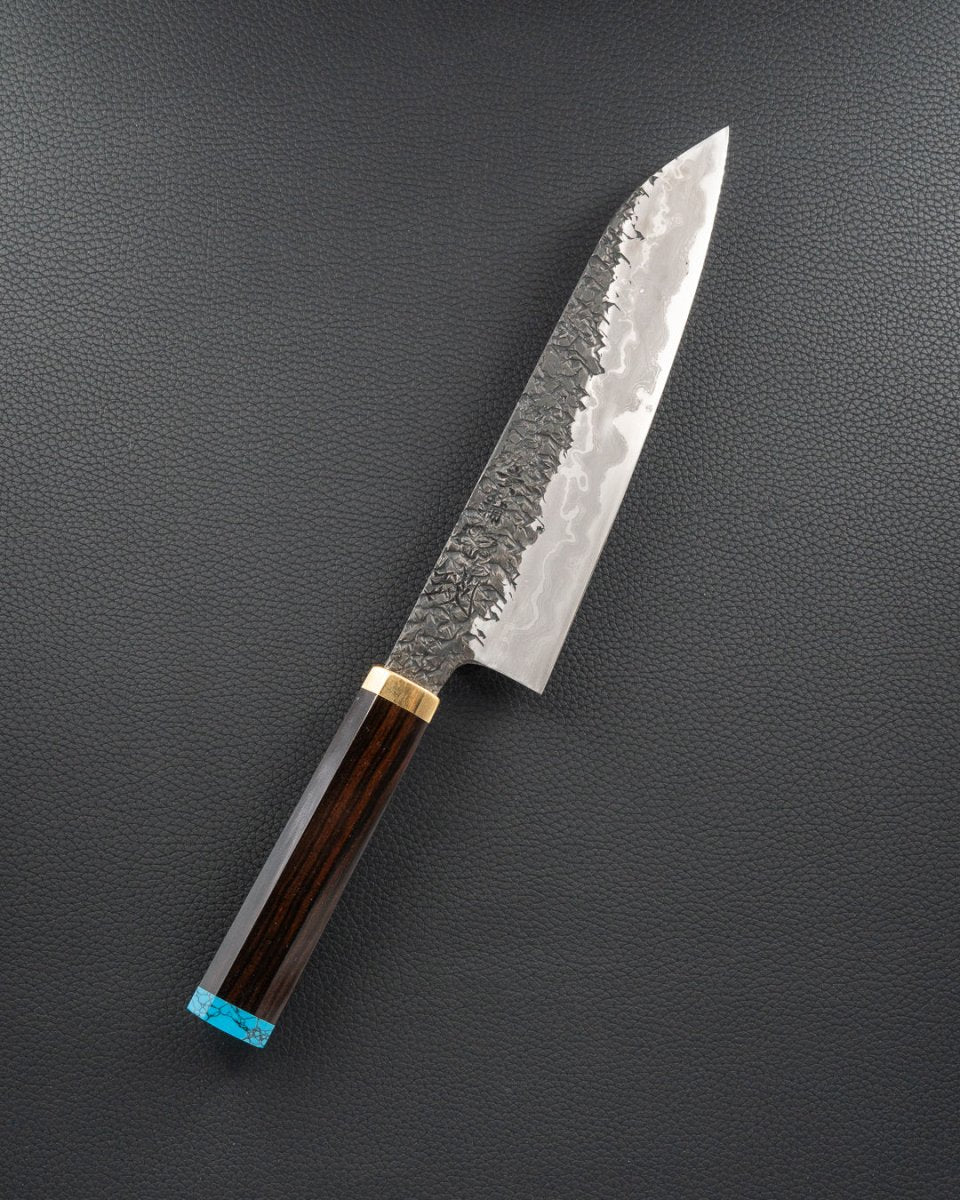
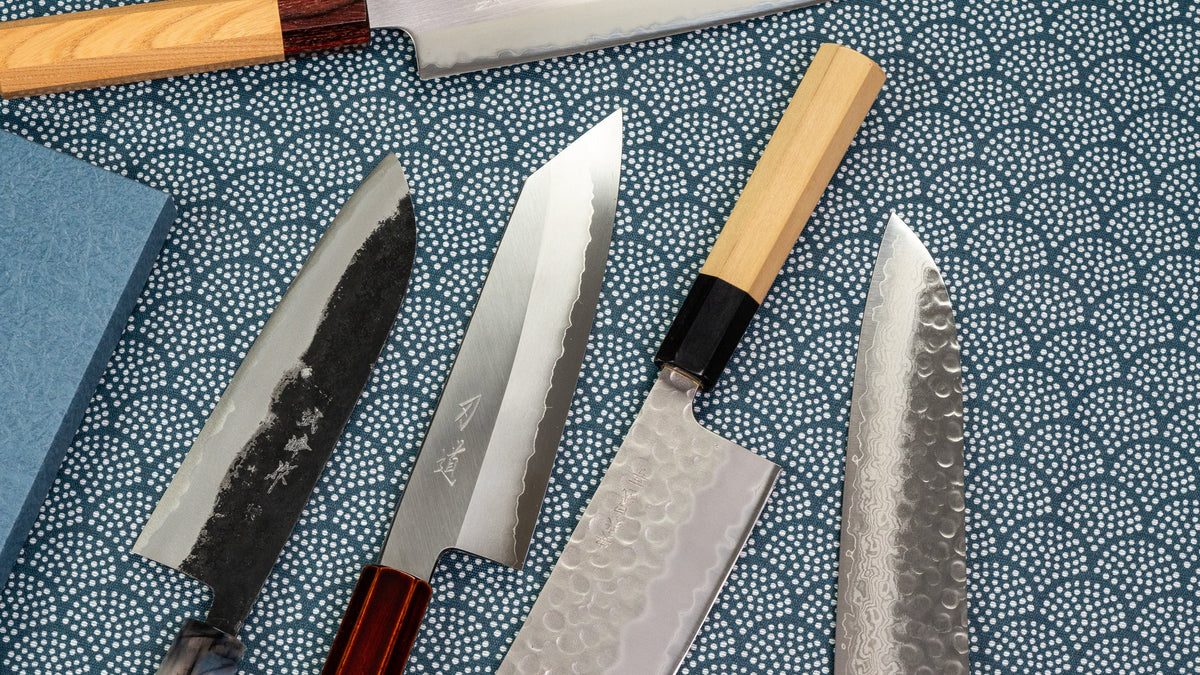
On knives like these the patina appears as a wavy dark line along the edge. The rest of the blade stays bright. The choice between carbon and stainless is covered in Carbon steel or stainless, and the stainless core steels in the article on VG10 and Ginsan.
Damascus is cladding
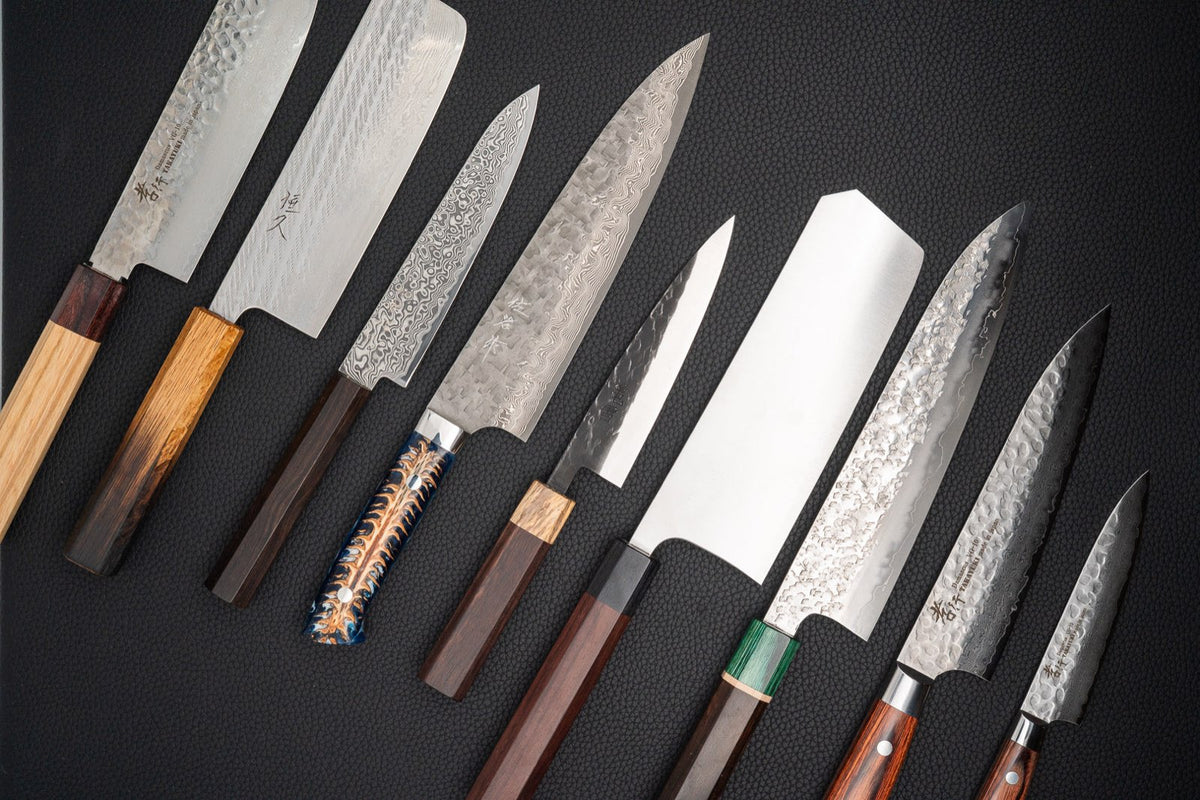
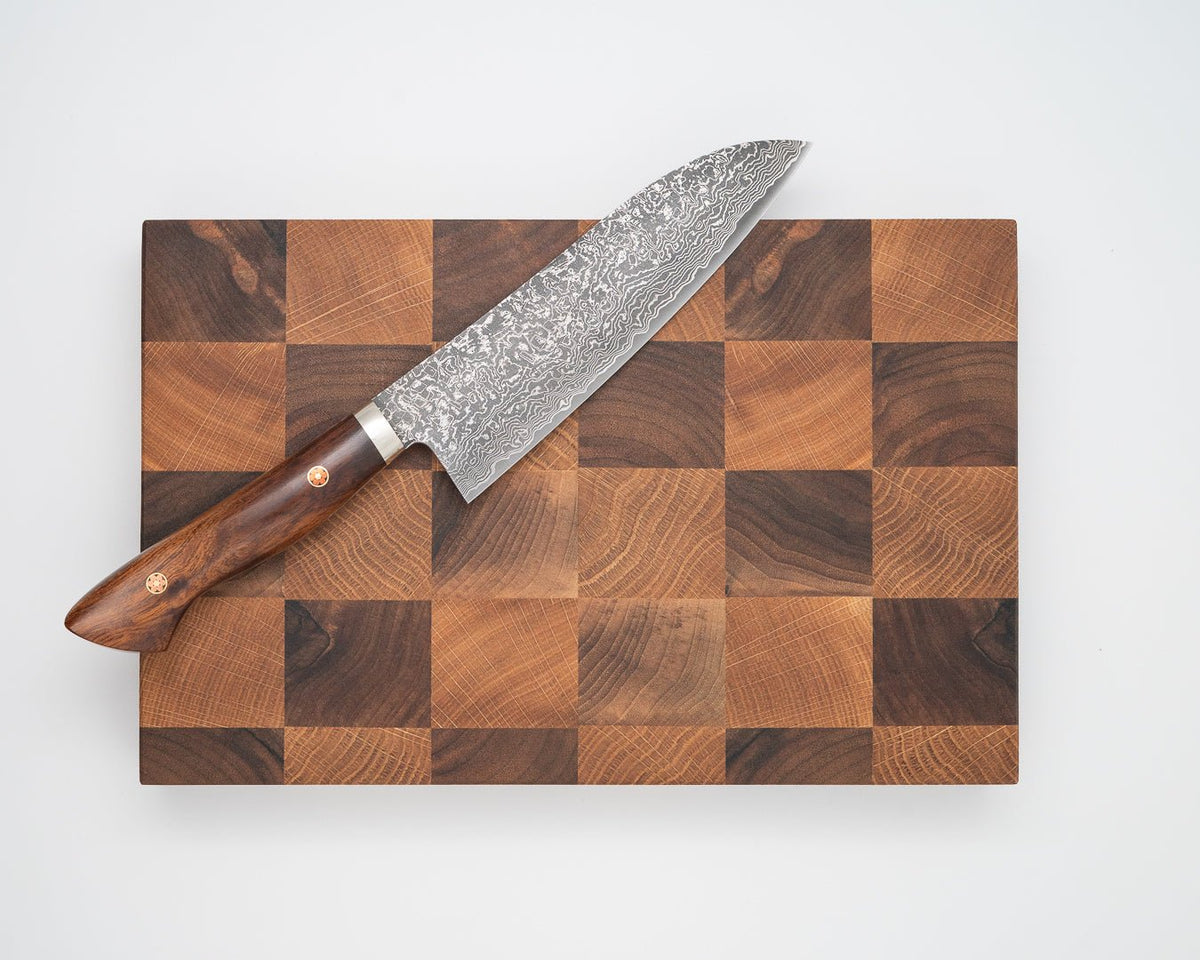
A damascus knife is usually a san mai where the cladding is folded into many layers and etched. The core is the same. The Knifenerd book calls the pattern largely cosmetic, but the book also mentions that the layers can stop the blade warping. The Quadrille book refers to studies where folding makes the steel tougher.

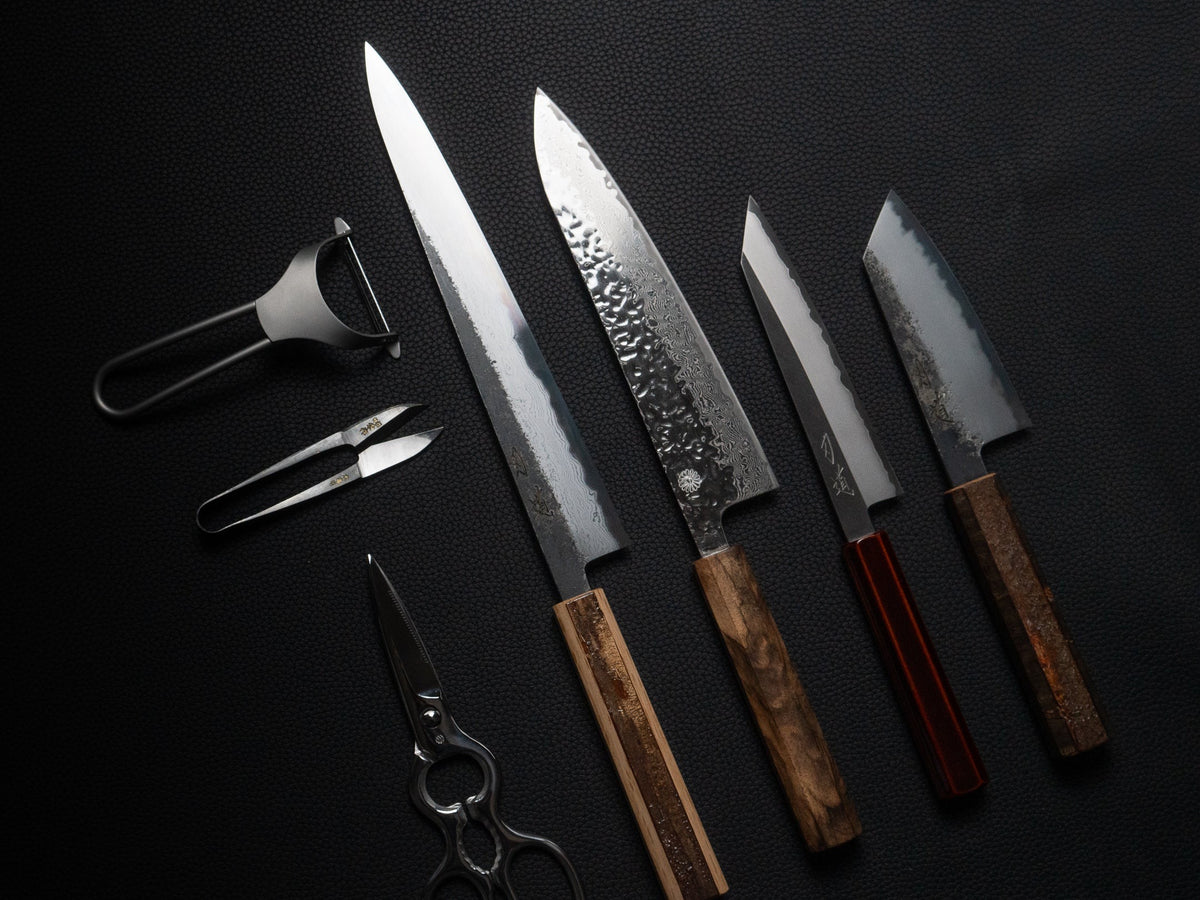
The edge sits in the core either way. The surfaces are covered in the article on the knife's surface, and you will find layered knives among our Japanese knives.
The layers on the whetstone
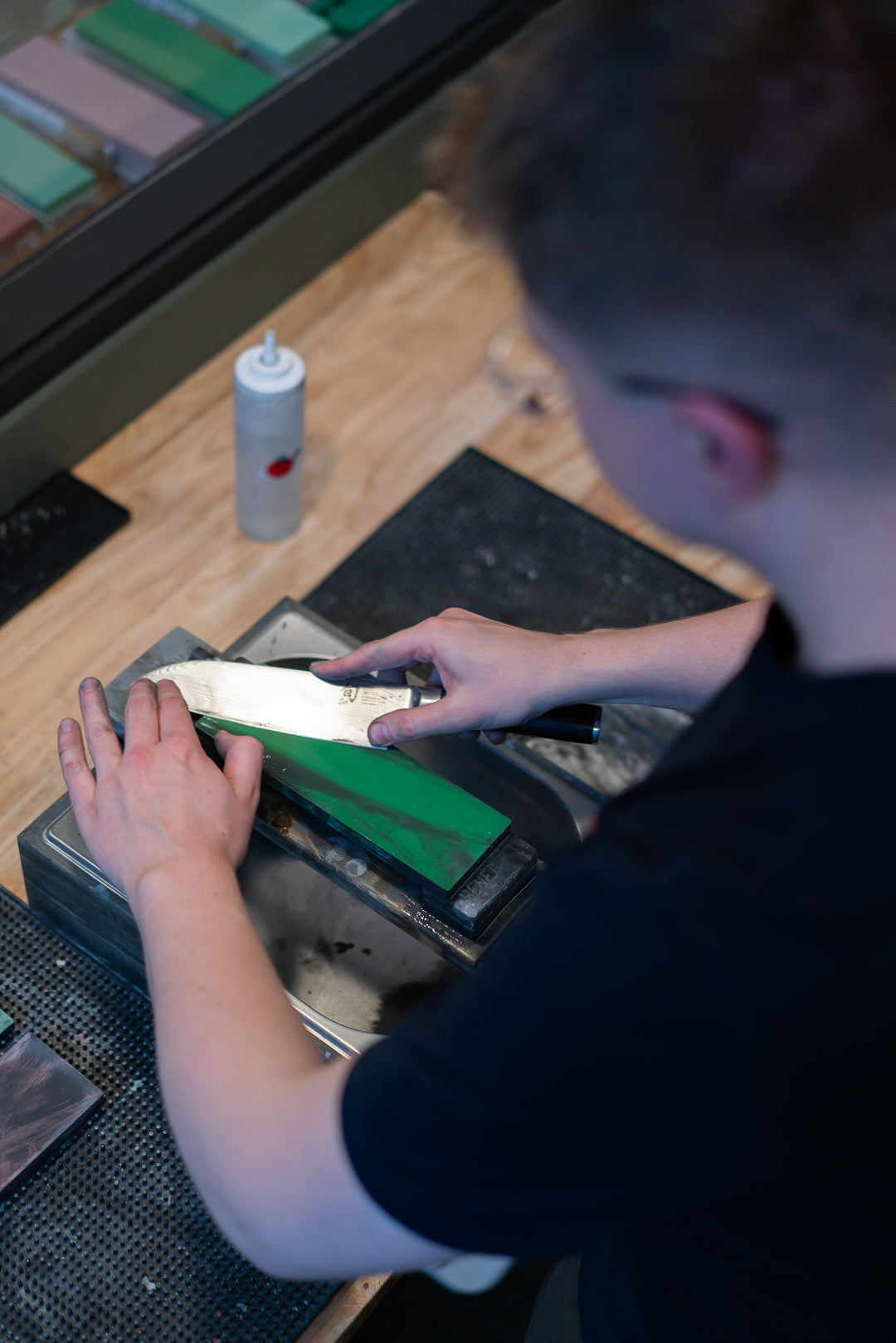
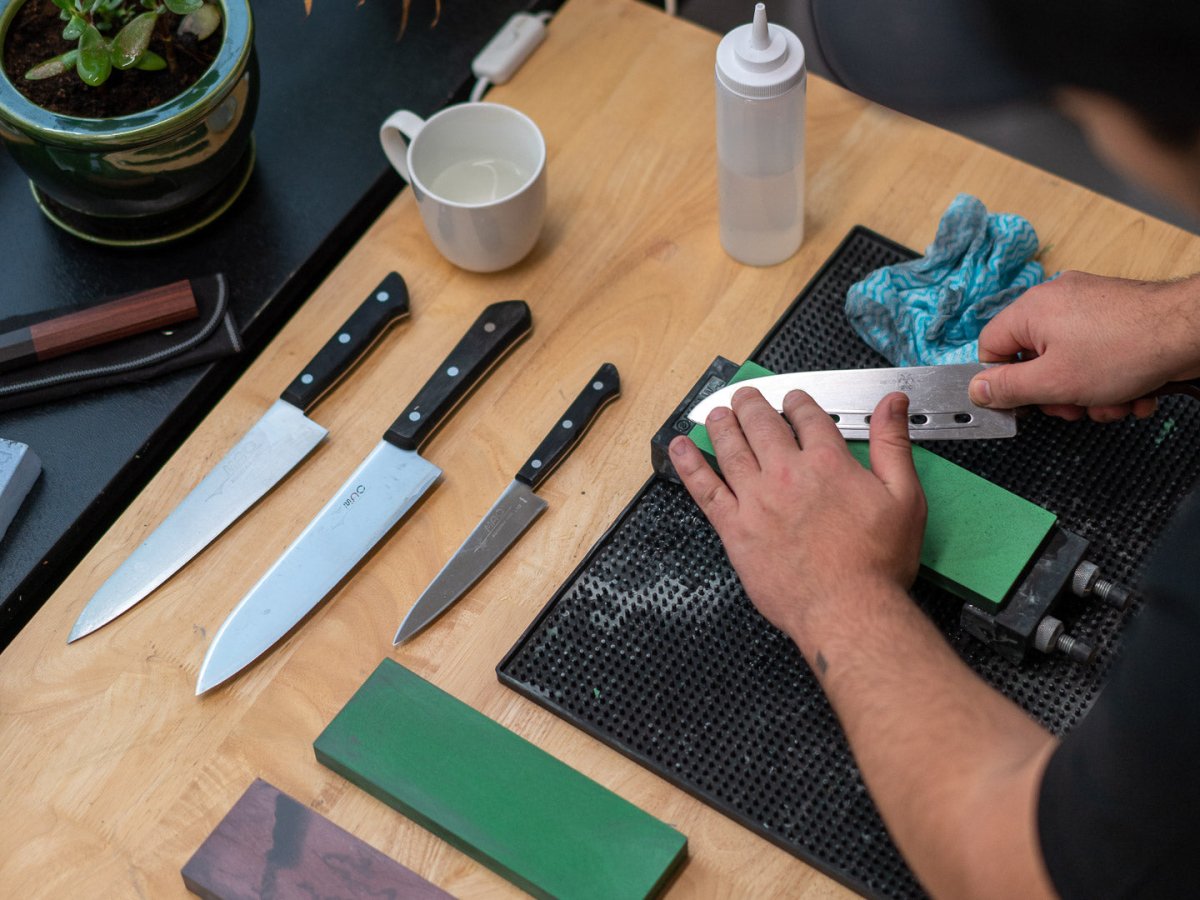
When we sharpen a san mai, it is the core that meets the stone at the very edge. The cladding sits behind. The knife can take over a hundred sharpenings with us.
After many sharpenings the blade gets thicker behind the edge, because the knife gets narrower and we work higher up the blade. It starts to wedge in potatoes and carrots. That applies to the most-used knives we get in. Then we thin the cladding, so the blade is thin behind the edge again.
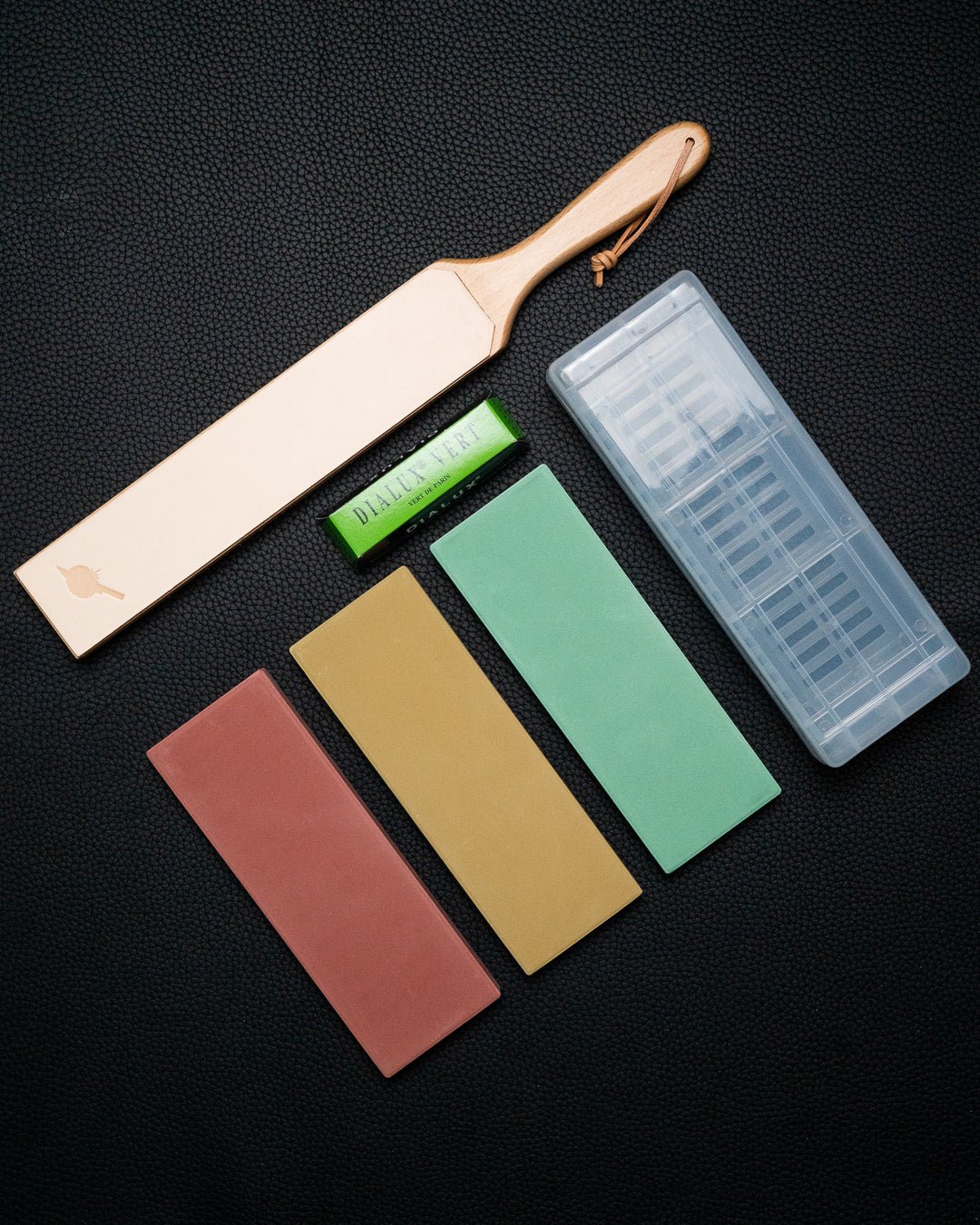
On a knife with stainless cladding we can see clearly how much core is left. The transition between bright and dark steel tells us how far we can go. If you want to do the thinning yourself, you learn the basics on the knife sharpening course. The stones are under whetstones.
Questions and answers
Is san mai better than monosteel?
For most kitchen knives, yes. The core can be made harder because the cladding takes the knocks, and the blade is less brittle. Monosteel is simpler and cheaper to make, and it works well on short knives and boning knives.
Why does the blade have a line along the edge?
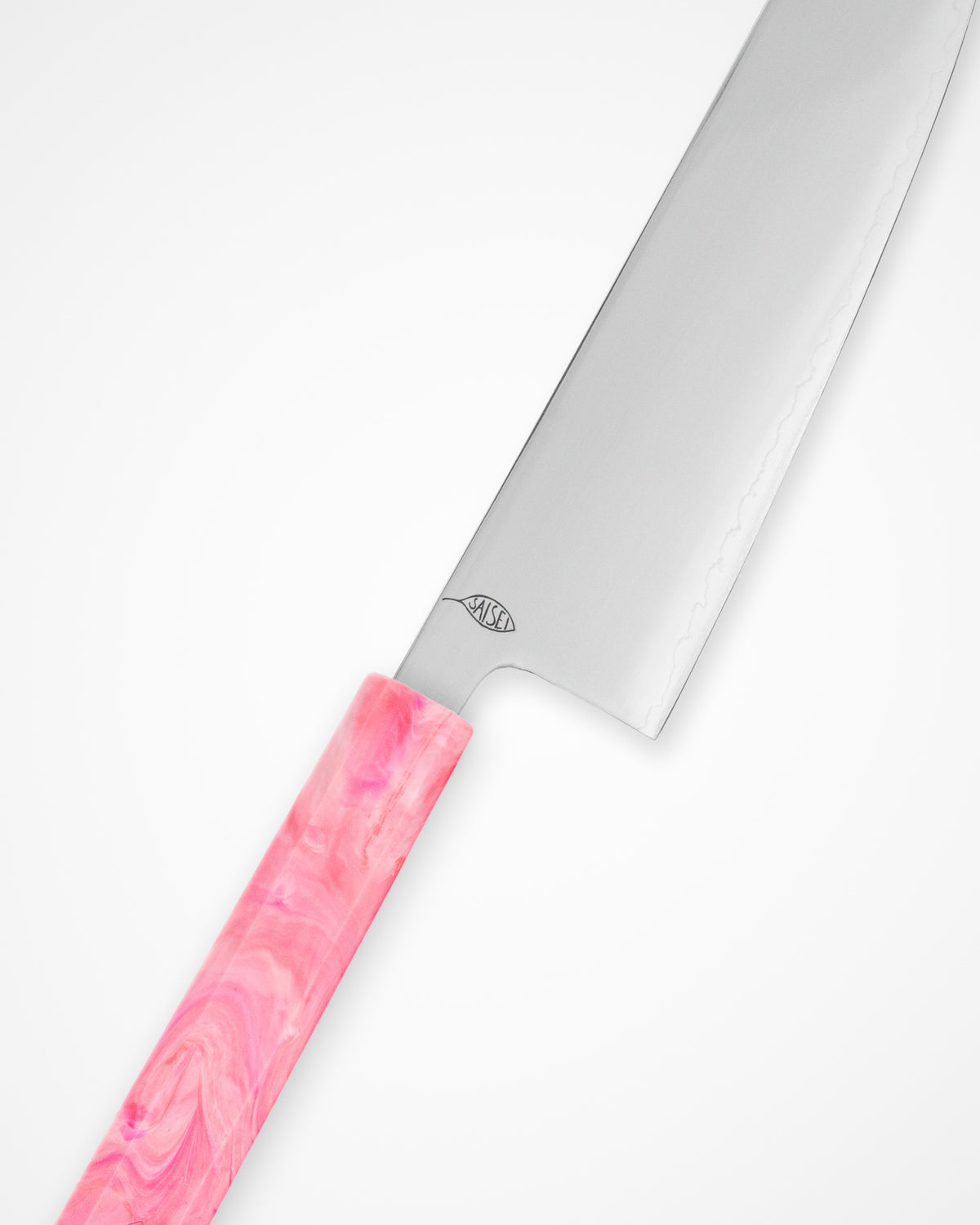
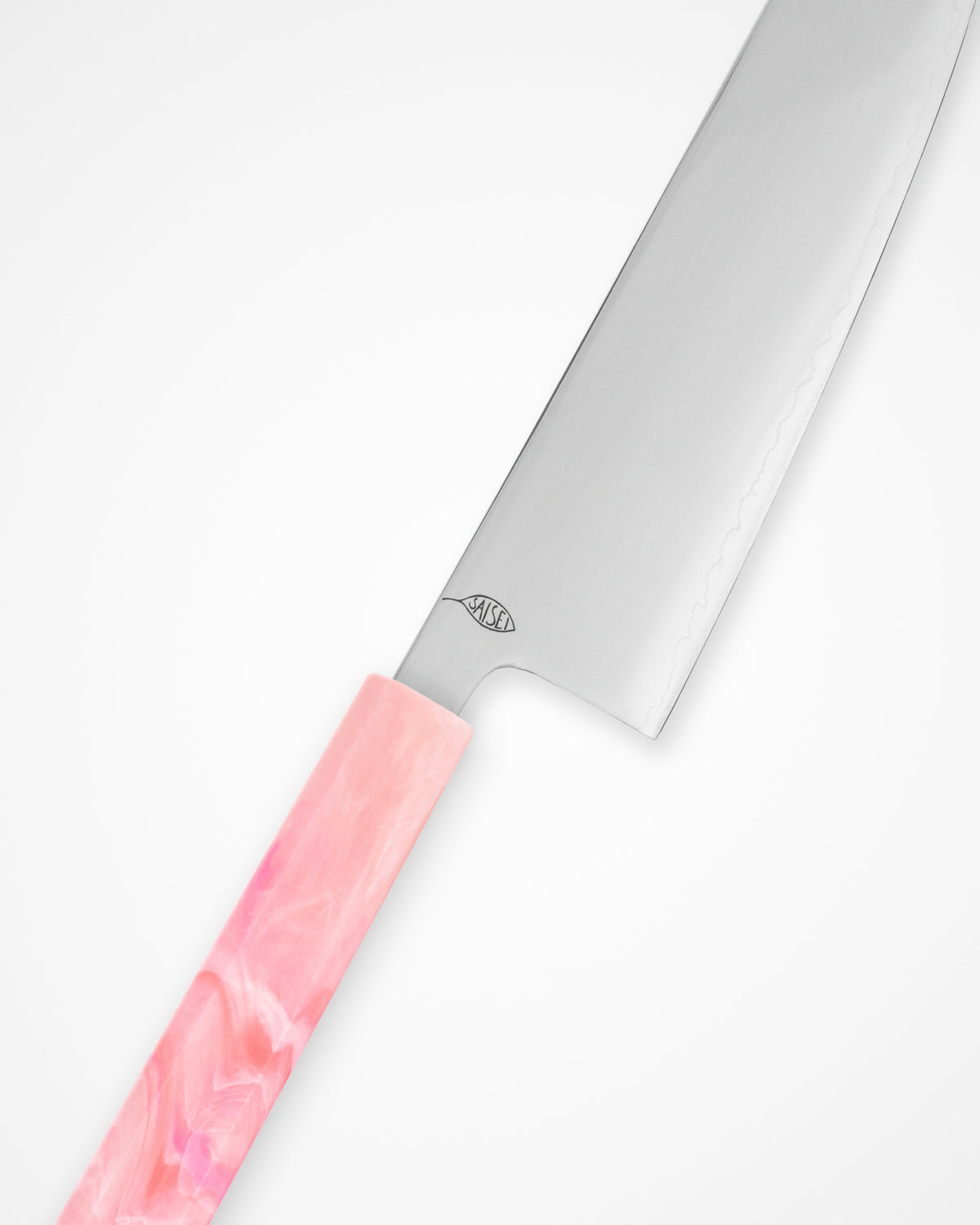
The line is the transition between core and cladding. It shows when the blade is ground and polished. On a carbon core with stainless cladding it becomes clearer with patina. It is not a fault.
Can a san mai be sharpened many times?
Yes. The core runs far up the blade, and a knife can take over a hundred sharpenings with us. After many sharpenings the cladding has to be thinned, or the blade becomes thick behind the edge and wedges in the food.
Is a damascus knife built in layers?
Usually, yes. Damascus is a cladding of many folded layers around a hard core, for example VG10 or another stainless steel. The pattern is in the cladding, and the edge is in the core.