


Wa handle: the wooden handle on Japanese knives
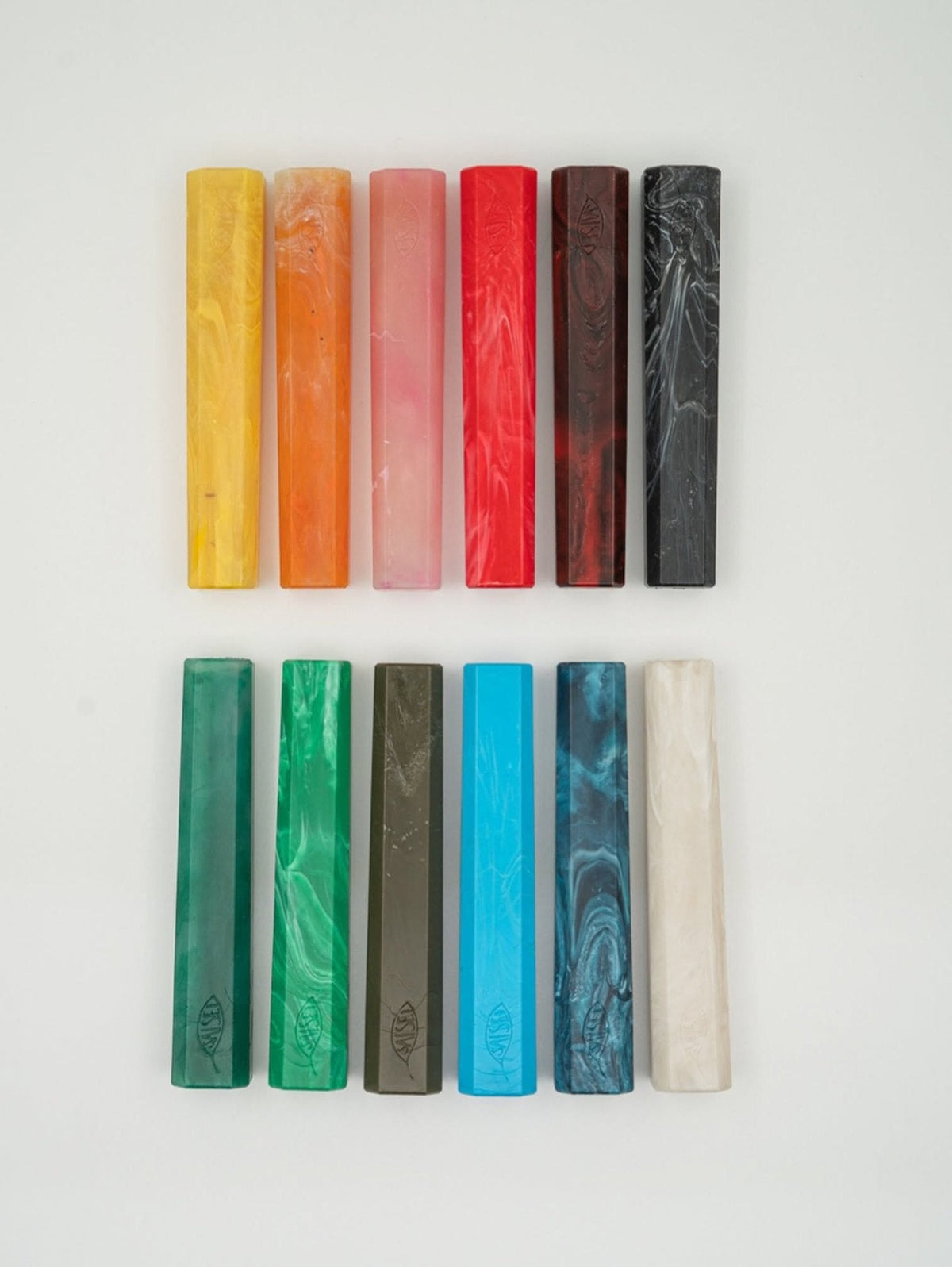
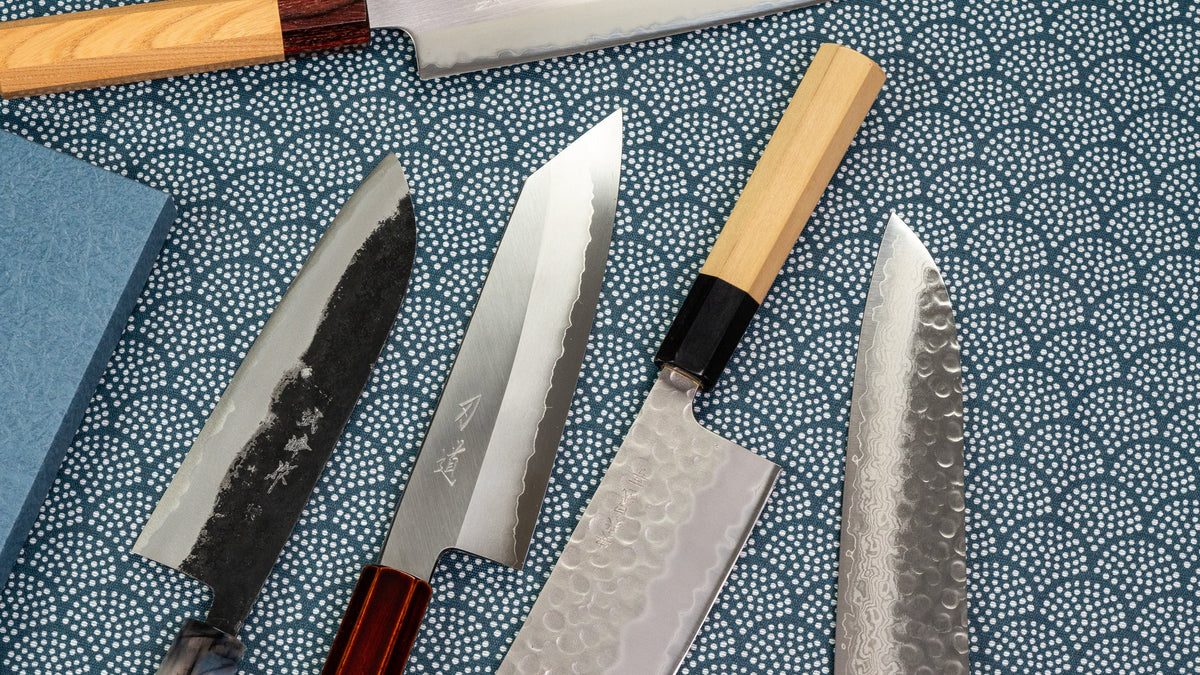
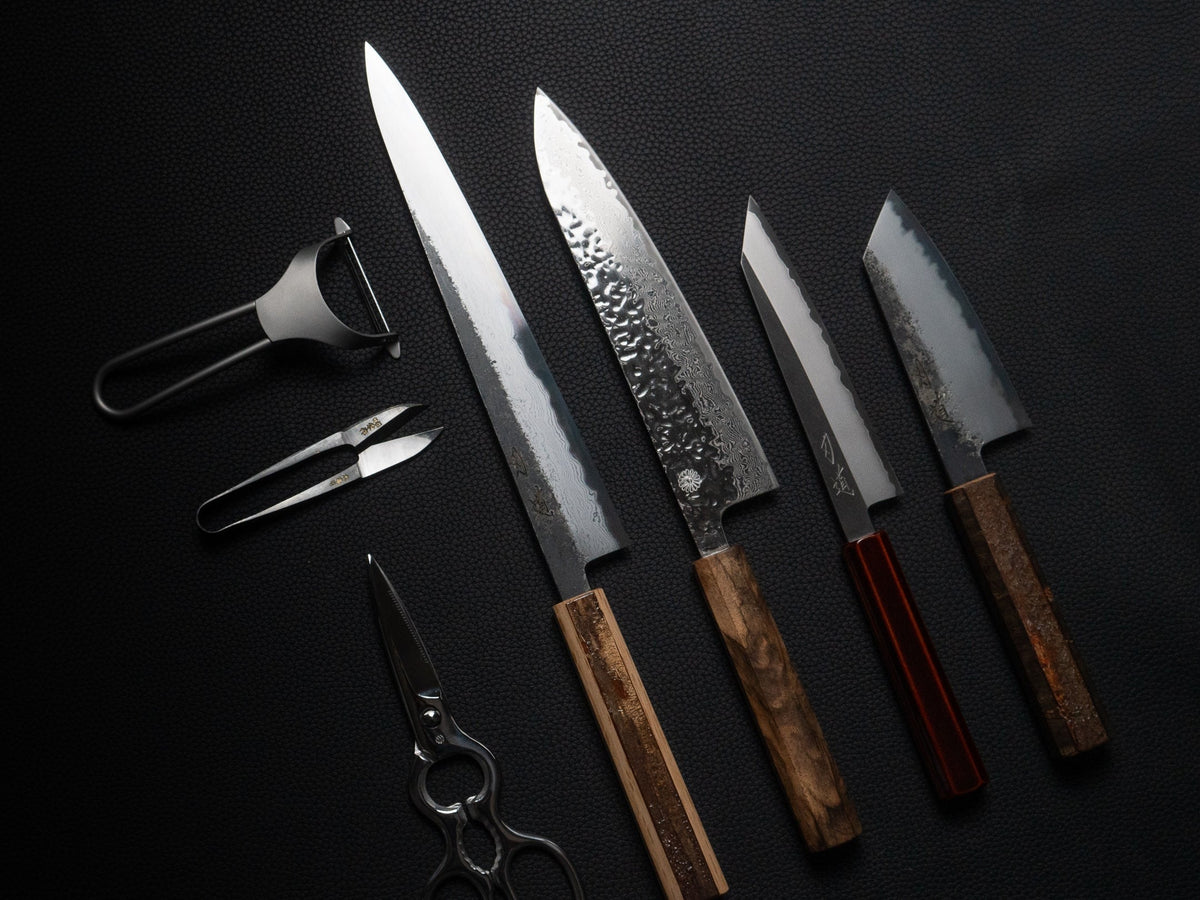
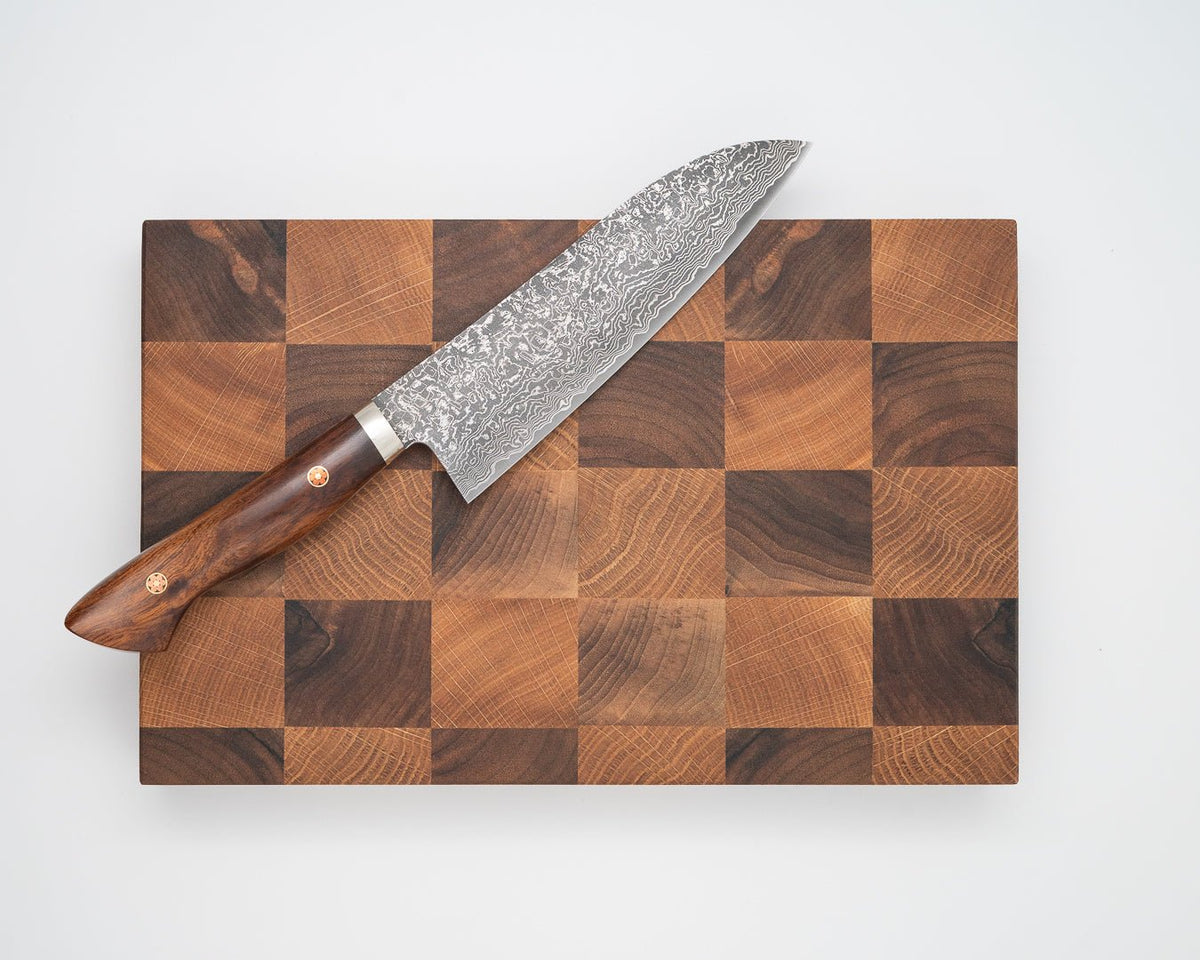
A wa handle is the traditional Japanese wooden handle. The tang goes into the wood and is held by glue, with no rivets. The handle is light, so the balance sits forward towards the blade, and it can be replaced when it is worn. Wa means Japanese. If you have a Japanese knife with a wooden handle, we replace the handle in the workshop for NOK 300.
How it is fitted
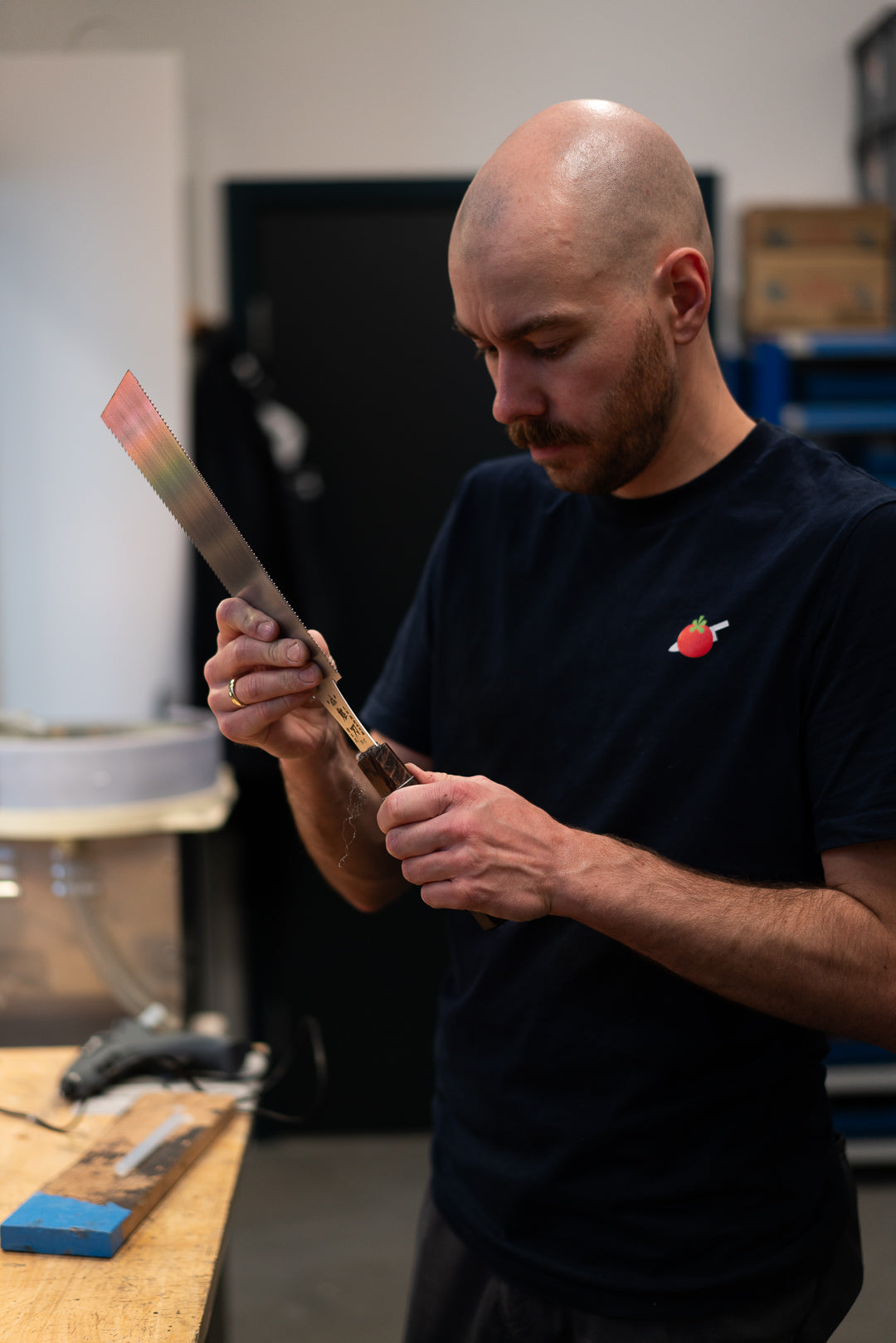
The tang is the narrow extension of the blade. It goes into a drilled hole in the handle. When we fit a handle, we dry-fit it first, file the tang straight and put glue in the hole. Then we heat the tang and push it in.

Many people notice a small step where the blade enters the handle. It is called the machi and it is there on purpose. According to The Anatomy of a Japanese Knife, it leaves room for the fingers, lets the handle be adjusted and stops the wood from splitting when the handle is fitted. It is most visible on knives from Sakai.
Traditionally the hot tang was burnt into soft magnolia wood. Today the glue does the holding, and the hole can be sealed with silicone. In the past, cooks took the handle off regularly to oil and dry the tang.
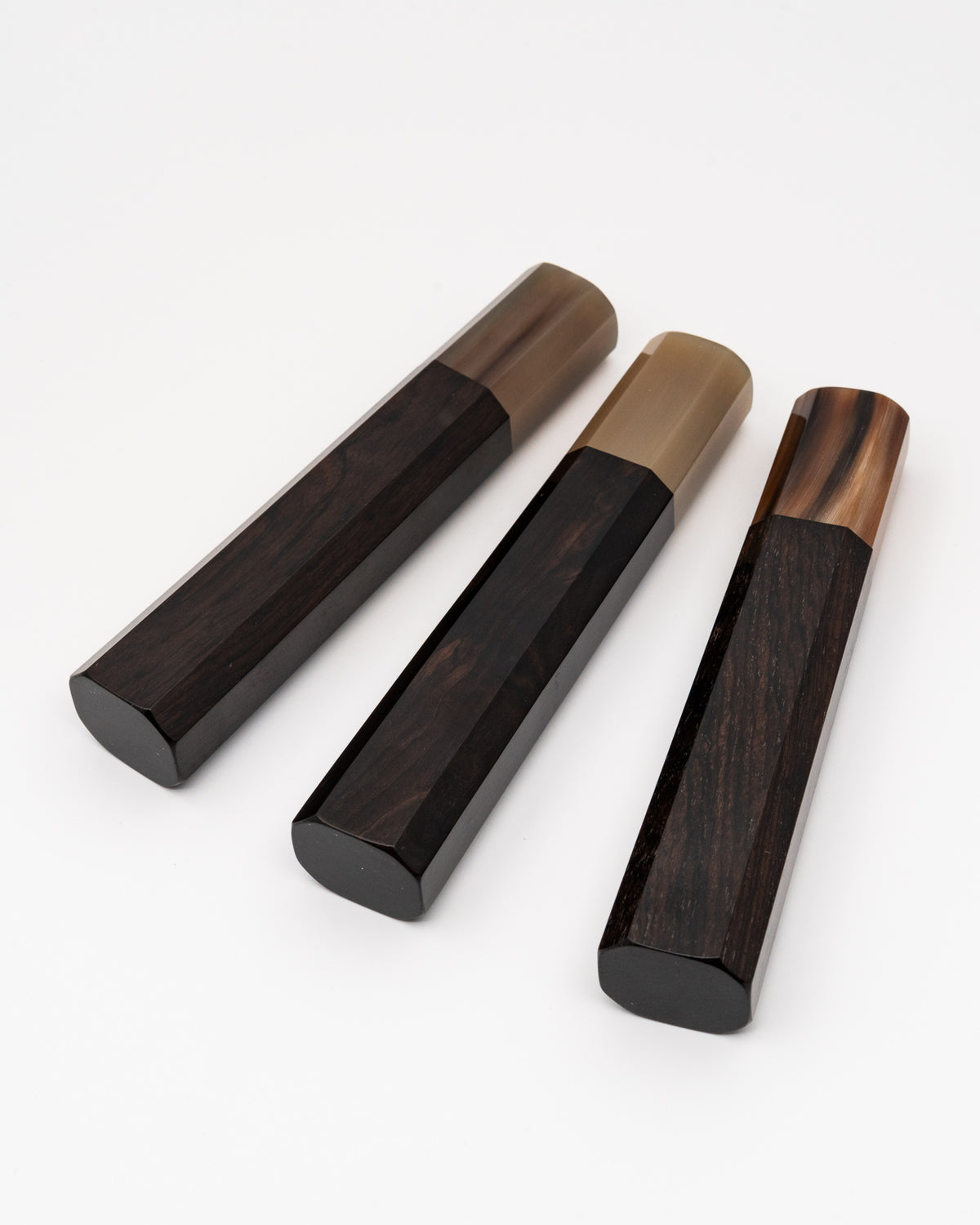
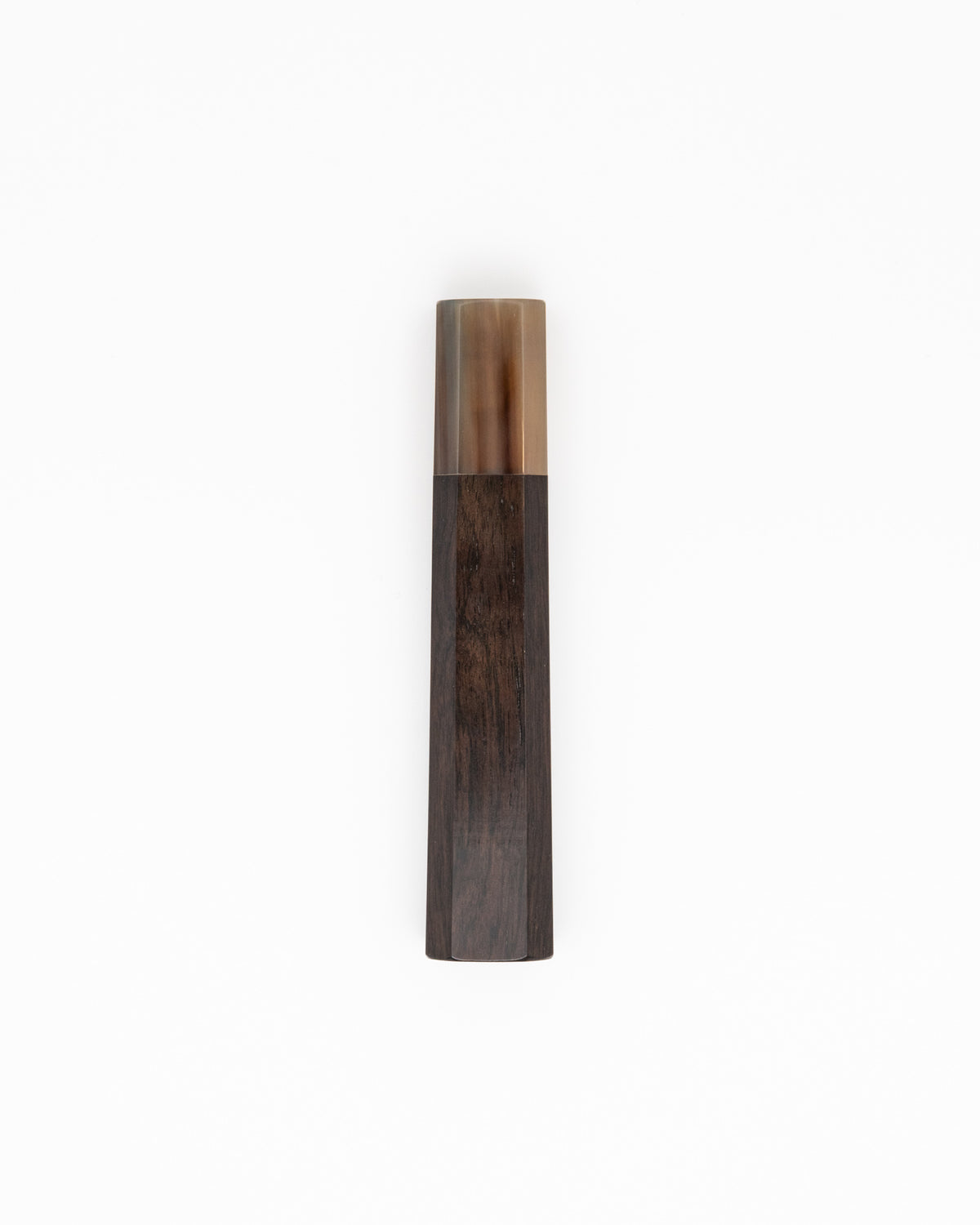
Closest to the blade sits the ferrule, which stops the wood from splitting. It is traditionally made of black wood or water buffalo horn, and on cheaper knives often of black plastic. Buffalo horn can crack in a very dry climate. A handle without a ferrule is called a mono handle and is more prone to stress cracks.
The balance
A wa handle is lighter than a Western handle with a full tang and rivets. The blade becomes relatively heavier, and the balance point moves forward towards the heel, where the pinch grip sits. Smiths in Japan have fitted handles like these to kitchen knives for 1,200 years.
The type of wood shifts the balance. Magnolia is the lightest, ebony is heavier. A heavy handle on a thin blade can pull the balance backwards. You find the balance point by laying the knife level across one finger.
Which balance feels right varies from hand to hand. At the shop at Teknostallen you can hold knives with both handle types and feel the difference.
The shapes
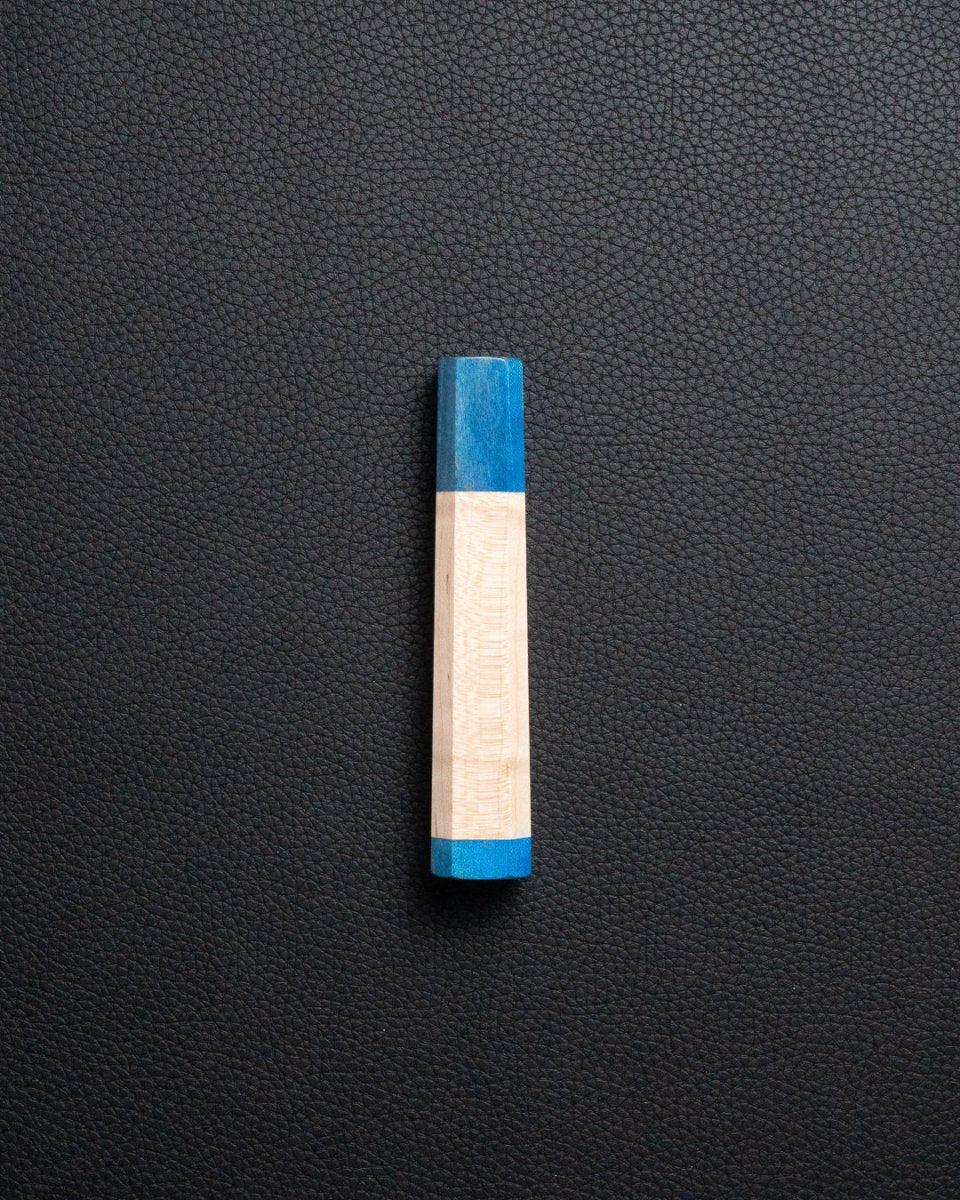
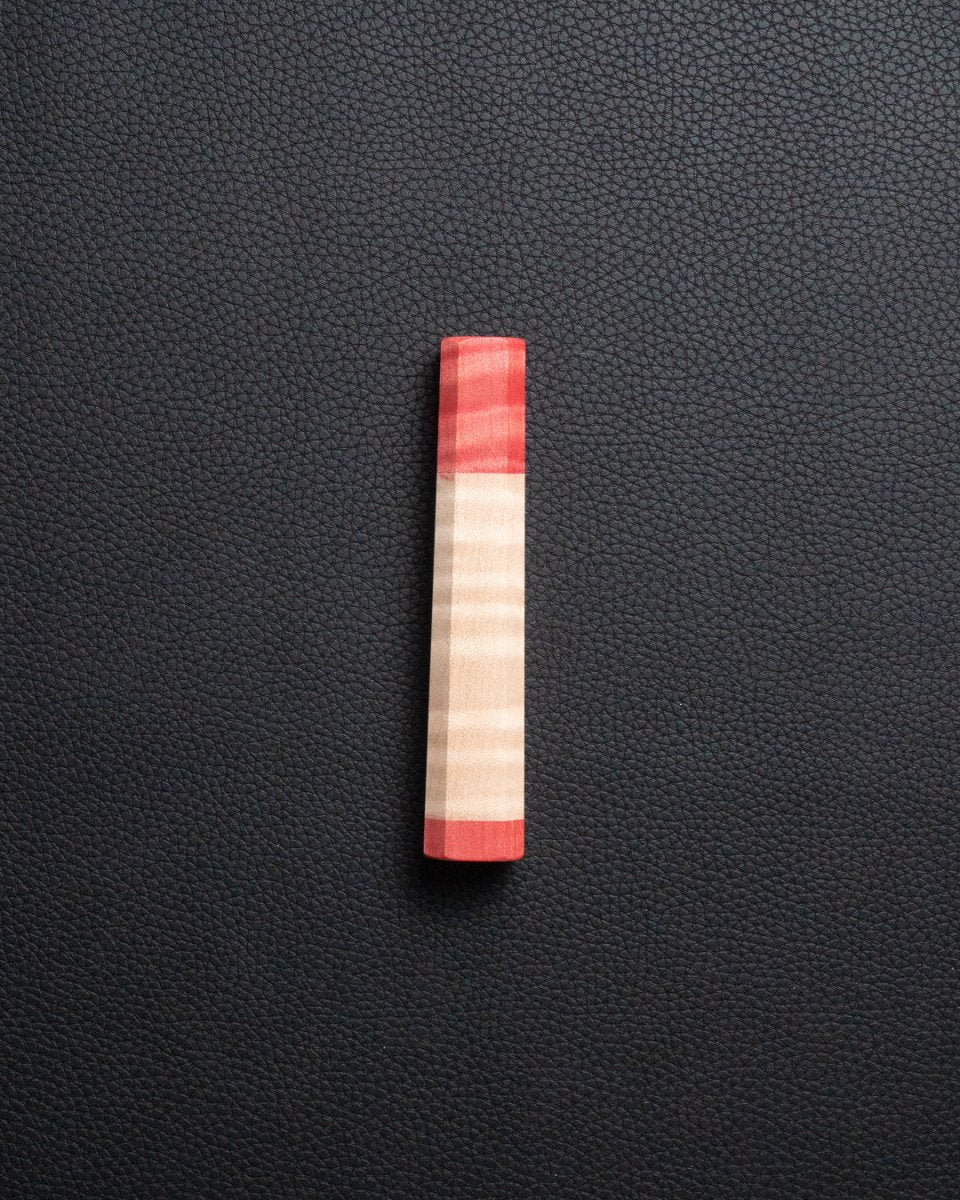
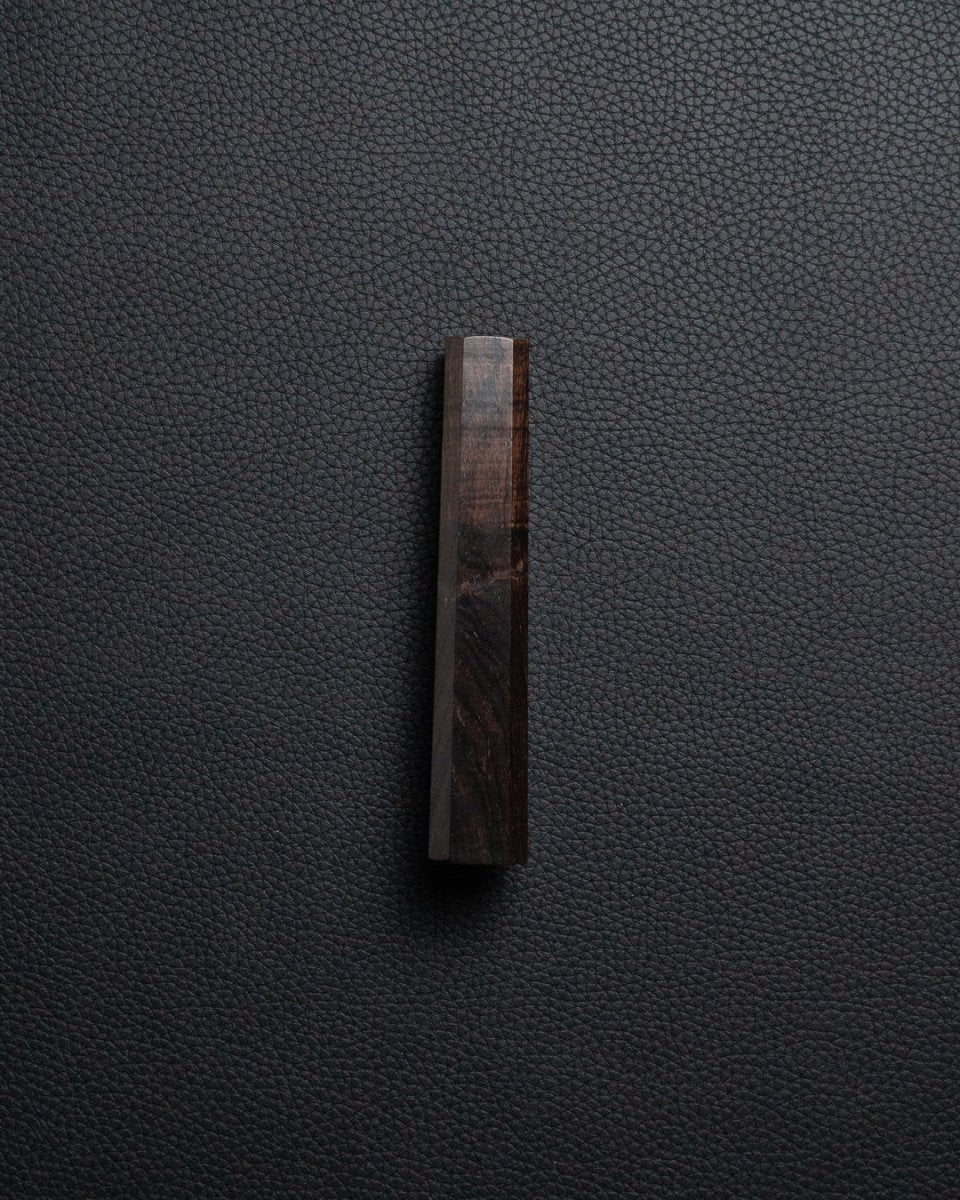
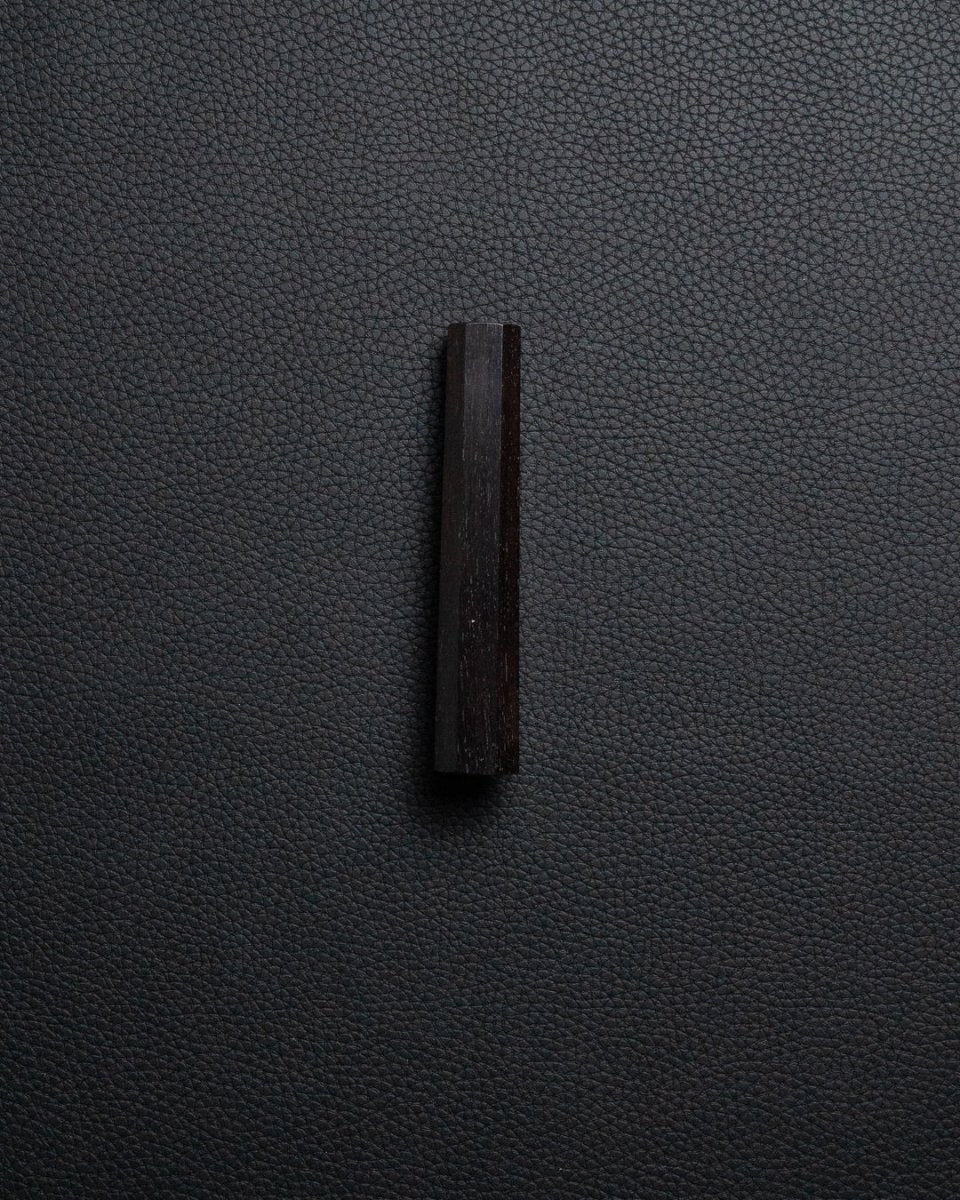
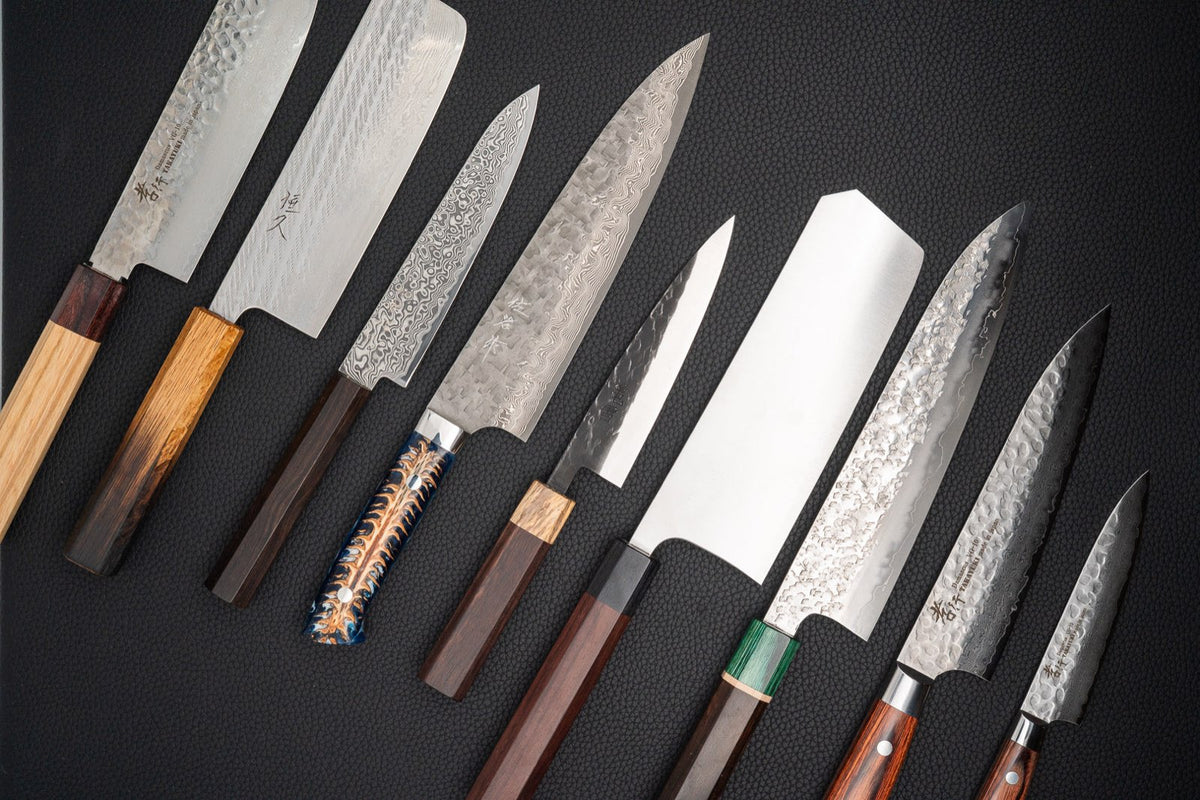
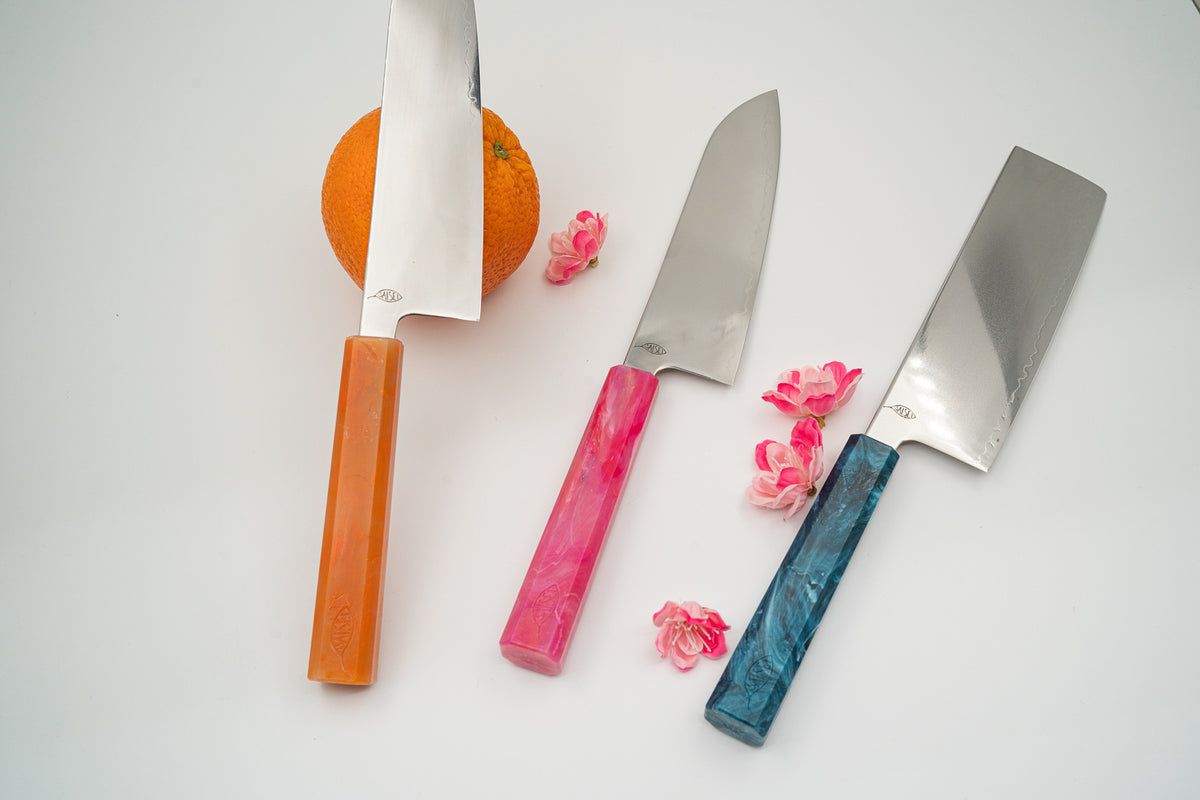
The traditional shape is oval. Outside Japan you most often see octagonal and D-shaped handles. The shape decides whether the handle suits both hands.
| Shape | Hand | Features |
|---|---|---|
| Oval | Both | The traditional shape, most common on knives for the Japanese market |
| Octagonal | Both | The edges give grip and stop the knife rolling in the hand |
| D-shaped | Usually right | Flat side towards the fingers, round side towards the palm |
| Chestnut-shaped | Right | Rounded shape, formed for the right hand |
Length and thickness are on the page about handle sizes. If you are left-handed, look for oval or octagonal, or read about left-handers in Santoku or gyuto.
Woods
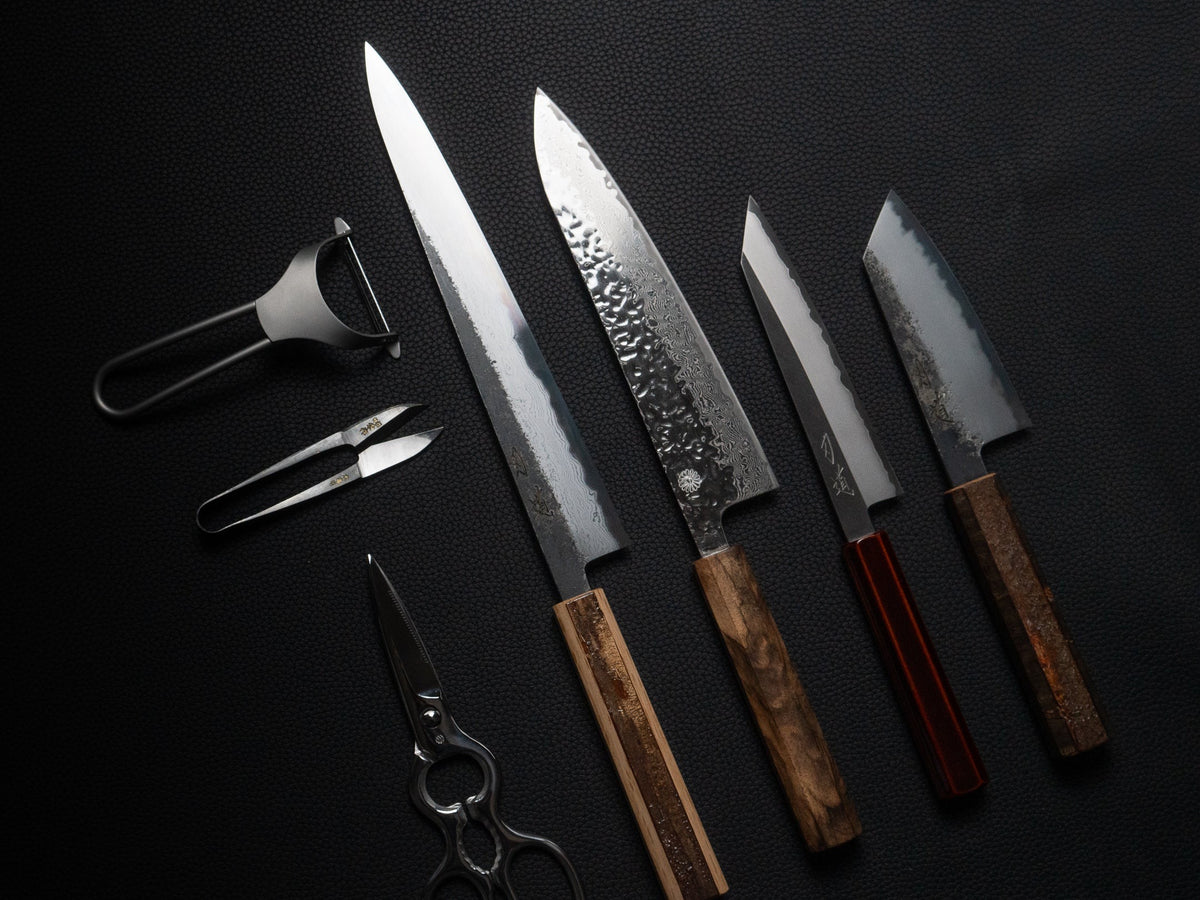
The most traditional wood is magnolia, in Japanese ho or honoki. Other common woods are teak, wenge, rosewood, cherry, ebony and maple. On expensive wa knives, plain handles in ebony, magnolia or urushi lacquer are the most common.
Stabilised wood is impregnated with resin and has become popular outside Japan. Pakkawood is layers of veneer set in resin and is mostly used on Western handles. Both stand up to moisture better than untreated wood.
Wa or Western handle
A Western handle, yo in Japanese, has two handle scales riveted to the tang. It is heavier, and the knife balances where blade and handle meet. Some people find it gives a better grip.
Western handles are hard to replace or repair. That is why they are made from hard-wearing materials such as pakkawood. We stock both handle types among our Japanese knives. In shops in Japan, Western handles are most common on double-bevel knives, while outside Japan it is the other way round. Which one to choose for your first knife is covered in Your first Japanese knife.
Caring for the wooden handle
Do not let water run in at the tang. The tang can rust inside the handle, and then it becomes the weakest point of the knife. Rinse the blade with the tip pointing down, wipe the handle and put the knife away dry.
A dishwasher dulls the blade and ruins the wood. Untreated wood develops a patina over time, and pakkawood needs little or no care. More on washing and storage is under knife care and in the article about the dishwasher.
A new handle in the workshop
Some knives come in with the handle split at the ferrule, loose from the tang or grey from water. The blade is often in good condition. Then we replace the handle, and the knife goes home with the same blade and new wood. When it is collected, our advice is to dry the handle as well as the blade.
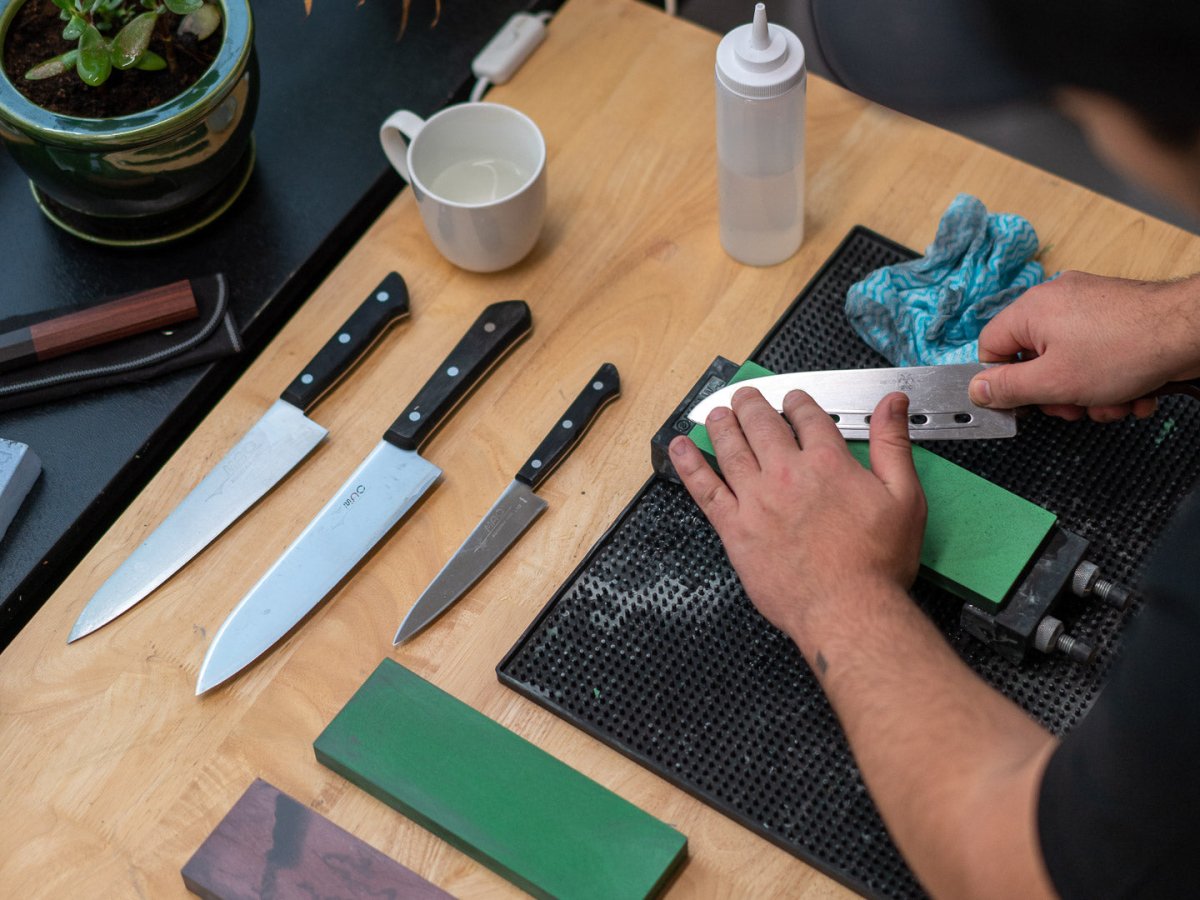
Replacing a handle costs NOK 300. We look at the knife first. If the repair is not worth it, you hear from us before we start. Prices are in the price list, and the work is done in the workshop that restores the Saisei knives.
Questions and answers
Does a wa handle suit left-handers?
Yes, if the handle is oval or octagonal. Both shapes are the same for the right and left hand. D-shaped and chestnut-shaped handles are usually shaped for the right hand. Check whether the blade is double-bevel as well.
What does a new handle cost?
Replacing a handle costs NOK 300 in the workshop. We look at the knife before we start, and if it is not worth it, we tell you. If the knife also needs sharpening, that comes on top, from NOK 149.
Can a Western handle be swapped for a wa handle?
It is more work, because a Western handle is riveted to a wide tang. The tang often has to be altered to fit a wa handle. Bring the knife to Teknostallen or send us photos, and we will look at it first.
Why do wooden handles crack?
Most often it is water soaking in at the tang, or dry air making the wood shrink. Handles without a ferrule crack more easily. Dry the handle after washing, and keep the knife away from the dishwasher and hot radiators.