

How a Japanese knife is made: from steel to handle

A Japanese knife is made in several steps: the steel is chosen, the blade is forged or stamped out, it is heat treated and straightened, and then it is ground and given a finish and a handle. Heat treatment matters most, and it does not show on the outside. Much is still done by hand and by eye, even in workshops that use a spring hammer and grinding wheels.
The steel
Most smiths do not make the steel themselves. They order it from large steel mills, such as Takefu Special Steel, and have it delivered in the right dimensions. That gives consistent quality and a heat treatment the smith can predict.
First the smith chooses the construction. It can be a single steel, a laminate with a hard core and soft cladding, or a honyaki hardened in two zones. Most buy the steel ready laminated. The layers are covered in the article on san mai, and the most common carbon steels in the article on aogami and shirogami.
Forged or stamped
A forged blade is hammered out of a hot blank. A stamped blade is cut out of a sheet, much like a biscuit cutter. The line between them is blurred: many forged blades are trimmed after hammering, and many stamped blades are hammered afterwards.
| Forged | Stamped | |
|---|---|---|
| How | The blank is heated and hammered into shape | The shape is cut from rolled sheet |
| The steel | Denser grain structure before grinding | Consistent from blade to blade |
| The blade | Tapers from spine to edge and from heel to tip | Even thickness until it is ground |
| Price | Higher, it takes time and more blades are lost | Lower |
| Best for | Long blades, such as gyuto and sujihiki | Short blades under 180 mm |
On short knives such as the santoku, nakiri and petty, a stamped blade loses little. The taper from forging is most noticeable on long blades.
Forging
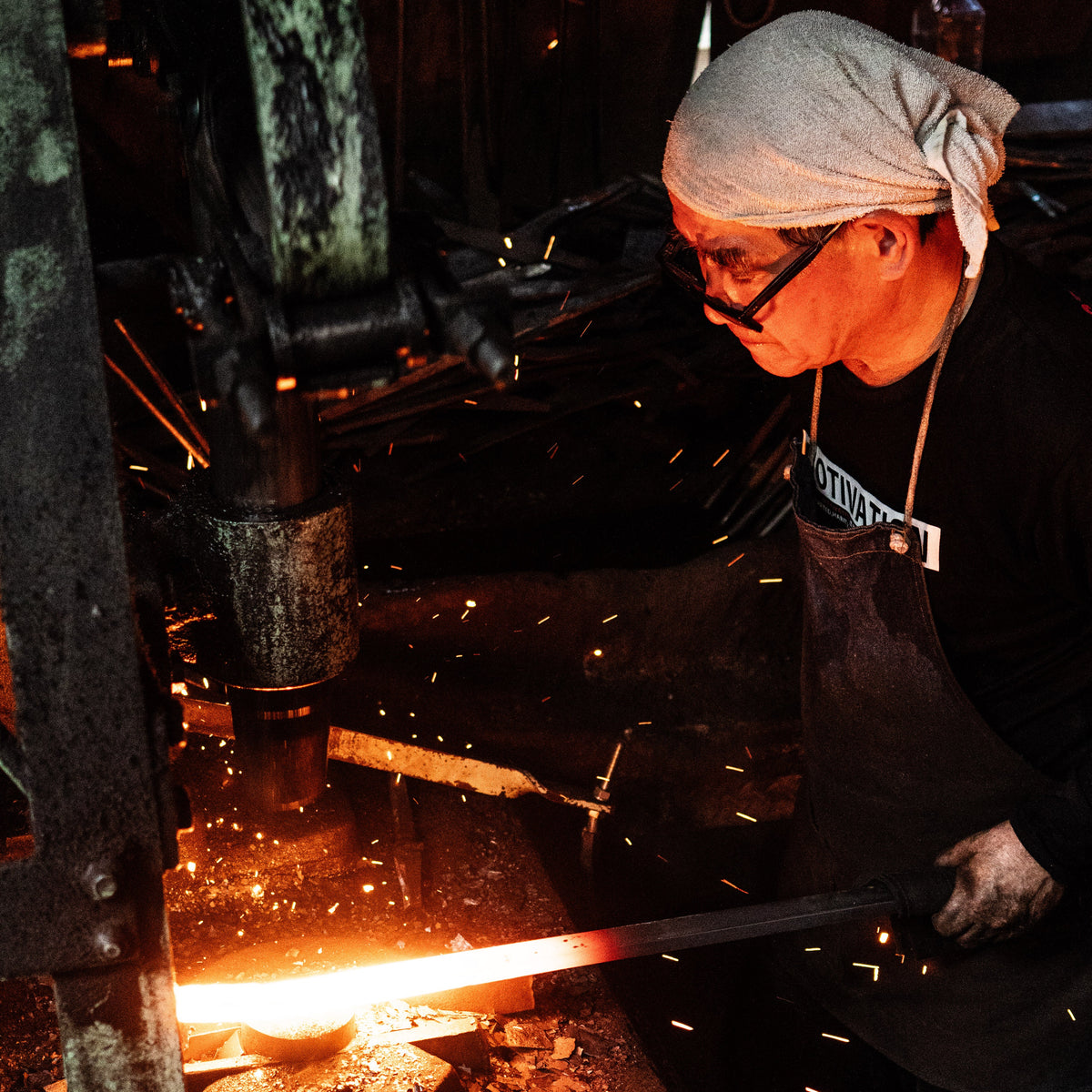
The blank is hammered to a rough shape and taper. The hammering compresses the steel and makes the carbides smaller and the grain denser, so the steel becomes tougher and chips less. Carbon steel gains the most from this. Powder steel gains nothing, because its structure is set at the steel mill.

Before the spring hammer, apprentices struck with sledgehammers where the master pointed. The spring hammer turned forging into a one-person job. At the smith Yoshimi Kato, every blade goes four rounds under the hammer: the tang is drawn out, the tip is shaped, the blade is thinned and finally it is straightened. Steel that is too hot is ruined, steel that is too cold cracks.
Heat treatment
After forging, the steel is too soft for a knife. It goes through three steps. First it is annealed: heated gently and cooled slowly to remove stresses from the hammering. Then it is hardened: heated and quenched in water or oil, so the steel becomes hard. Finally it is tempered at a lower heat, so the hardness drops a little and the toughness rises.
Rudolf Dick gives figures from Japanese tool smithies in Japanese Blacksmithing: carbon steel is hardened from around 780 to 800 degrees in water and tempered at 180, to 61 to 63 HRC. The Knifenerd book gives the same tempering temperature for carbon steel.
Japanese smiths judge the temperature by the colour of the carbon steel. Stainless steel has to be held at an exact temperature for set times, so temperature-controlled ovens are used for it. Poor heat treatment ruins a good steel, and the fault does not show on the outside.
Between each step the blade is straightened with a hammer. Straightening is a typical apprentice task, and a blade that is allowed to warp too far is hard to get straight again.
Grinding
The blade is ground on large rotating wheels over one metre in diameter, held in a wooden jig. The grinding has to go gradually, so the heat does not ruin the hardening. This is where the blade gets its geometry: how thin it is behind the edge, and whether it is flat, hollow or convex ground.

In Sakai the sharpener is often a different person from the smith. That was also the case in the workshops we visited there in 2023: the smith forges the blade, the sharpener gives it an edge and the wholesaler fits the handle and the name. The trip is covered in With the smiths in Japan.
Finish and handle
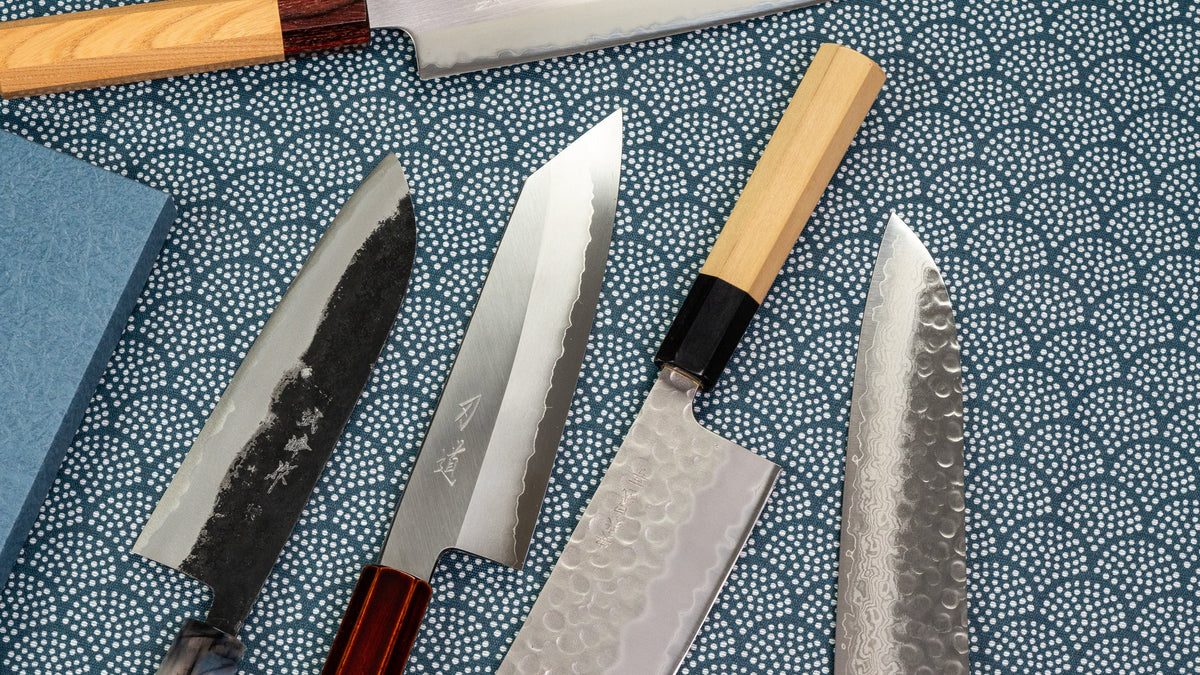
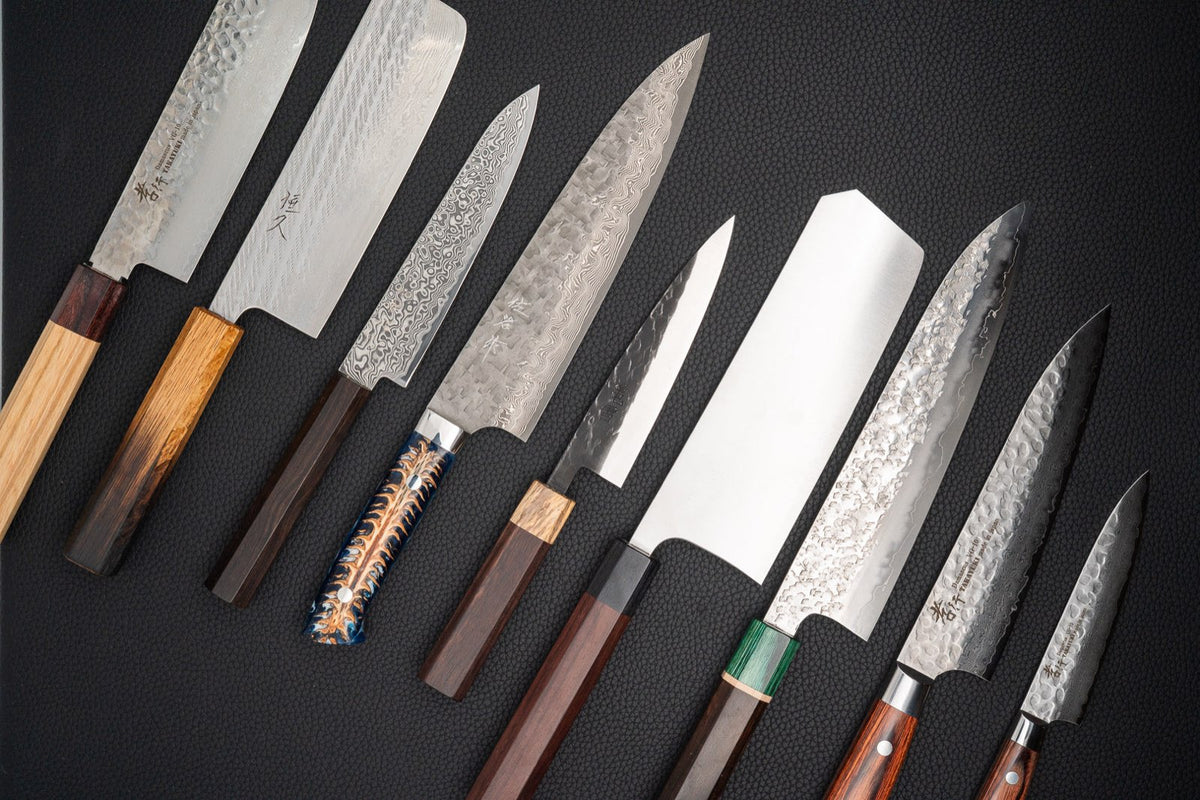
The finish is partly decided before grinding. Kurouchi, the black surface, is forge scale left on from the smithy. Migaki, kasumi and mirror are made during finishing. What each finish means is covered in the knife's surface.

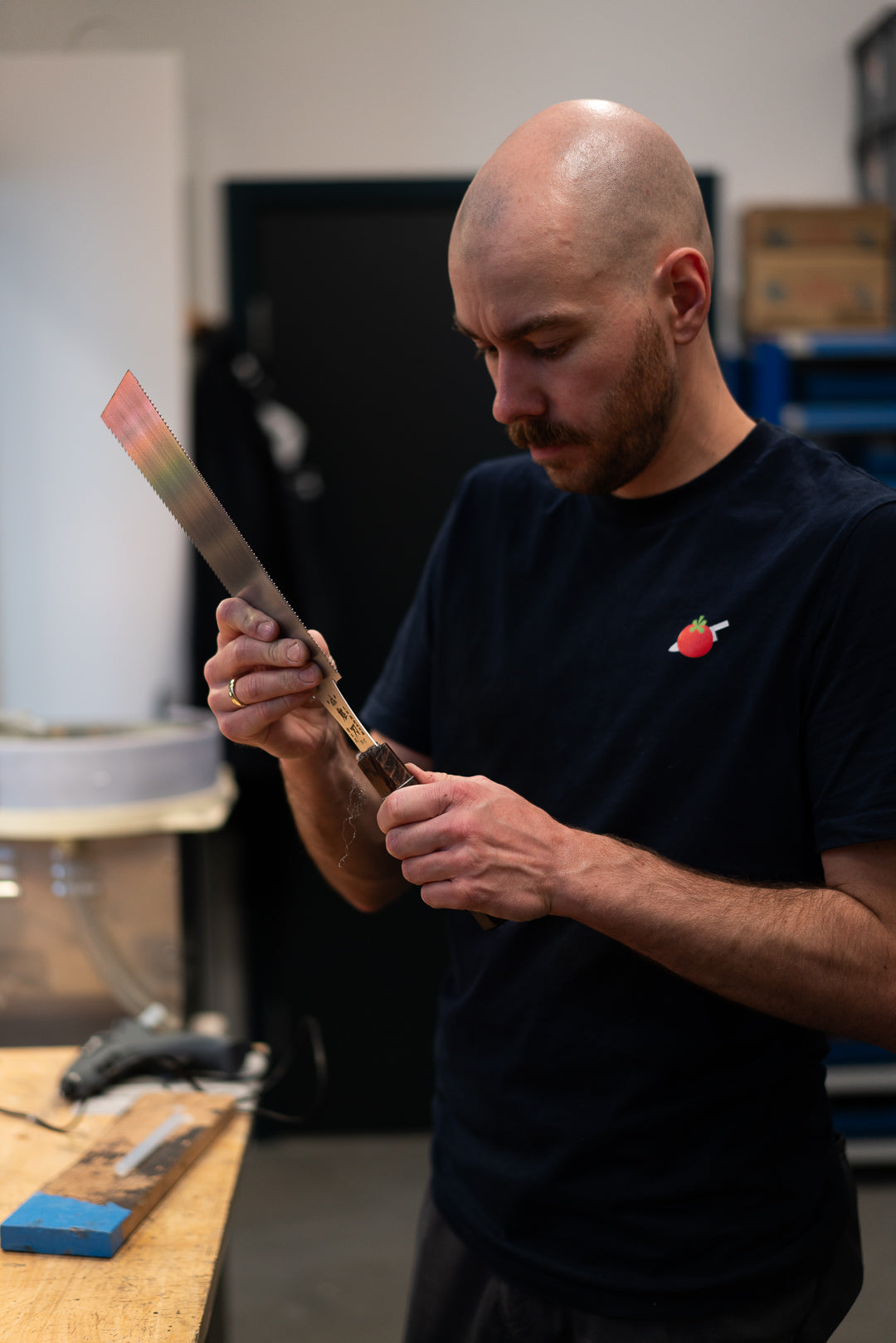
Finally the name is engraved or stamped, and the handle is fitted. A wa handle is fitted onto the tang with heat and glue. Many expensive wa knives leave the smith without a handle and are fitted with one by the retailer. The handle is covered in the article on the wa handle.
From the workshop
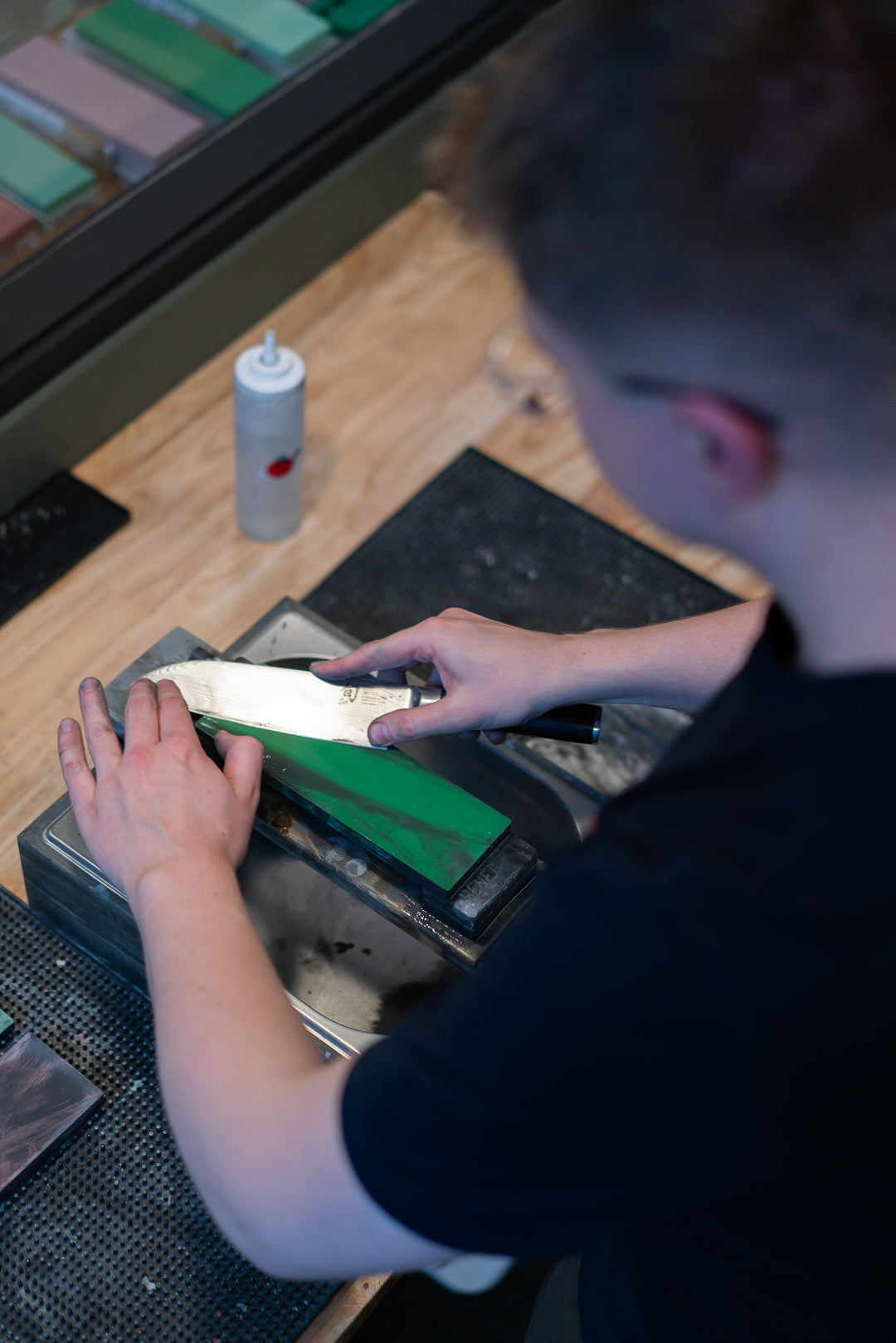
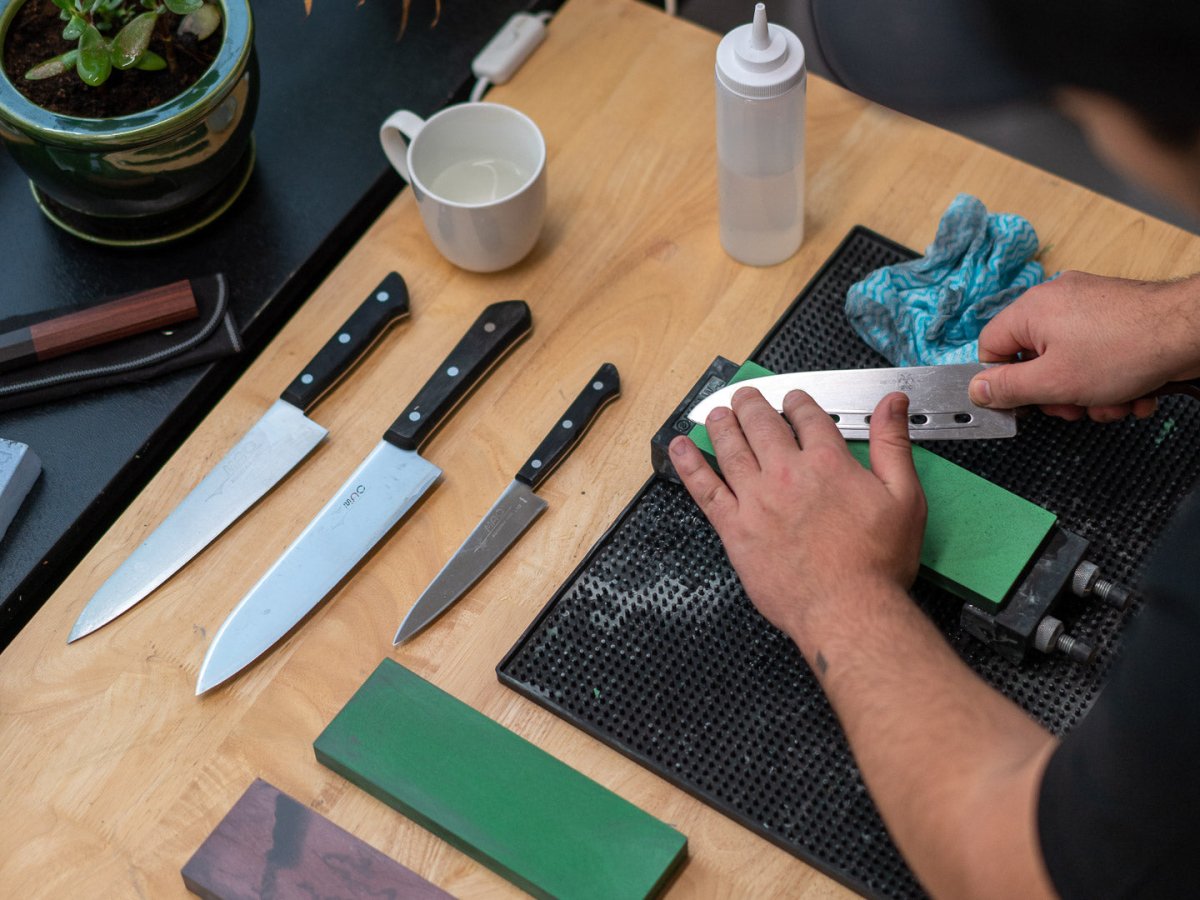
When a knife is on our sharpening bench, we see at once how the factory or smithy ground it. A blade that is thin behind the edge cuts easily for many years. A thick blade wedges in potatoes and carrots, however sharp the edge is.
We keep the edge and the shape the smith gave the knife. Whetstone sharpening costs NOK 249. You will find knives from both smithies and factories under Japanese knives, and Kevin Kent's account of the whole process is in The Knifenerd Guide to Japanese Knives.
Questions and answers
Is a forged knife better than a stamped one?
Not always. Forging gives a denser grain structure and a taper you notice on long blades. On knives under 180 mm a stamped blade loses little. Heat treatment and grinding matter more than whether the blade is forged.
What is heat treatment?
Controlled heating and cooling in three steps: annealing, hardening and tempering. Hardening makes the steel hard, tempering makes it tougher. Time and temperature depend on the steel and the thickness of the blade.
How much of a Japanese knife is made by hand?
It varies. Forging, straightening, grinding on the wheel and fitting the handle are done by hand, often with machine help such as a spring hammer and grinding wheels. In factories the blades are stamped, but several steps are still done by hand.
How long does it take to learn to forge knives?
Many apprentices spend 10 to 15 years before they are fully trained. According to Kent, a smith can learn to make a good-looking knife quickly, but it takes 10 to 20 years to understand heat treatment.