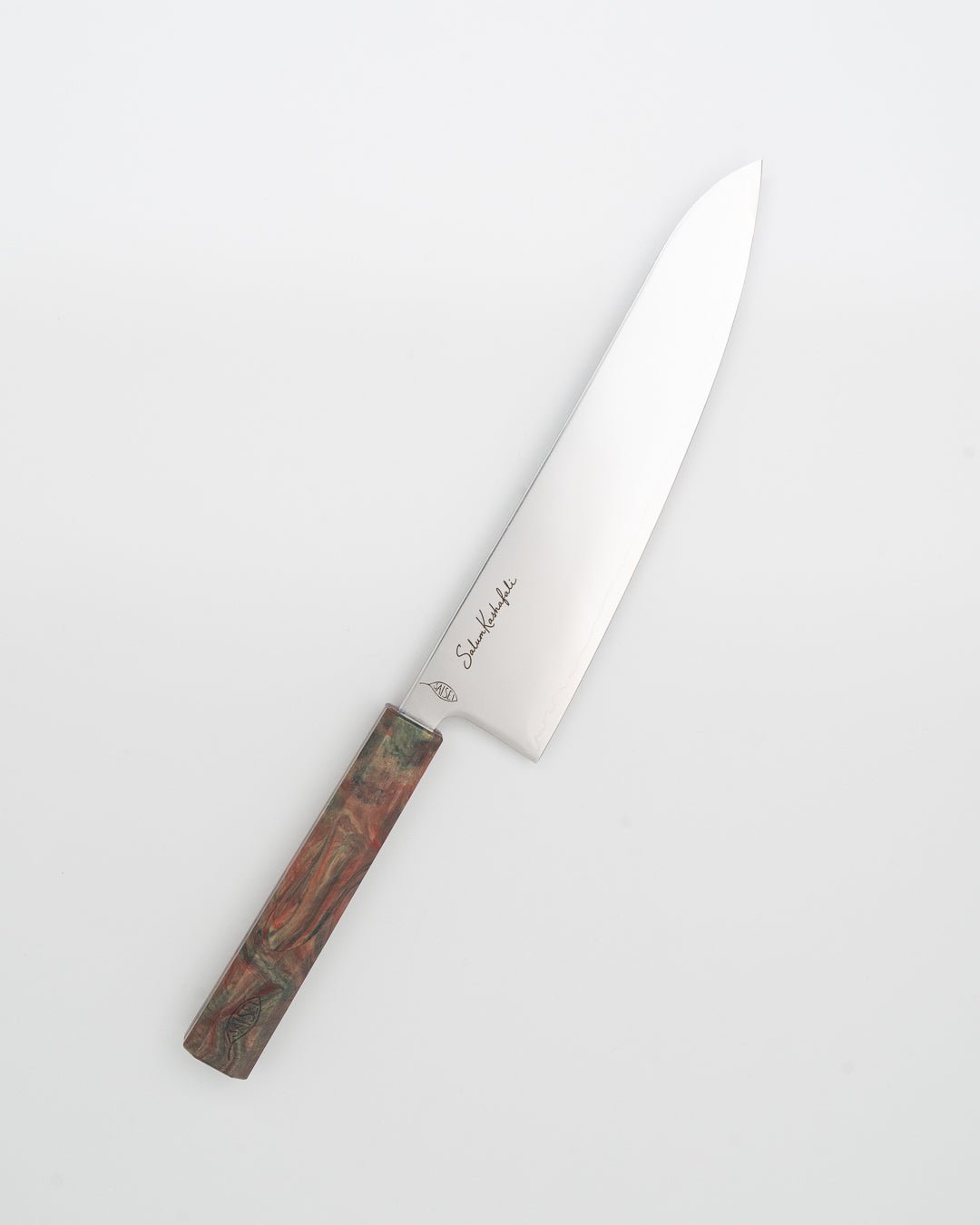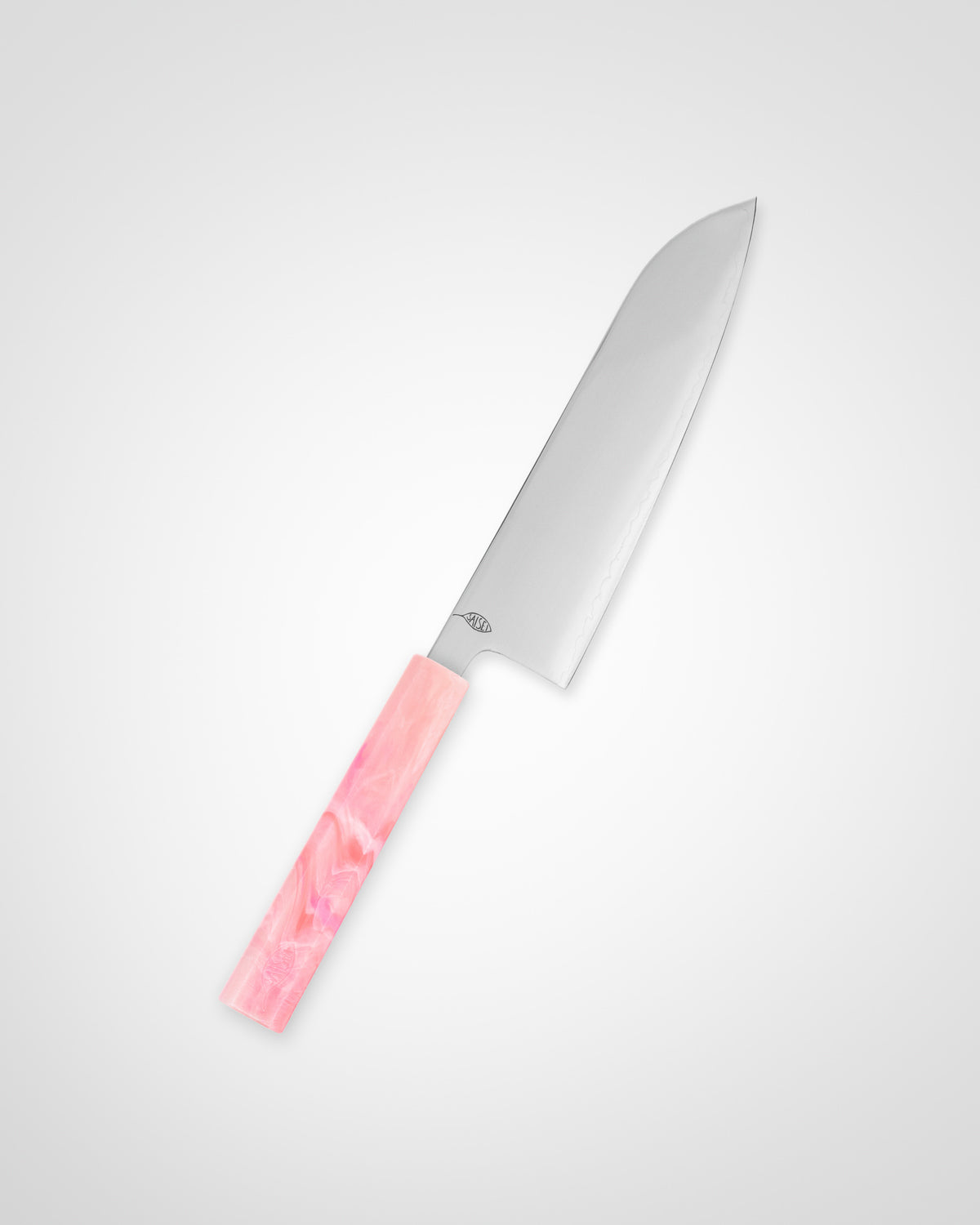


Honyaki: the knife made from one piece of steel
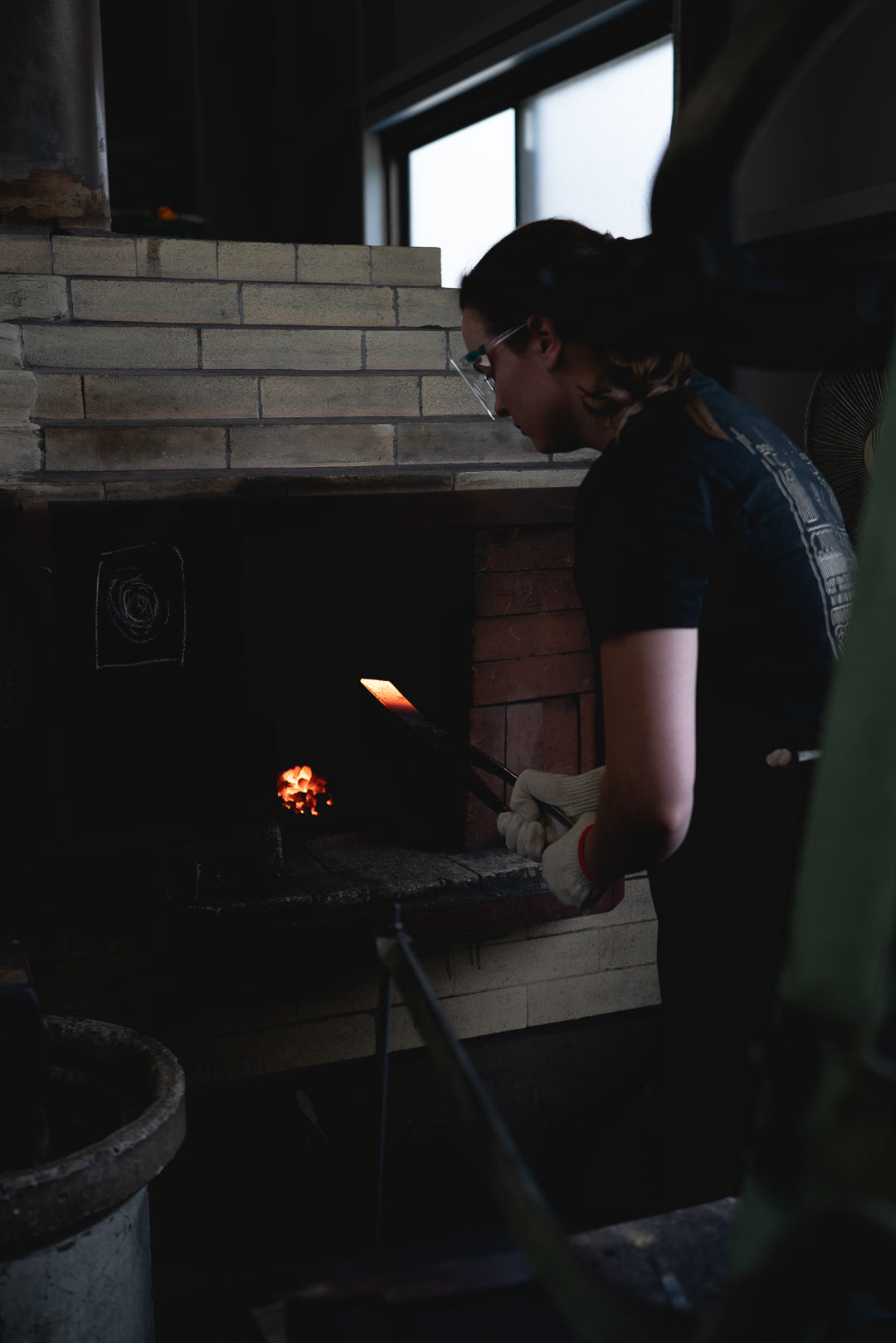
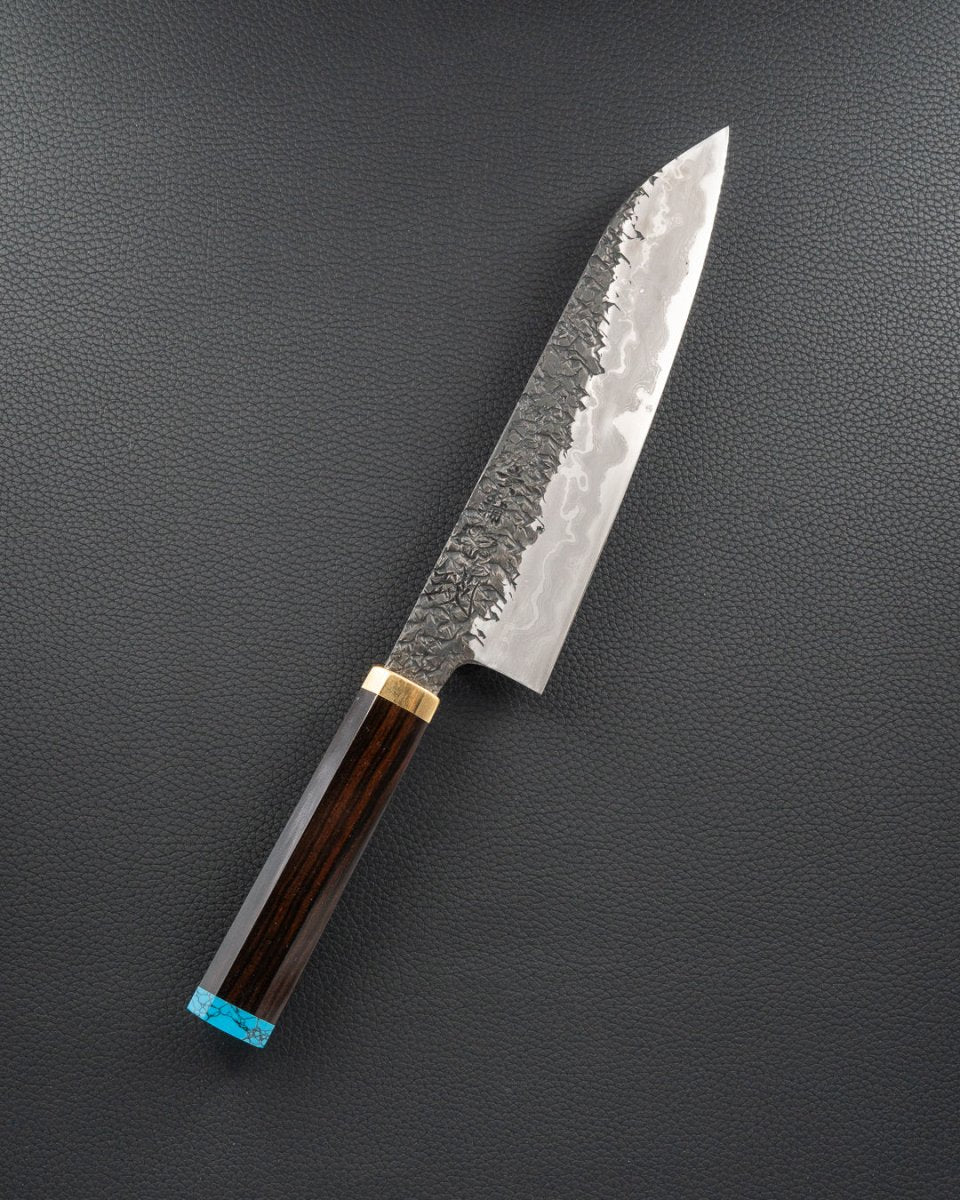
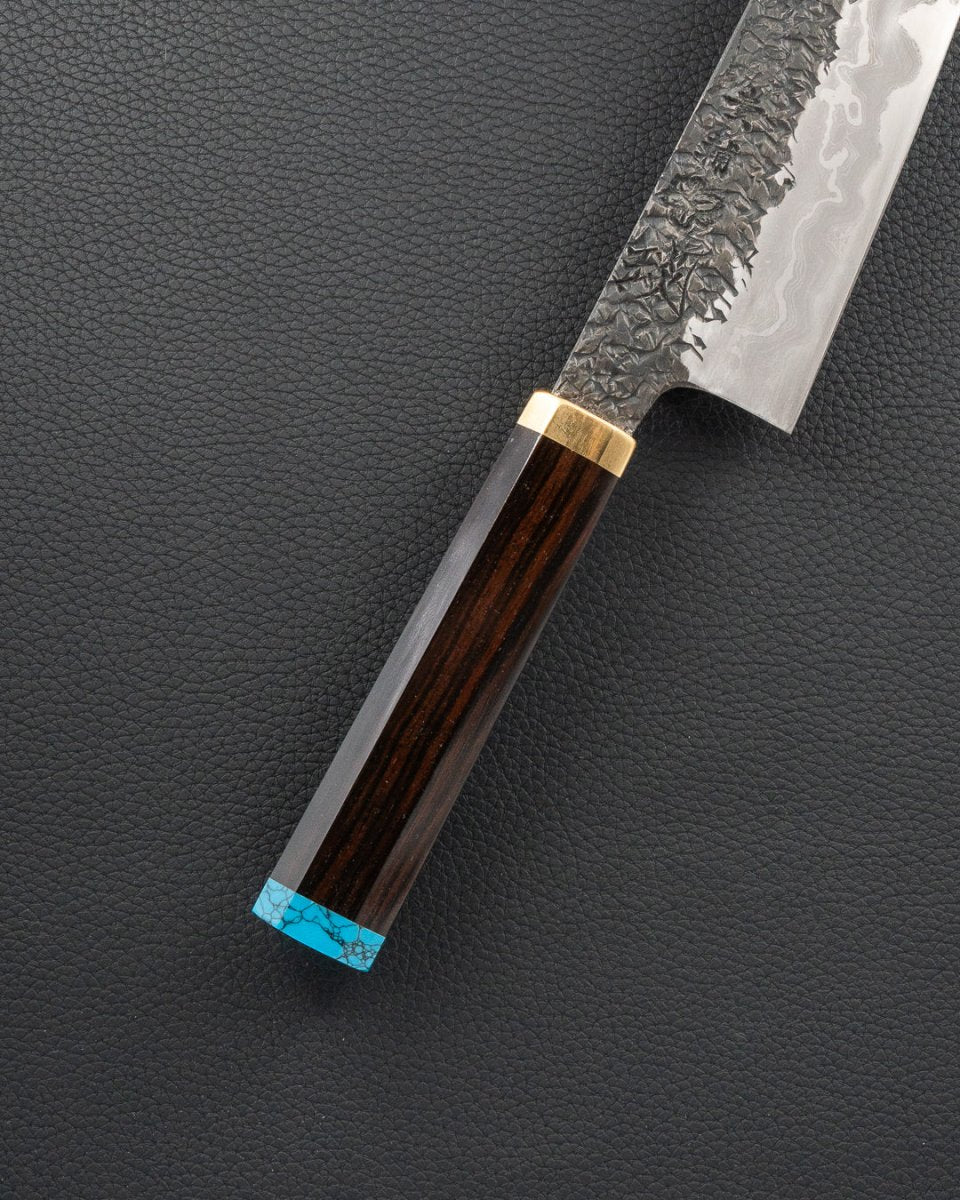
A honyaki is a Japanese knife forged from one piece of steel, where the edge is hardened hard and the spine is tougher. The difference is made with clay before the blade is cooled in water. It is the oldest way of making a knife in Japan, and the most difficult. Most Japanese knives are built in layers instead.
The word and the technique
Honyaki means 'true fired' or 'true forged'. What defines it is the hardening. A knife of one steel that is hardened evenly across the whole blade is called monosteel. That is common: most honesuki used in Japan are mass-produced monosteel.
An ordinary Japanese knife has a hard core between two layers of softer steel. That construction is covered in the article on san mai. The honyaki solves the same problem without cladding. The smith makes the hard and the soft part in the same piece of steel.
The clay and the water
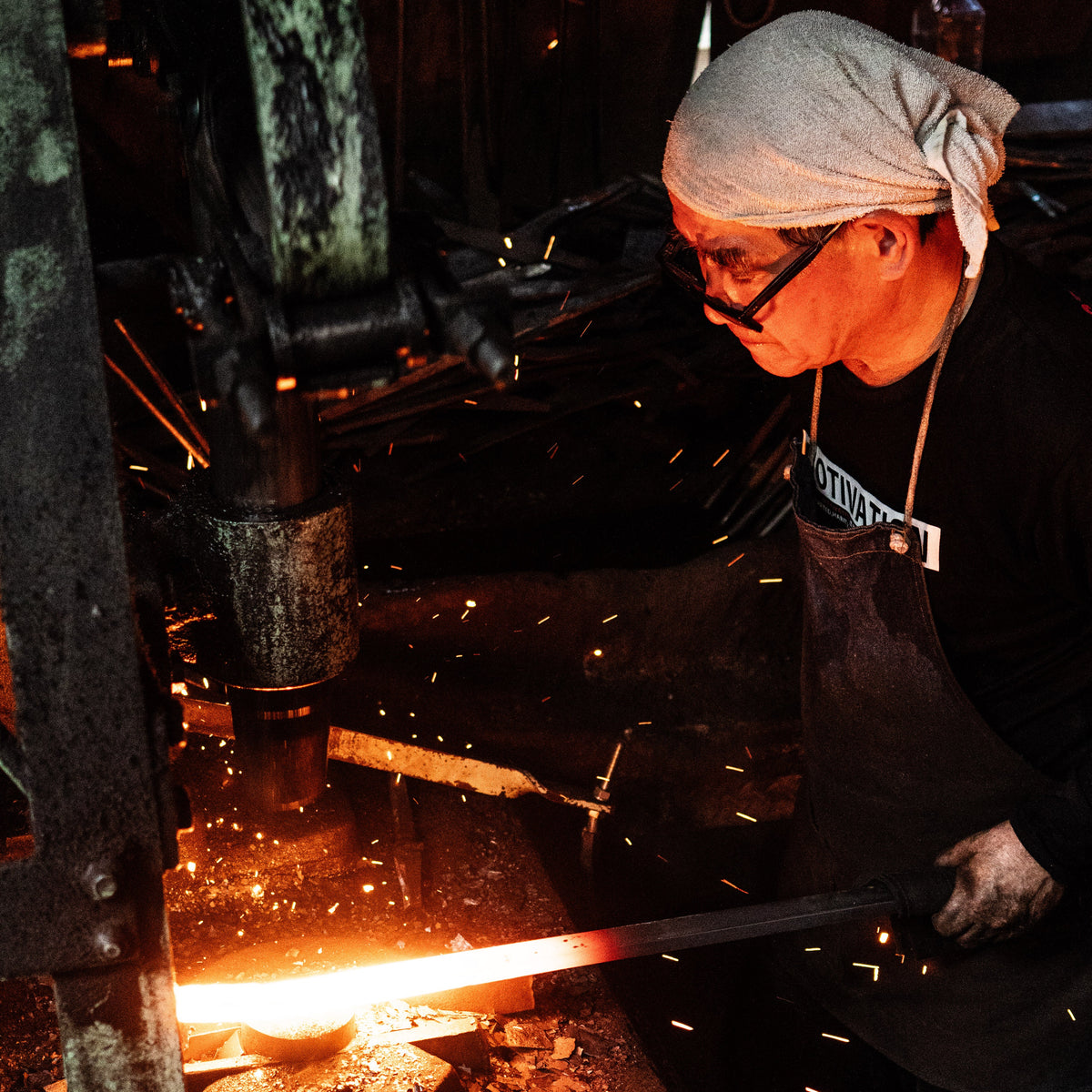
Before the blade is quenched, the smith applies a thick layer of clay, charcoal and sand over the spine and a thin layer over the edge. The blade is heated, and the smith judges the temperature by the colour of the steel. Then it goes into the water.

Rudolf Dick explains in Japanese Blacksmithing that a thin layer of clay makes the water cling and cools the edge faster, while a thick layer insulates the spine. The clay also stops the surface losing carbon in the heat.
The edge under the thin layer cools fastest and becomes hard. The spine under the thick layer cools more slowly, becomes tougher and absorbs knocks. Afterwards the blade is tempered at a lower heat, so the edge loses a little hardness and becomes less brittle. A blade that was equally hard across the whole surface would be so brittle that it could break if it fell on the floor, which is why the smith hardens only the edge.
Hamon
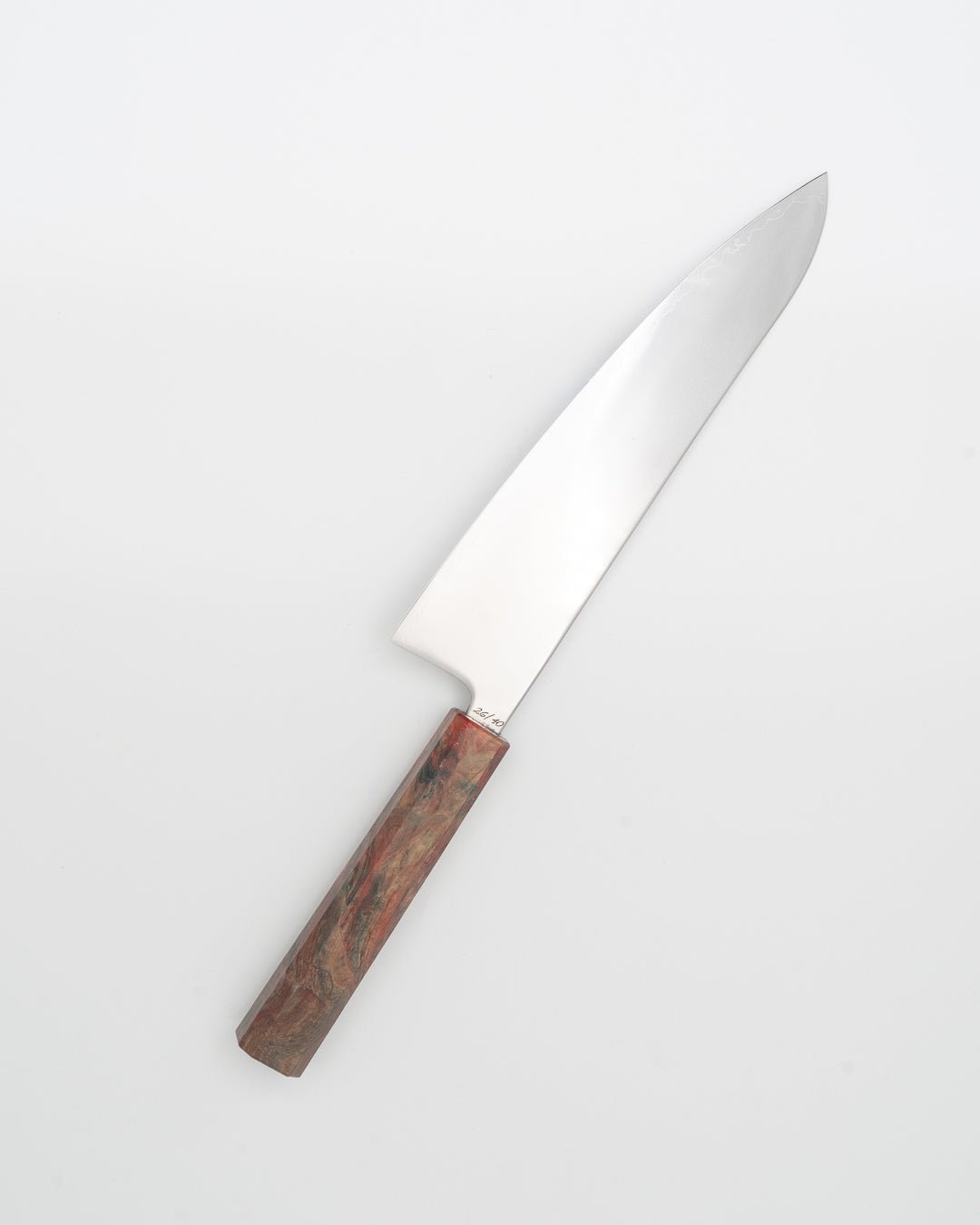
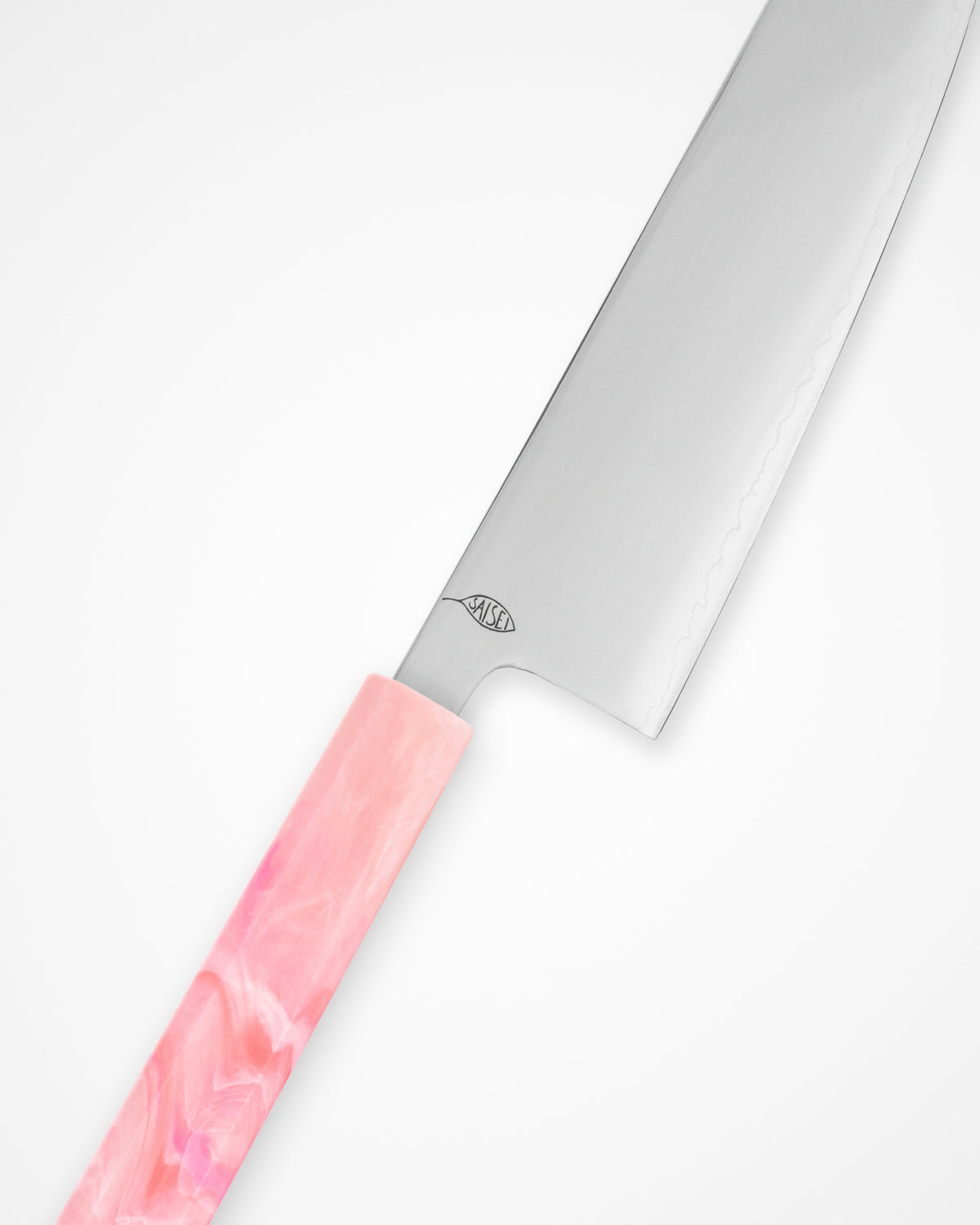
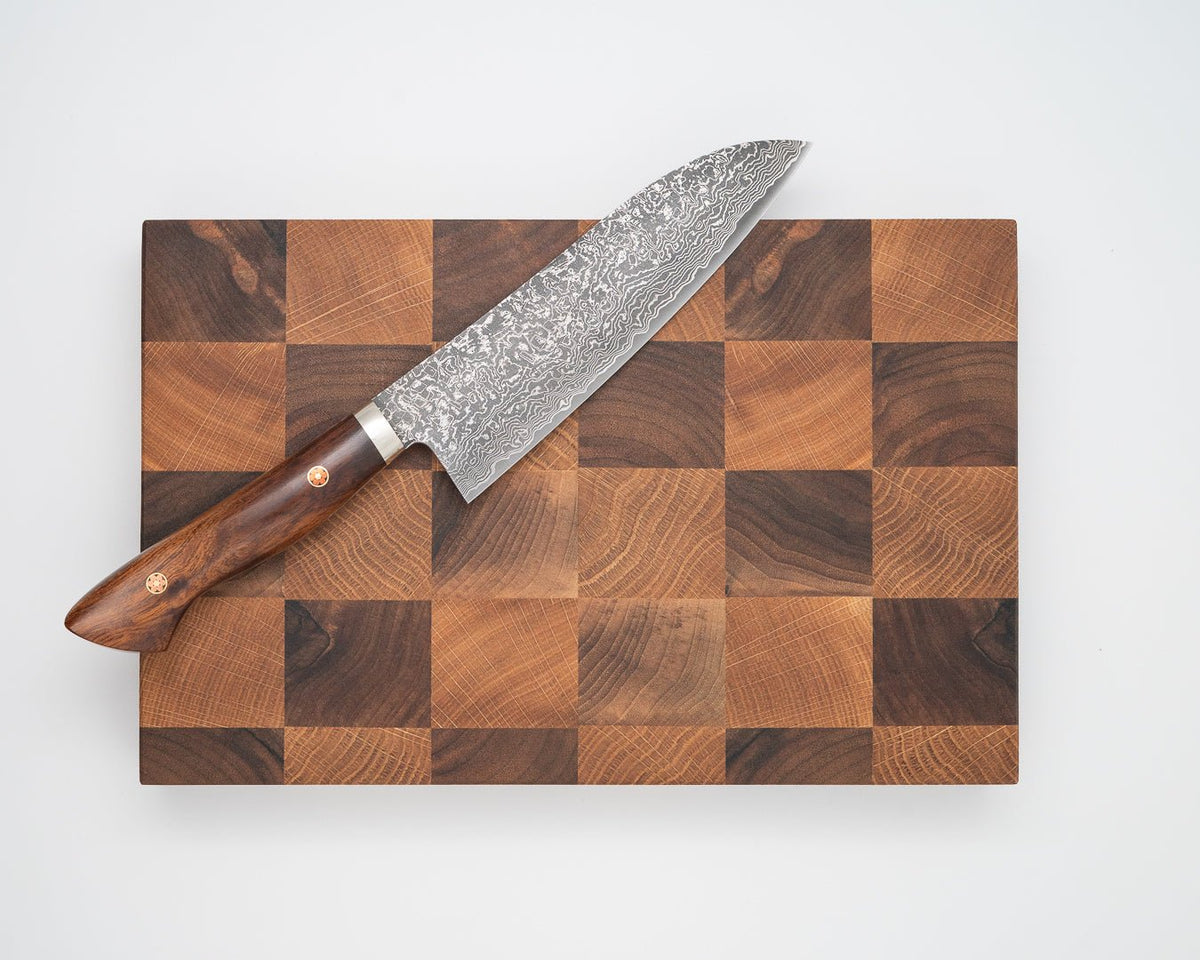
The boundary between the hard and the soft zone shows as a wavy line in the steel. It is called the hamon and appears when the blade is polished. Its shape depends on how the smith laid the clay and controlled the heat.
A fine hamon comes from the smith's control of the heat treatment. No special clay does the job for him. The same line is found on Japanese swords, which are hardened the same way. The word is also in the glossary.
Steel and failure rate
True honyaki is usually made in shirogami 1 or 2 and cooled in water. There are also honyaki in blue steel and in stainless. Differential hardening only works in steel with low hardenability. The two paper steels are covered in the article on aogami and shirogami.
Even the most experienced smiths lose blades in the water. The blade can crack or warp, and some sources state that up to 30 per cent are lost. That loss is built into the price of the blades that survive.
Among the smiths who make honyaki is Satoshi Nakagawa in Sakai. In Sakai the smith forges the blade, a separate sharpener gives it an edge, and the wholesaler fits the handle. We have been there, and the trip is covered in With the smiths in Japan.
In the kitchen
A honyaki is hard at the edge and holds it well. It bends and twists less than a laminated knife, which can warp over the years. Naoto Fujimoto writes about this in the steel chapter of the Knifenerd book, which we stock in the shop.
Most honyaki are carbon steel. It rusts if the knife is left wet, so the blade should be washed and dried straight after use. Over time it develops a dark patina, which protects against rust. The rest of the care is under caring for your knife.
Cut on a wooden or rubber board, and keep the knife away from bone, frozen food and the dishwasher. That goes for all Japanese knives, but with a honyaki there is more to lose. Which boards the edge can take is covered in the article on cutting boards.
From the workshop
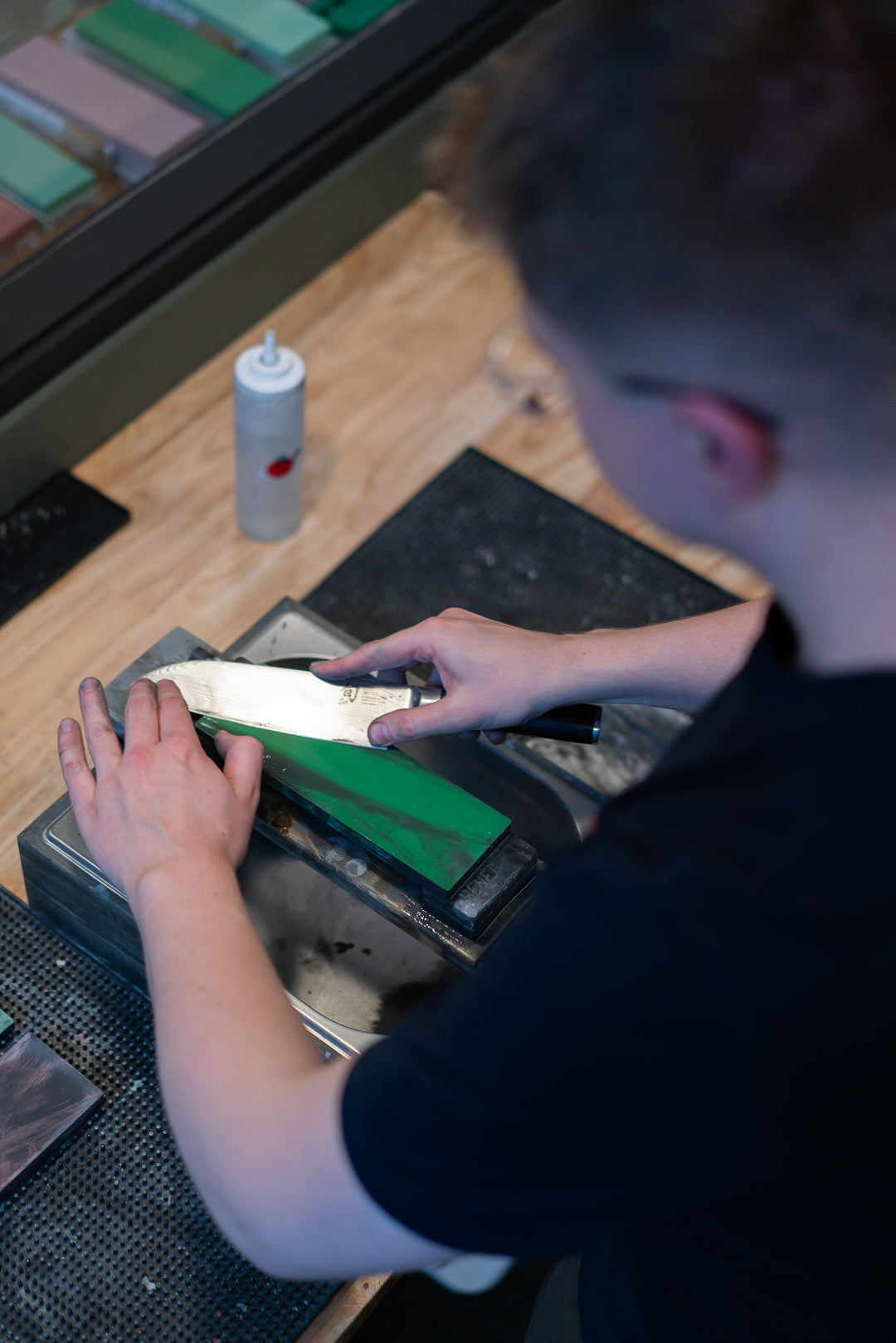
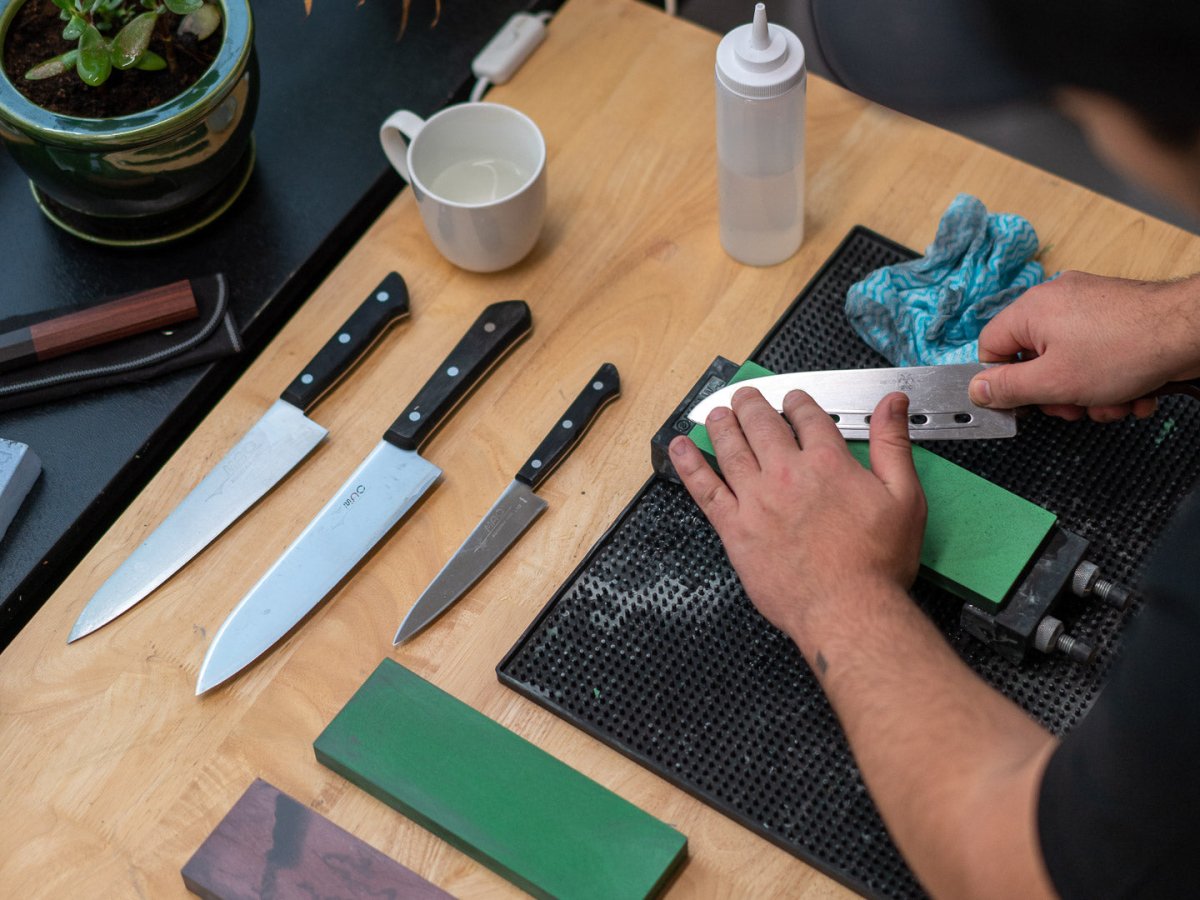
We rarely see a honyaki on the sharpening bench. When one comes in, we take it on the whetstone by hand, like other Japanese knives. Whetstone sharpening costs NOK 249.
What we see more often are laminated knives whose owners have wondered whether the line on the blade is a hamon. Usually it is the seam between core and cladding, or an etched pattern. Look at the knife from the edge upwards: on a san mai the line follows the edge at an even distance, on a honyaki it waves.
The choice
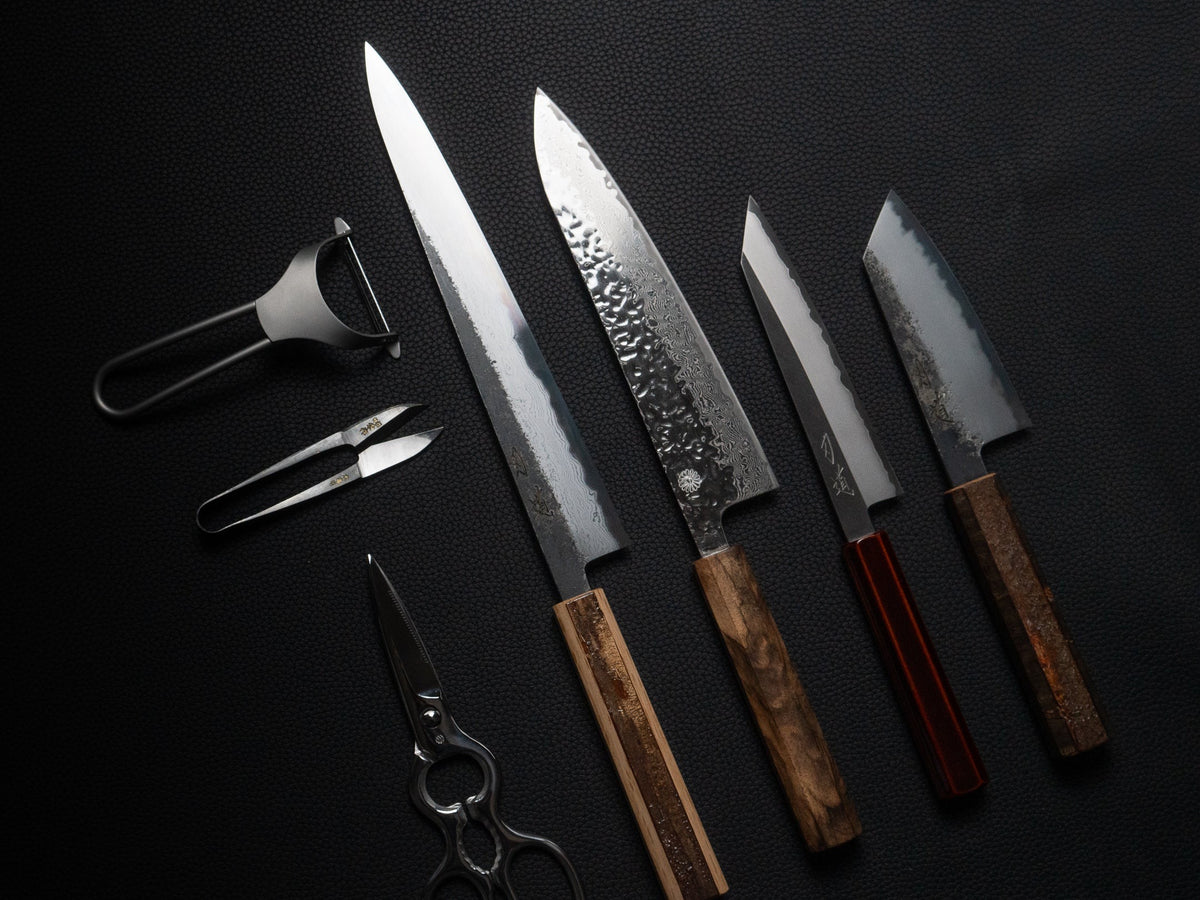
For most people a good laminated knife is the right buy. The edge sits in a hard core steel either way, the knife costs less, and the soft cladding is more forgiving. Honyaki is for you if you want the blade as craft, and you dry the knife without thinking about it. Our range is under Japanese knives.
Questions and answers
What is the difference between honyaki and monosteel?
Both are one piece of steel. A honyaki is hardened in two zones under clay, so the edge is hard and the spine tough, and it shows as a hamon. A monosteel blade is hardened evenly across the whole surface and has no such line.
Is a honyaki sharper than a laminated knife?
Not necessarily. The sharpness sits in the edge, and on a laminated knife the edge is also hard core steel. The honyaki bends less over the years. The price comes from the work and from the blades that crack in the water.
Does a honyaki rust?
Most are made of carbon steel, shirogami or aogami, and rust if left wet. Wash and dry the blade straight after use. The patina that comes with time protects it. There are honyaki in stainless steel, but most are carbon.
How is a honyaki sharpened?
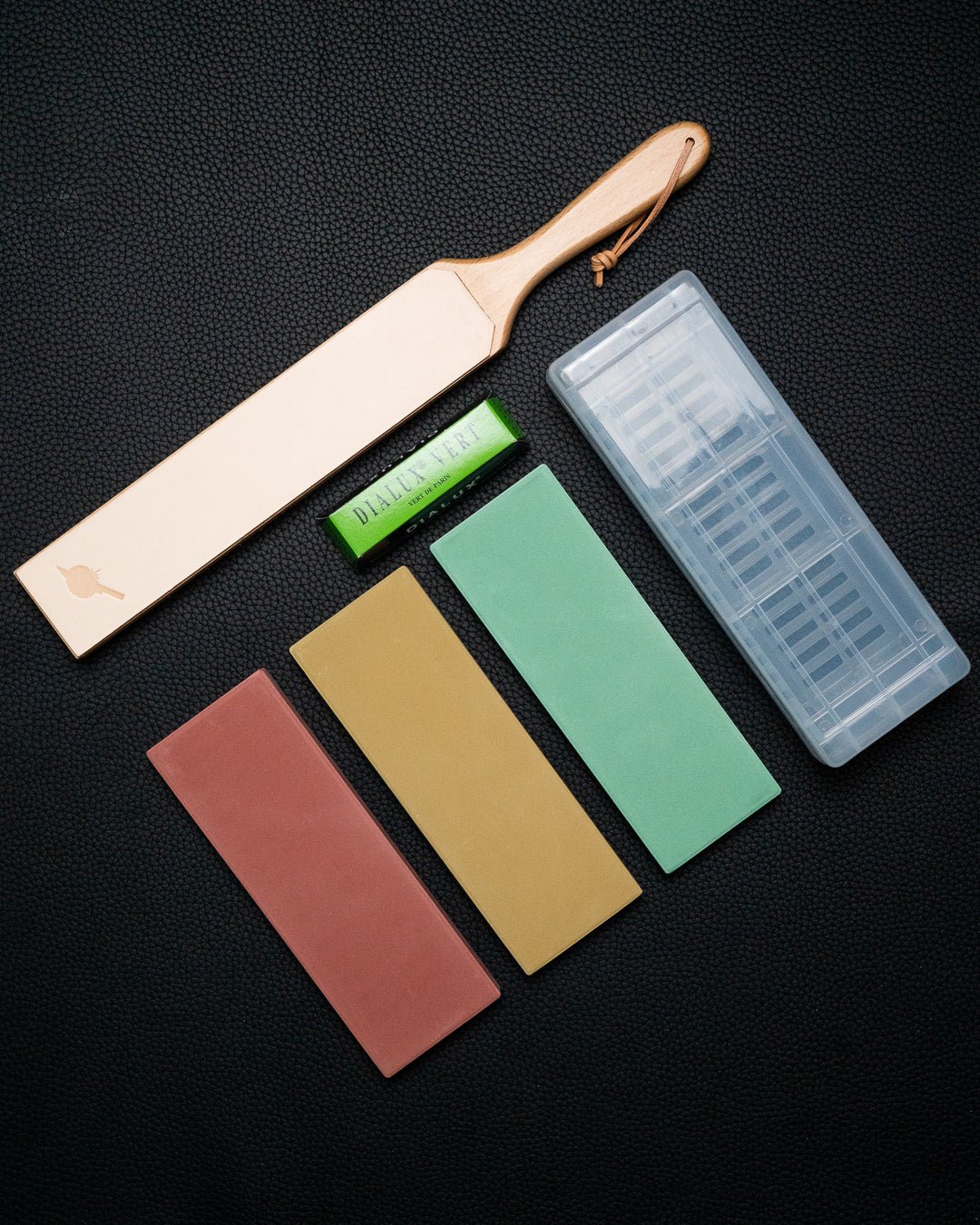
On a whetstone, like other Japanese knives, with the same angle all the way. Avoid grinding wheels and honing steels. If you would rather not sharpen it yourself, we do whetstone sharpening for NOK 249 in the workshop.